






Skip to content
French Microlight Federation Member
Home
Flying Entry to the Flying section

Fly

What is microlighting?Where to fly?Licence and insuranceMedicalHandivolMechanics

Become a pilot

The pilot certificateMicrolight examTrainingTrial flight

Regulations

Regulatory documentsAirspacePlan your flightsAirfieldsOPS ULM — order of 17/02/25

Federation support

Youth supportThe BIAGrantsIn-Flight Companion training
Instruction Entry to the Instruction section

Network

Clubs and schoolsInstructors

Instructors

Microlight instructor trainingList of instructors by départementKnowledge refresherThe teaching programmeTeaching and technical sheets
Sport
Safety Entry to the Safety section

Prevention

DirectivesParachutesFederation prevention

Safety reports

REX — submit and browseFlight Safety BulletinReturn to Flying (REV)ECCAIRSCSV flight safety officersList of REX reports

Alerts

Safety news

Files and quizzes

Good practice
News Entry to the News section

Read

Federation newsULM Info — the magazineClub and school life

Calendar

EventsSubmit an eventFederation events

Media

Photos & VideosDocuments to downloadPractical guides

Stay informed

Frequently asked questions
The Federation Entry to the Federation section

The institution

Elected membersThe divisionsRegional committeesThe DTNEthics and professional conductSafeguarding in microlightingThe federation in figuresOfficial textsGeneral Assembly

Federation events

The Youth Microlight Tour (Tour ULM Jeunes)Microlight World ChampionshipsFesti'ULM

Join us

RecruitmentContactReport
Site map

SafetySafety report

Loss of visual references

Following a transponder problem, we had to ferry a high-wing training microlight to a coastal airfield where there is a radio workshop 50 kt away.

REX no. 5338
Year
2010
Weather
Favourable
Damage
No
Aircraft
Three-axis microlights
Date of flight
14/06/2010
Role on board
Pilot
REX category
Weather
Phase of flight
in the cruise
Type of flight
a trip - a navigation
Equipment
Radio, Transponder, GPS
Possible consequences
Loss of visual references
Environment
over flat terrain

What happened

Following a transponder problem, we had to ferry a high-wing training microlight to a coastal airfield where there is a radio workshop 50 kt away.
As we are also aeroplane pilots at the club, we are used to aircraft with an artificial horizon and a turn-and-slip indicator.
The microlight has neither, and the transponder failure forbids us from transiting the controlled D zones, which lengthens our journey time.
On arriving overhead the coastal airfield, a dark band of low cloud was moving in from the sea towards the airfield. Seeing ourselves blocked on the coast, we decided to make a
U-turn.
On the way back there is a marshy, and therefore damp, area. Level at 2000 ft according to the GPS to avoid the class D, we suddenly entered a
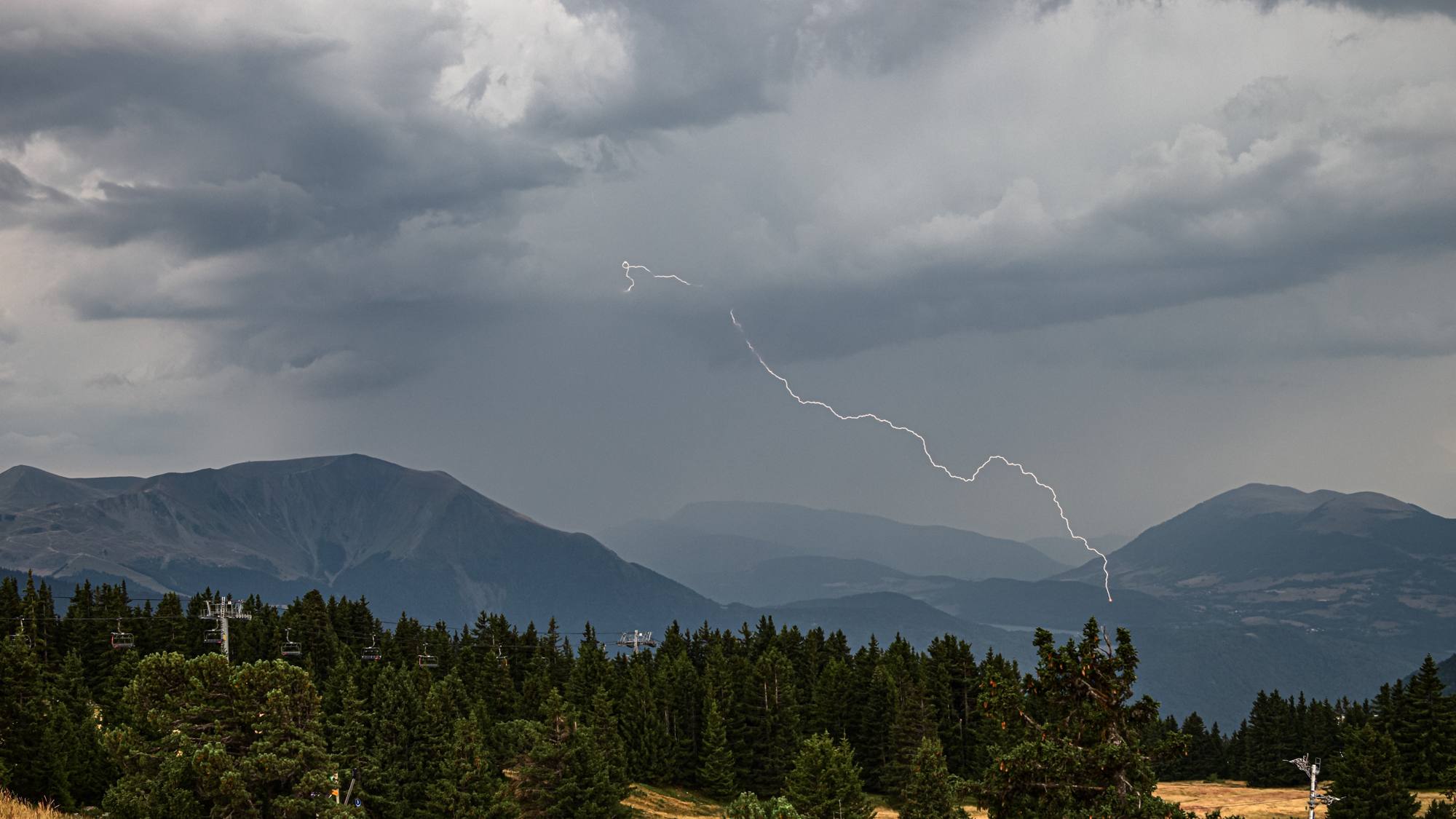
dark cloudy area. Loss of reference, no backup instruments, a moment of panic: we were about to become part of the accidents in the REC. Descent to 1500 ft and within 30 s VMC returned.
END OF FLIGHT towards the good weather. Back at the airfield, and the transponder was sent by post.

Pilot's comments

Without instruments showing the aircraft's attitude, IMC, even very briefly, is a stressful and dangerous experience.
No artificial horizon, no turn and slip indicator, no heading indicator, just an altimeter and an old-generation GPS: unlike what we are used to in aeroplanes, brushing with the clouds puts you in a bad position.
Lessons learned:
Bad habit of disregarding minor cloud phenomena, as one might in a well-equipped aeroplane (brief passage through IMC)
Entering IMC while flying under VFR in a truly VFR-only aircraft.
Moderator's comment:
This account is interesting in that, even though this was not the reporter's intention here, it reminds us that having instruments on board can encourage pilots to pursue a dangerous, and indeed prohibited, course of action.
Even if the aircraft were fitted with gyroscopic instruments, bear in mind that the mass and low wing loading of microlights rarely give them enough platform stability to be flown safely on instruments.


They support the federation

All our partners
  • Ministry of Ecological Transition
  • DGAC
  • Ministry of Sport and the Olympic Games
  • National Sports Agency
  • CNFAS
  • FAI
  • Aéro-Club de France
  • CNOSF
  • EMF
  • Air and Space Museum







