
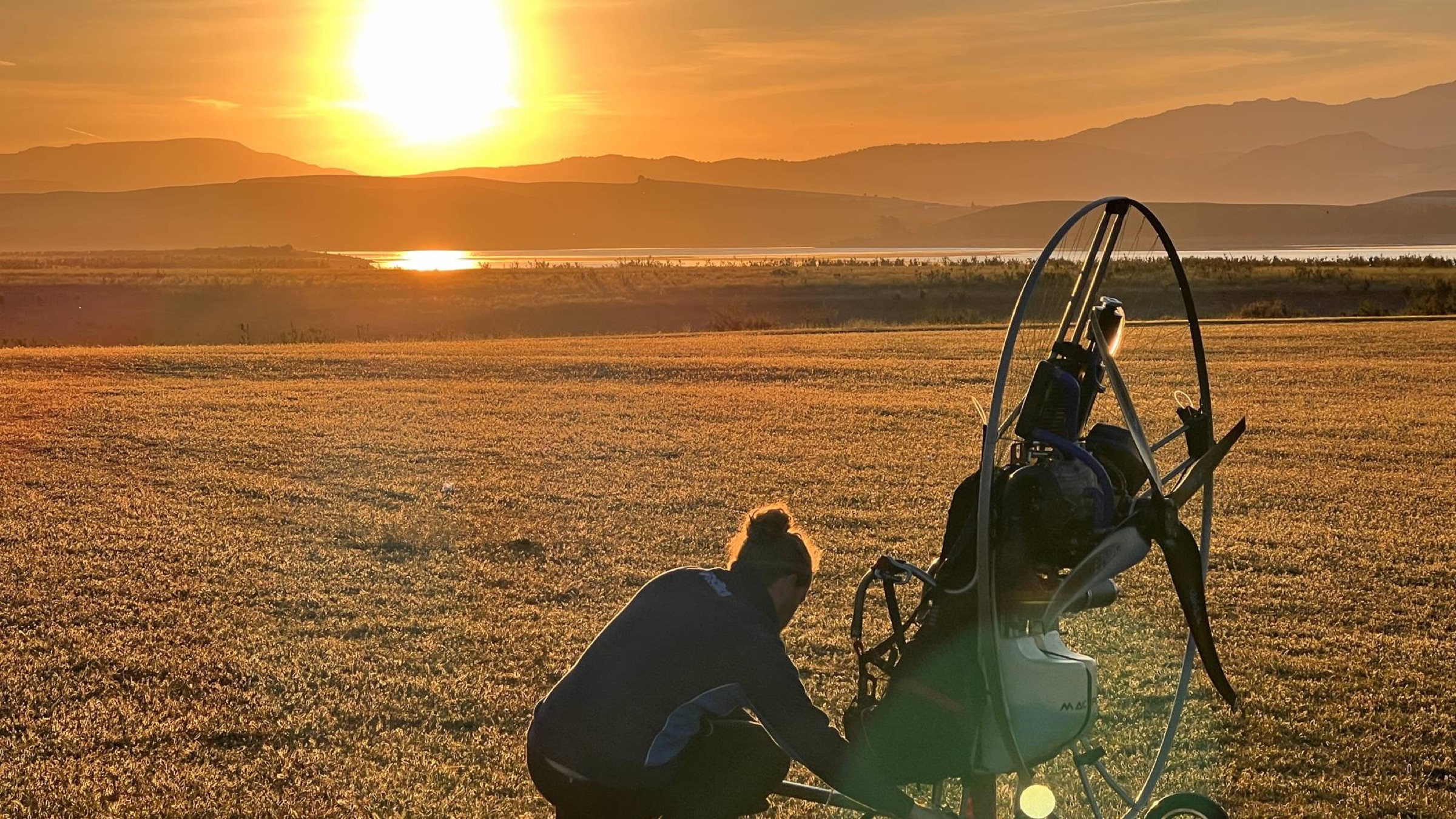
What happened
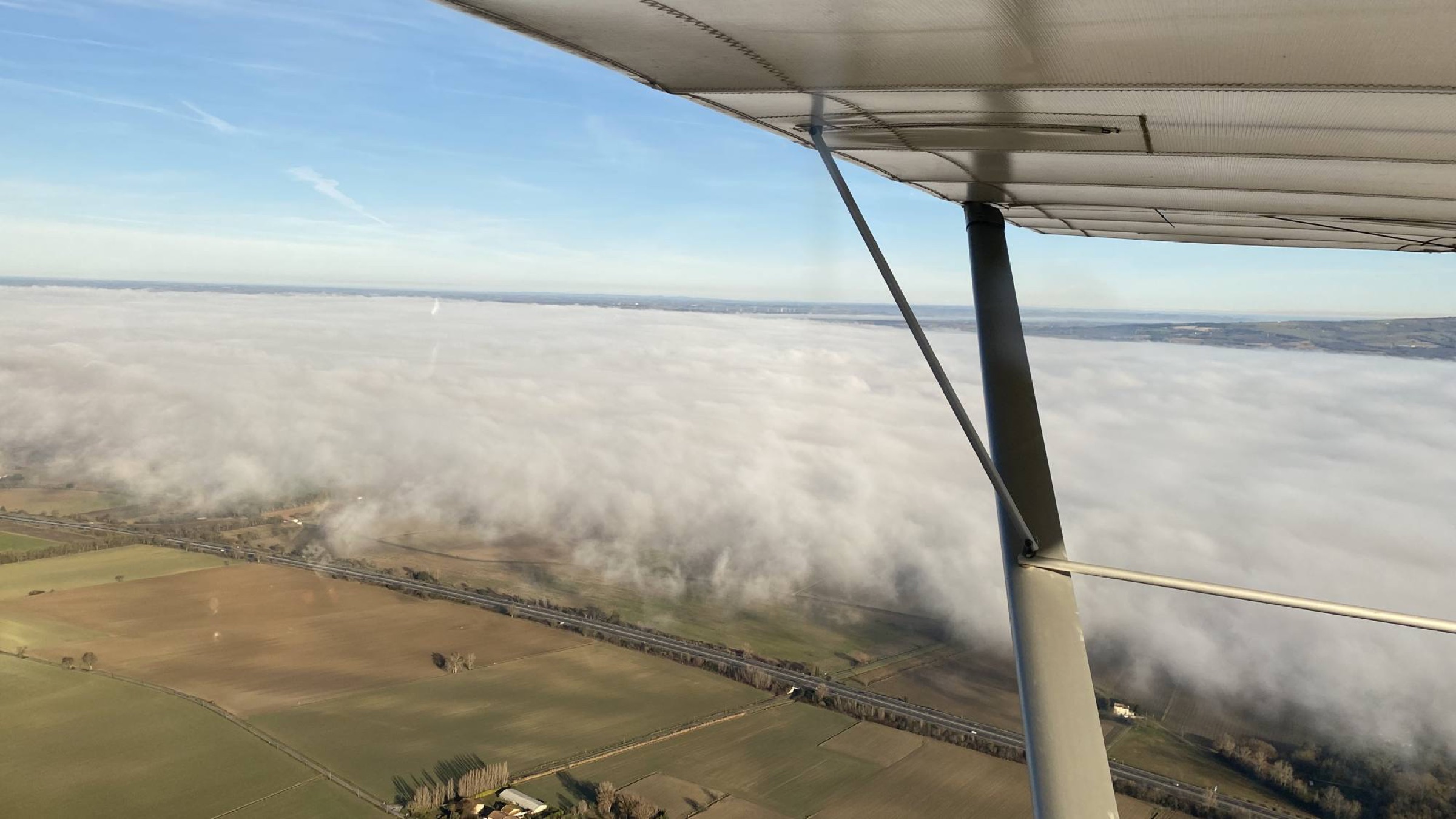
The sky was blue with no wind. The forecast for the next day was an orange thunderstorm alert. Examination of this blue sky showed storm cumulus at 100 km and a cloud veil of 15 km by 3 of stratus type at 3000 ft, 100 m thick, with no build-up. I would keep an eye on it just in case. It was 10 km away and moving at 10 km/h. I took off in nil wind for a 1-hour local flight. I began to see lightning at 100 km.The sky was still blue, the cloud veil was still there and about to arrive overhead. As there was no wind, I decided to continue. I passed 50 m above friends who were working.
I had barely left them when a wind of incredible violence suddenly sprang up just as the tip of this insignificant cloud arrived above me; the wing went into pitch and roll with angles of 45°, I had never known such force. I applied the brakes moderately to calm it and it only half responded. I lowered my head and saw with horror that my mates on the ground had become tiny little figures.
I found myself being sucked up by the cloud, and then I remembered the account of that German woman caught in a storm that took her up to 10,000 m. I had to react at once; my altimeter showed a climb of 10 m per second. I had to reduce the wing area by making big ears, but I had only seen the technique on the Internet.
I grabbed the two outer 'A' controls and pulled; miraculously the ears formed at the tips of the wing, but the climb was just as fast. I let go of everything and started again, taking the lines higher up; the cords cut into my hands, I slowed down, but it was still climbing, I had to bring them down even lower. I stood up and, as high as I could, grabbed the lines and brought them together in both hands at the centre of the wing, then using all my weight I brought them down to chest level, let go with my left hand and made a knot, locking them with my forearm. This position was more comfortable. The climb was stopped, but I was not descending either. The wing, reduced to half its area, flew; it was more or less stable.
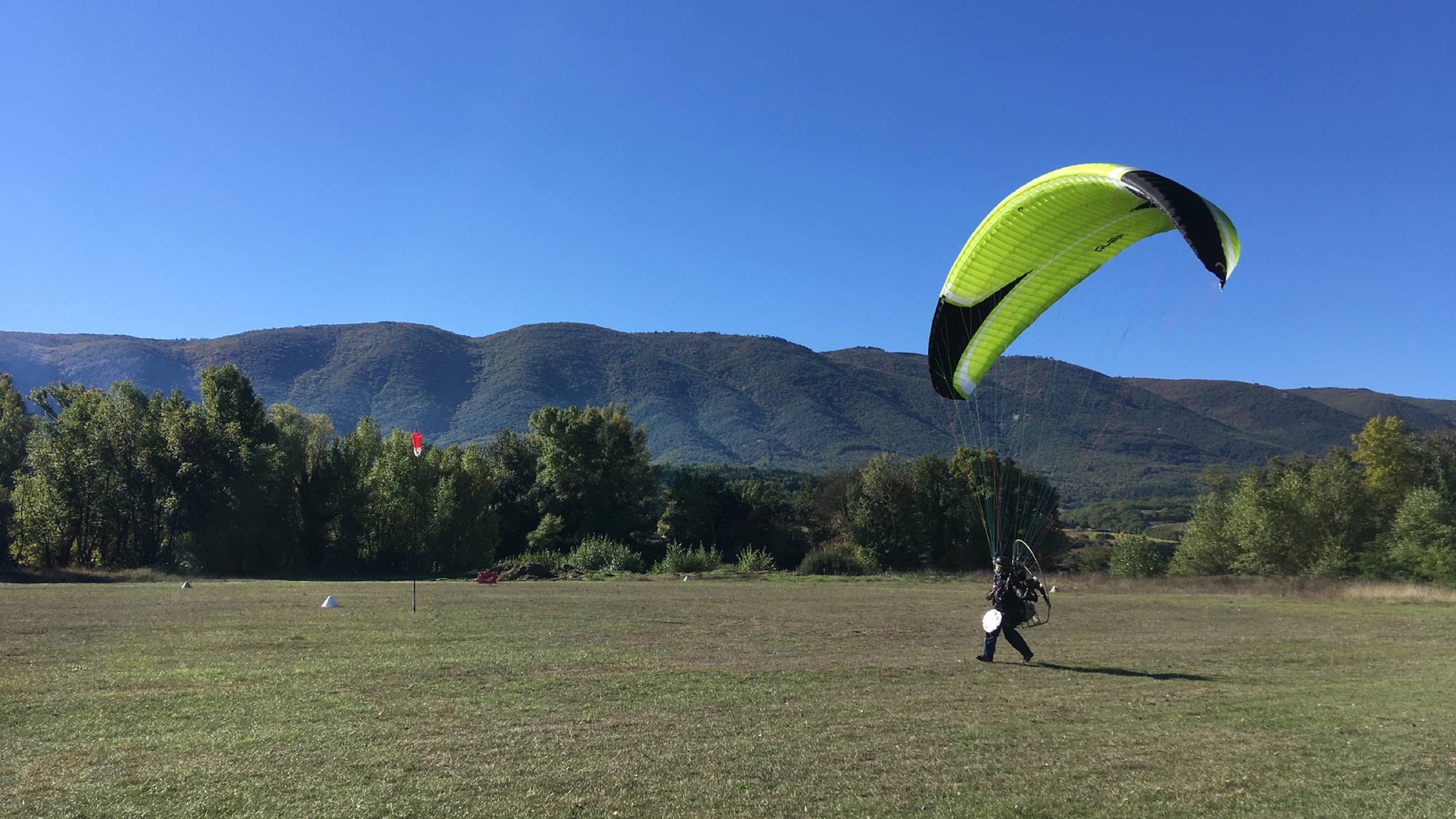
I had to come down and I no longer controlled anything in direction. My paramotor was at full idle but the propeller kept pushing; I cut the engine, a point of no return since I would not be able to restart it, but I made that choice. The response was instantaneous, I descended quietly, I could even have landed in big ears. After a few minutes, on reaching 50 m above ground, I released my grip, my wing reopened and carried on descending, but the joy of getting back to the ground made me forget the rule “with a paramotor you must always land into wind”. At 20 m above ground, seeing that I was moving away from a track, I turned around so as not to have too far to walk. A bad mistake: I ended up with a 40 km/h tailwind, too late to turn back; I stabilised the wing and prepared for landing. 3…2…1… Touchdown…, my legs started running. The wing quickly brought me back to reason by setting the 30 kg of the paramotor down on my 60 years, brakes pulled hard, I prepared for the inevitable and spread my arms in a cross to protect my rib cage. My legs, unable to keep up, stopped working and I let myself be gently laid down on my stomach to finish my run. It was done over 5 m, the wing collapsed cleanly and I got up at once, unhurt. My paramotor was at full idle but the propeller kept pushing; I cut the engine, a point of no return since I would not be able to restart it, but I made that choice. The response was instantaneous, I descended quietly, I could even have landed in big ears. After a few minutes, on reaching 50 m above ground, I released my grip, my wing reopened and carried on descending, but the joy of getting back to the ground made me forget the rule “with a paramotor you must always land into wind”. At 20 m above ground, seeing that I was moving away from a track, I turn
Pilot's comments
After 15 minutes the cloud had moved 3 km away and, sitting by the side of the track, I could see a large cumulus 1,500 m high sitting on top of that insignificant-looking cloud.During the few minutes of this adventure, I had only covered half a turn of a circle 300 m in diameter; everything had happened vertically.
I was pleased to have kept control of myself and won the battle, but it is something I will do my best never to go through again.
Lessons learned:
none