
What happened
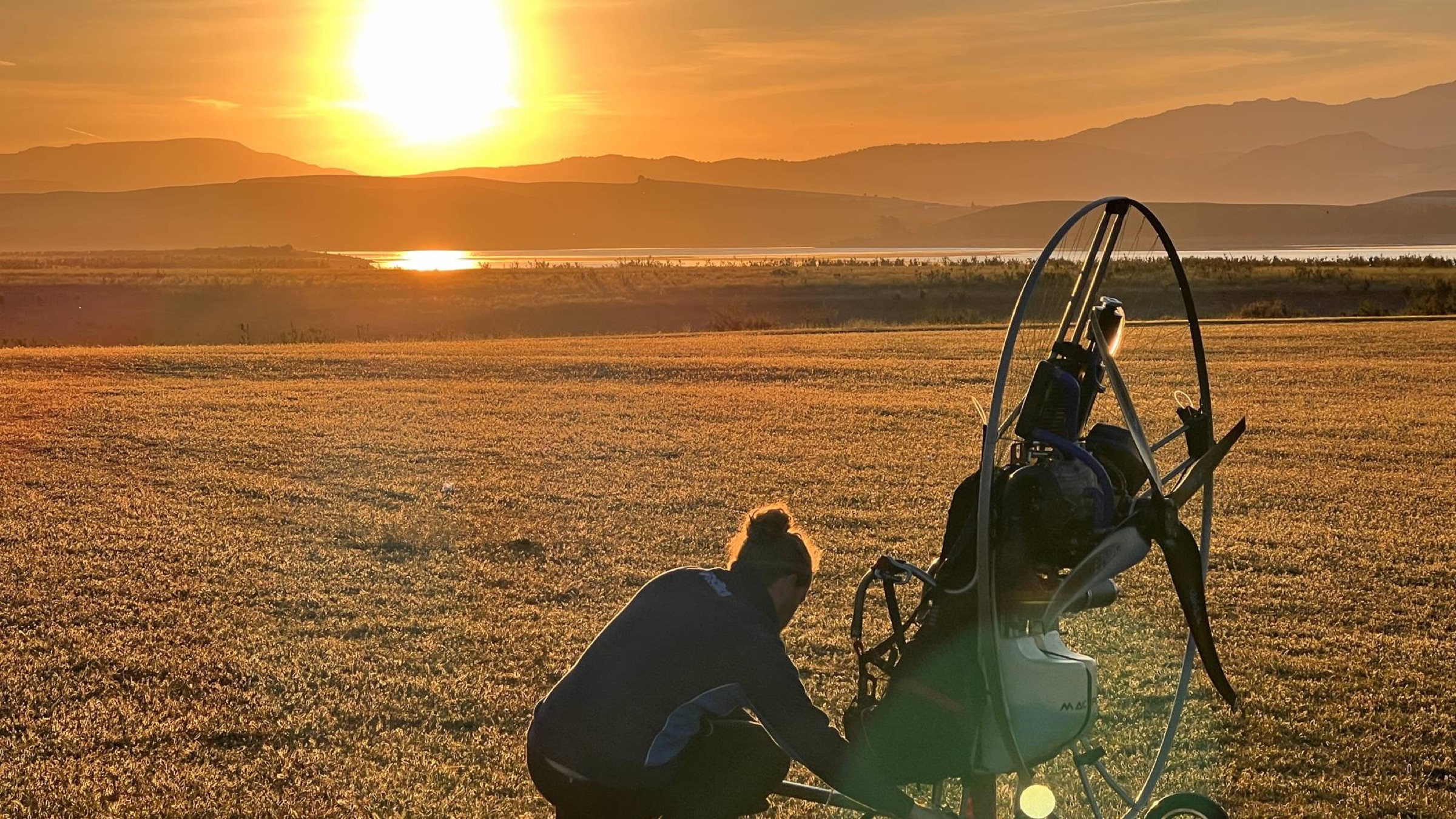
Returning from a flight, I called on the radio to let another microlight that was starting to join ahead of me know (he replied on the radio) that I was extending my flight so that he could land safely. Once the runway was clear (radio confirmation received), I called at the start of the downwind leg, on base and on final. I heard nothing on the radio apart from the previous microlight. To be on the safe side, I always look higher up to see whether another aircraft is landing at the same time, and I saw nothing.Halfway down final, my engine stopped!
Engine-failure practice took on its full meaning and I had no fear that the landing would not end properly. As a precaution (there was a slight crosswind), I moved off the runway centreline to leave more room from the buildings lining the runway.
The surprise was that an aeroplane had landed at the same time as me, just a few metres away! I never heard it on the radio (my radio was working properly) and did not see it on base.
Some aeroplane pilots fly a very long final very close to the ground, and it is then difficult to spot them against the setting sun. From now on, I scan the ground and the sky on downwind and on base.
I was unable to contact the pilot and he did not reply to my text message.
In short, the radio is not enough: looking out, both high up and close to the ground, is essential.
.
Pilot's comments
The radio is an essential aid but is not enough to avoid every flight manoeuvre.Very long finals are a trap for weight-shift microlights, which generally fly a tight circuit for safety.
Lessons learned:
I did not look carefully enough for a machine arriving at ground level while I was on base. From now on, I scan the ground and the sky on downwind and on base. I was unable to contact the pilot and he did not reply to my text message. In short, the radio is not enough: looking out, both high up and close to the ground, is essential.