






What happened
beautiful weather, visibility >50 km
Arriving overhead a microlight strip for landing, at about 1000 ft AGL, 500 ft above the circuit published for the microlight strip. I had sent an arrival message overhead on 123.5 about 3 min earlier; no reply from aircraft operating at this strip.
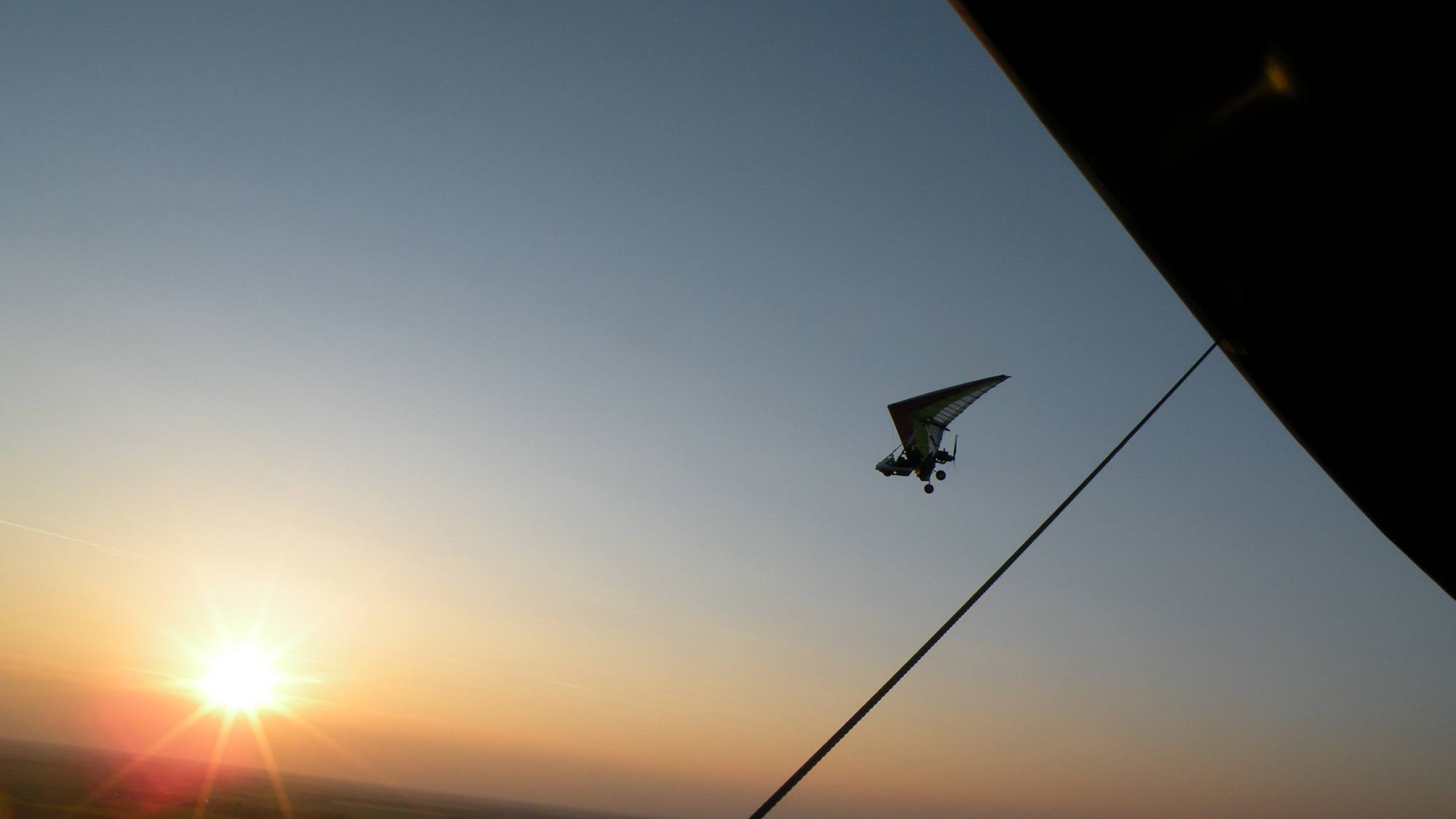
Suddenly a 3-axis microlight crossed us about 20 m below (I could clearly make out the pilot) at an angle of about 45° to our track, from the front. Without the difference in altitude, I think there would have been a collision. This aircraft was not in the sun.
Neither I nor my passenger (also an aeroplane and microlight pilot) had seen this aircraft before we discovered it at the last moment of this near collision.
Contrary to our usual habit, the SIV had not been contacted for this short flight.
The microlight is fitted with anti-collision lights on the wingtips, but I am not sure I had switched them 'ON'.
The FLARM (which also has an XPDR detection option, but from experience XPDR detection is not 100% reliable, unlike detection of other FLARMs) did not detect the aircraft, which may not have had an XPDR.
After crossing we turned to keep it in sight and sent a message on 123.5 to try to make contact, but without success.
The microlight was still operating in the vicinity of this strip, so we diverted to another airfield 5 min away.
Pilot's comments
awareness of the risk of visually missing an aircraft that is really very close… in particular with this microlight, whose visibility forwards and downwards is poor
the lessons:
- always contact the SIV, even for short local flights
- always use the anti-collision lights
- increased look-out in the forward and lower sector, in particular near an aerodrome or microlight strip or a 'tourist' point
- possibly, we will think about fitting orange anti-collision markings like those on gliders (this microlight is plain white)
Federation analysis
These are the limits of the see-and-avoid rule in uncontrolled airspace.









