

What happened
CLOSE ENCOUNTER IN CRUISE DESPITE SIV CONTACT AND GOOD VISIBILITY (13:45 UTC)
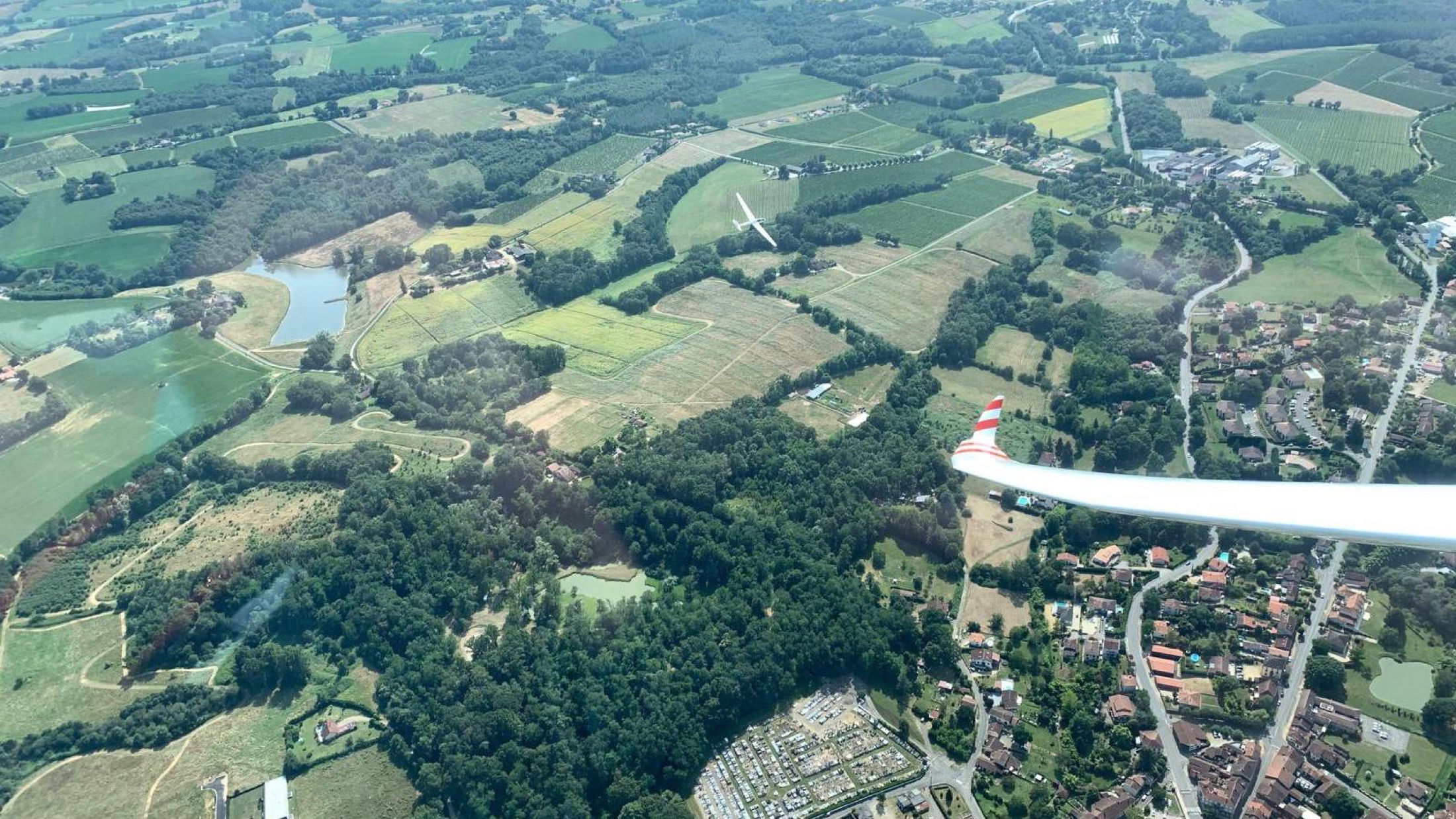
On a navigation flight, I passed another aircraft at close range (a vertical separation of about 150 ft and 30 m horizontally).
I saw it barely a second before we crossed; I think it saw me 3 seconds earlier. I was flying at 180 km/h and I estimate the aircraft (a low-wing) had a similar speed. Our closing speed was therefore about 100 m/s.
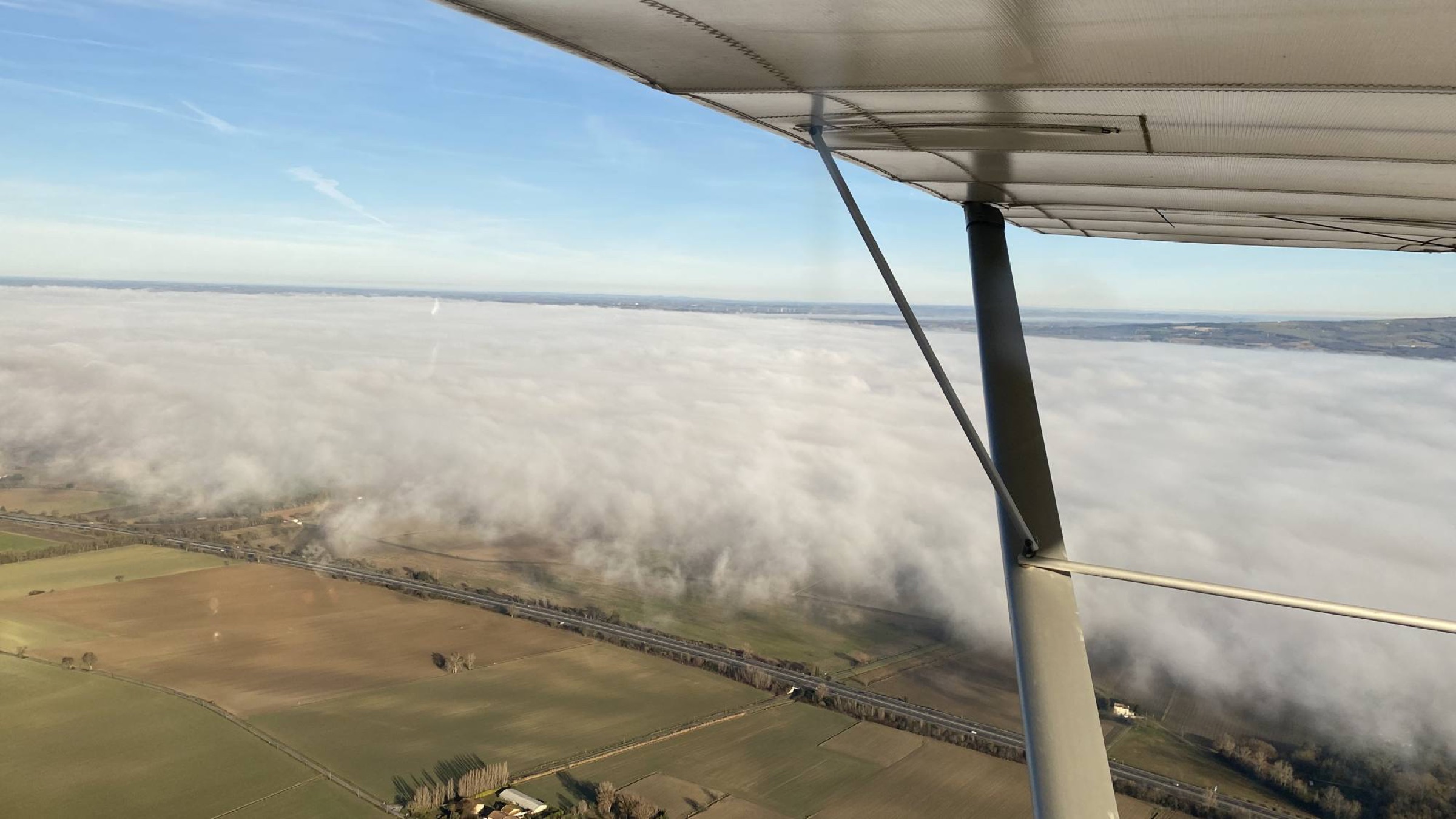
I was flying at 1800 ft QNH in class G, beneath a Toulouse TMA.
I was making a flight between Royan (LFCY) and the Spanish microlight airfield of Torroella de Montgri on a Sunday afternoon in fine weather under a VFR flight plan. I was in contact with the Toulouse SIV with a Mode S transponder operating. I also have an ADS-L system that receives transponders, FLARM, OGN, (etc…) and no aircraft was shown in the nearby sector.
The close encounter took place after 1 h 35 of flight, on a flight that lasted 3 h in total.
I was returning from the Mondial de l'ULM and had flown Belle Ile (LFEA) – Royan that morning (2 h 15 of flight).
The SIV controller, who was giving flight and traffic information, did not point out the traffic to me. After the crossing, I informed the controller of the close encounter, telling him I thought the yellow aircraft did not have an active transponder. The controller confirmed this and replied that he did not have the aircraft on his primary radar either.
A few moments later, an aircraft called on the radio frequency to say it had crossed paths with me, had made an avoidance manoeuvre and was on a local flight around Montauban. I recognised part of the callsign: this aircraft had been in contact with the SIV for about twenty minutes.
Pilot's comments
The lessons for me:
- "see and be seen" has its limits; it was my second 3-hour navigation of the day, I was not tired, but just before the close encounter, I had my head in the cockpit for 5 seconds to check my navigation (I was approaching a turning point).
- It is unrealistic to think I can keep a vigilant lookout outside 100% of the time on a long navigation flight.
- I trust the SIV and my ADS-L system, even though I know their limits.
- the other aircraft saw me earlier, but late
- It is good to contact the SIV, but if you do not have your transponder on, like the other aircraft, the controller has no idea of your position, and so cannot provide traffic information (you sometimes hear controllers inform an aircraft not on frequency that they have it on primary radar, but not here).
- The semicircular rule could ensure separation in VFR, but it applies only at higher altitude.
- In future, for my navigation flights, I will fly higher, even if it means requesting a transit through controlled zones C or D where a transponder is mandatory. That way, the SIV/Approach will have the position of all aircraft.