






The Analyst's analysis - BSV no.56
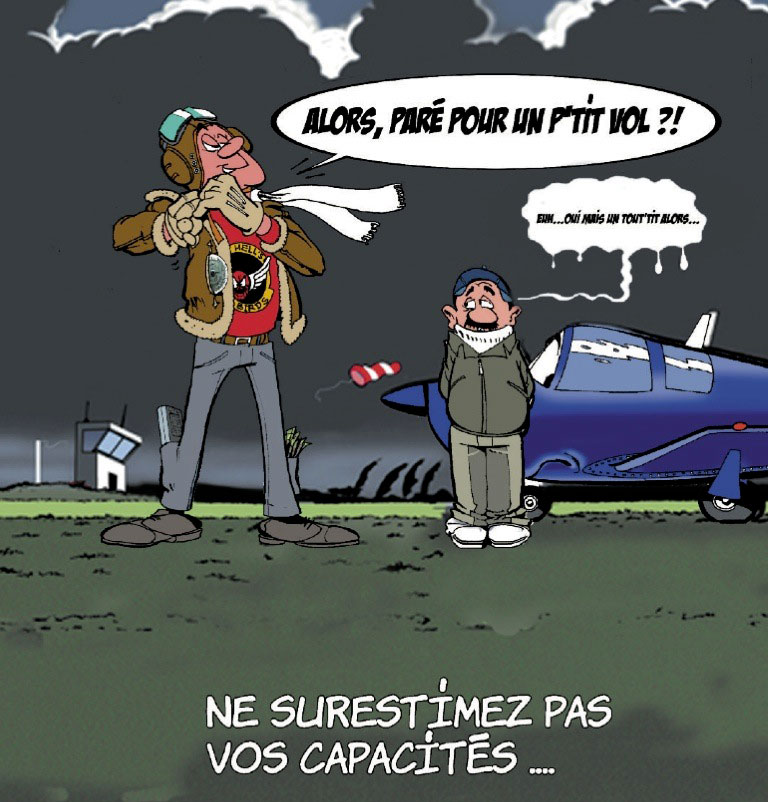 On 27 August 2016, in the late afternoon with favourable weather, a microlight pilot carried out engine tests on the runway.
Source/BEA/aero: Take-off during take-off roll tests, loss of control in flight, collision with the ground
After an acceleration phase, the microlight took off and after a few seconds of flight, “ground-looped”. The aircraft was destroyed, the pilot died.
No technical failure can be demonstrated on the aircraft. Aged 68, the pilot held, by equivalence from his basic “aeroplane” licence of 1990, a three-axis, weight-shift and paramotor microlight licence since January 1993.
As the regulations did not require it, no flight with an instructor validated these equivalences. A non-retroactive order of 4 May 2000 now limits this equivalence to the theory part alone.
This pilot's limited microlight experience did not allow him to manage the flight and he clearly showed overconfidence given his little knowledge of this machine.
Unshakeable self-confidence is not enough to guarantee the safety of a flight; we know that most accidents result from human failures. The first singularity of flying is the need to pay particular attention to the human factor, in short to the pilot's real technical ability to master the aircraft being used.
Here we see a problem of individual culture that is not in keeping with the standards of aviation. Indeed, reputed to have a strong temperament and to be self-assured, this pilot was unable to set aside this character trait and adopt an attitude marked by more humility and more in line with the rules of the air.
Each individual has their own personality, which results from their social background, their upbringing and their past experiences; all these characteristics are developed throughout a lifetime.
This raises again the delicate question of cultural factors in air sports; indeed, it could suggest that some cultural attitudes are less conducive to safety, in short that some individual behaviours are better than others for safety?
The pilot's psychological profile may explain the lack of judgement in the face of the challenge he set himself; driven by overconfidence, he was no longer aware of the enormous risk he was taking.
The FFPLUM's safety action consists precisely in changing behaviours so that they can fit into a safer context.
The REV (Return to Flying) programme, set up by the federation, which is aimed at all microlight pilots, makes it possible, by flying with an instructor, to erase the bad habits that inexorably build up over time, to better understand the particularities of your microlight, to retrain in complete safety, etc. In a few words, it is the guarantee of approaching your next flights in complete safety!
So, in this accident, conditioning by an instructor on a weight-shift microlight was needed and would certainly have avoided this tragedy.
Laurent Kerbrat
Flight Safety Analyst
Editorial
 Cheers!!!!
The festive season is over, with its feasts and indulgence of every kind. Now is the time to make good resolutions about healthy living, so that you can approach your next flight in the best possible shape.
Training Corner
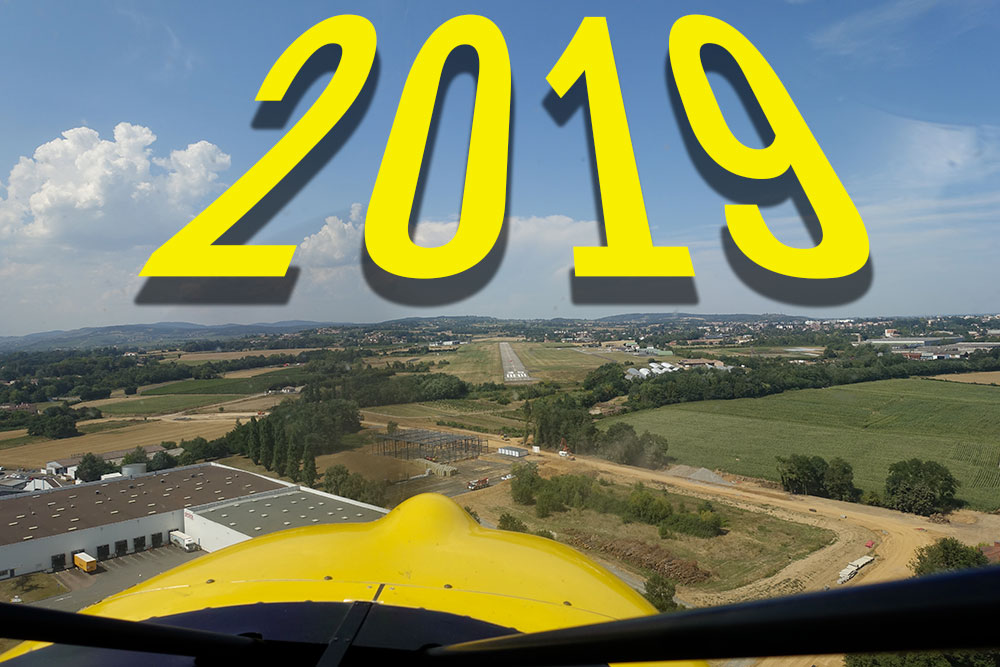 And my 2018 resolutions… how am I doing?
Remember: this year, I will take care not to let the administrative documents for my machine go out of date. This year, I will make a point of removing the cowling for the engine pre-flight. This year, I will no longer refuel in the hangar. This year, I will keep an eye on the age of my fuel, noting the date of my last fill-up in a logbook...
Safety in Figures
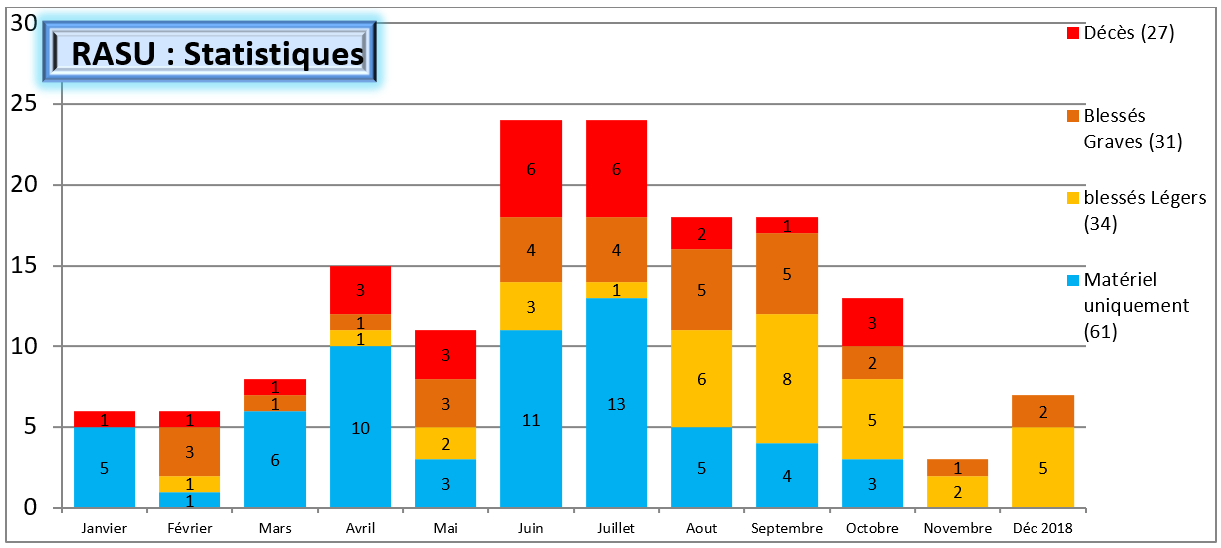 The table below summarises the accident statistics recorded from 1 January to the end of December 2018, classifying casualties by severity and distinguishing accidents involving only material damage. The second table shows accidents of microlights registered in France but which took place abroad and with foreign crews.
What about doing a REV? > video guide
A question about the REV programme? > see our dedicated FAQ









