The federation's file
The BIA, from A to Z
The Spirit of the BIA
The Aeronautical Introduction Certificate (BIA) is a qualification apart for National Education. It has no real equivalent. It stands at the junction of Education and the world of aviation and space; a bridge between passion and reason, knowledge and practice, professional and amateur, civil and military. Its long and prestigious history shows its value and interest. France is a great aeronautical country and the BIA is a wonderful vehicle of discovery that allows candidates to showcase their skills and knowledge with enthusiasm and rigour. The General Inspectorate of Engineering Science and Technology is fortunate to be in charge of this qualification for National Education. The BIA is run in full coordination with the Directorate General for Civil Aviation and the National Council of Aeronautical and Sports Federations.
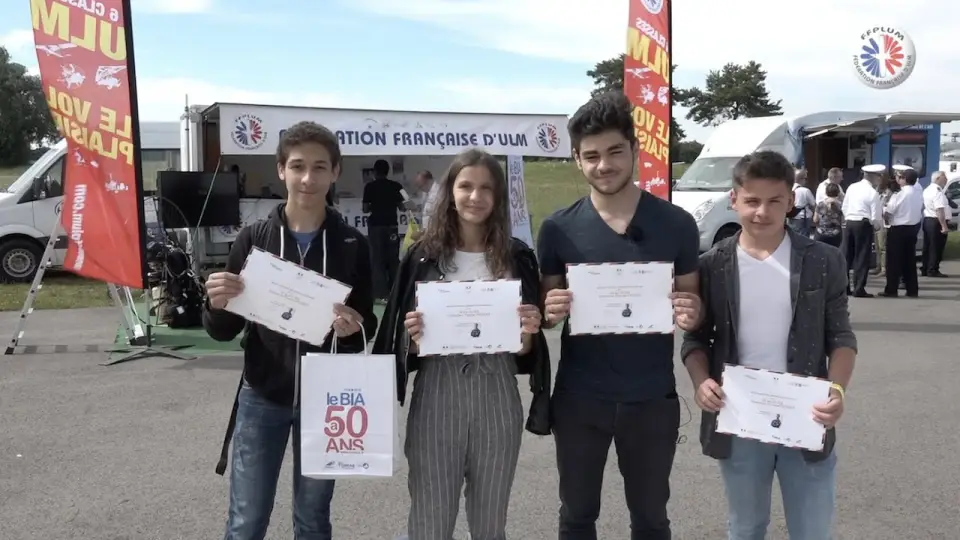
If you are a student and are interested in aeronautics, you can receive training for the BIA and get an introduction to microlighting.
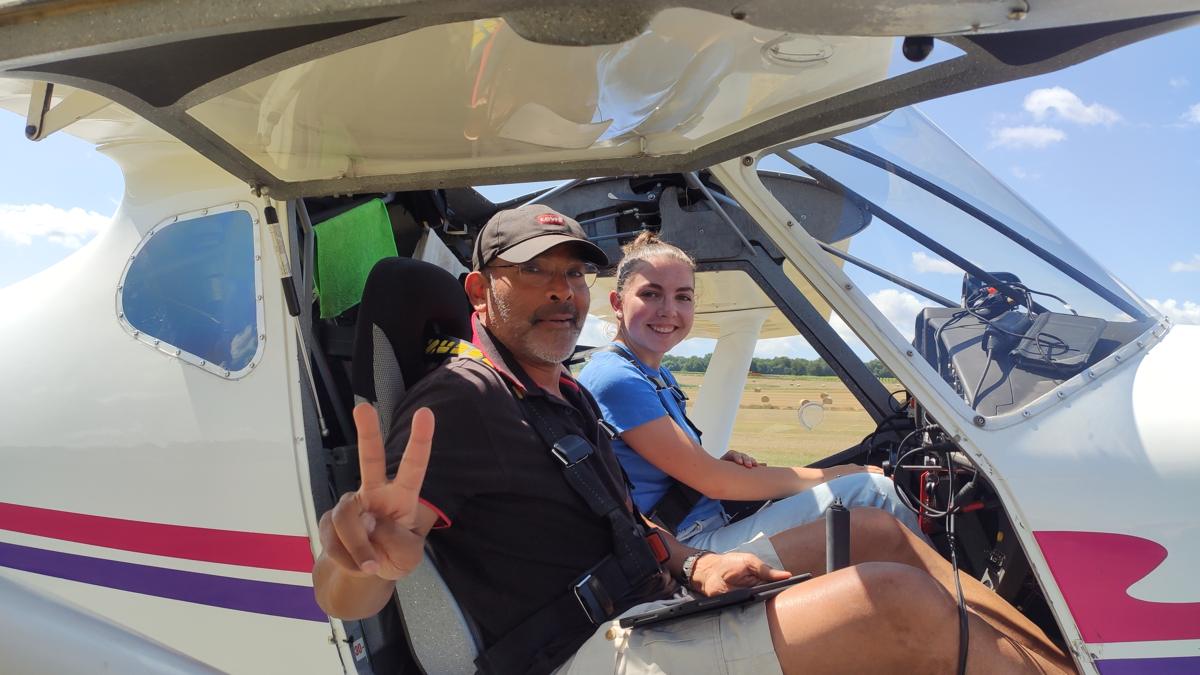
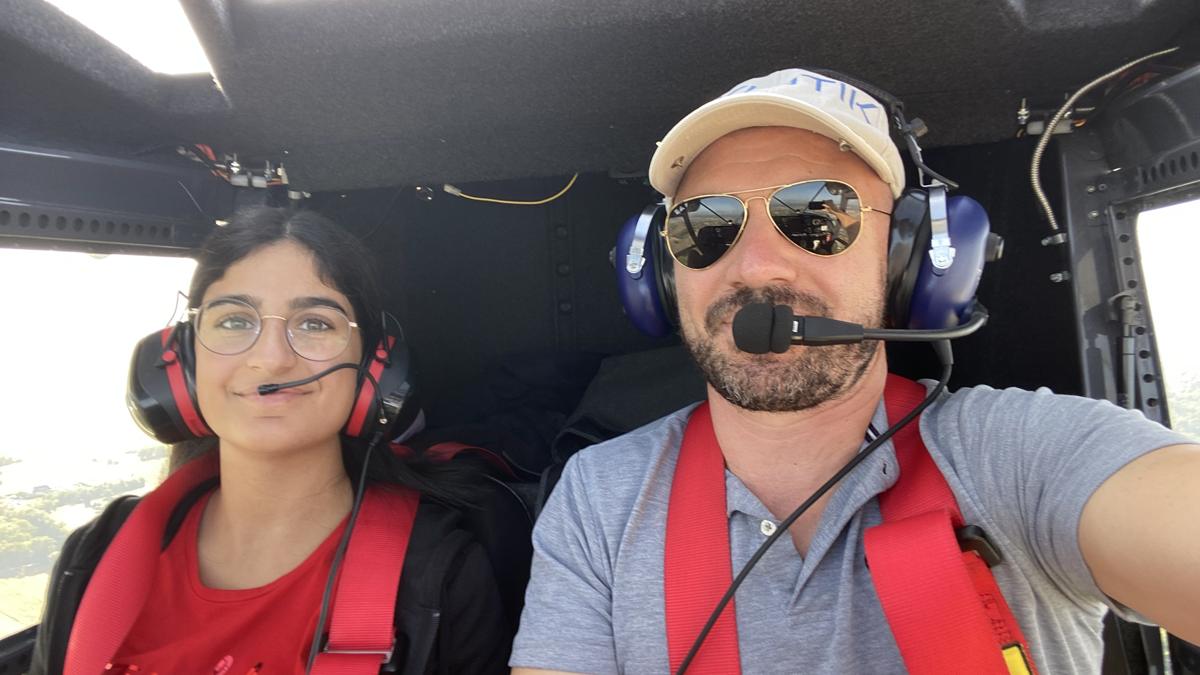
If you are a microlight instructor, you can give introductory flights to National Education students preparing for the BIA.
You can also take the CAEA in order to supervise National Education students and introduce them to your sport.
If you are a CAEA teacher and are preparing your students for the BIA, you can discover microlighting and introduce your students to it.
You want to prepare for the CAEA in order to teach the BIA in schools
To develop microlight flying, the FFPLUM offers its support for organising introductory flights.
A wide variety of aeronautical activities can be run within National Education.
The aim of the BIA website monbia.fr is to show the coherence of this introduction to the scientific and technical culture of aeronautics and space. May it serve everyone!
 |
 |
 |
For more information, go to monbia.fr
Reference texts
Syllabuses
Orders
B.O. Official Bulletin
Official Bulletin No. 11 of 12 March 2015
Agreements
Downloadable templates
YOU ARE A STUDENT
BIA training
The BIA (Aeronautical Introduction Certificate) is open to candidates aged at least 13 on the day of the exam.
The exam dates and the conditions for individual registration are set each year and published in the National Education official bulletin (generally a single session a year, around mid-May).
Teaching is coordinated by the CIRAS, which is also responsible for organising the exam. From the first term of the current school year, a training centre that has decided to prepare young people for the BIA informs the CIRAS of its intention and gives it a forecast of the number of candidates it wishes to put forward.
If you are interested in aeronautics, you can ask the head teacher of your school to take aeronautical training preparing for the BIA.
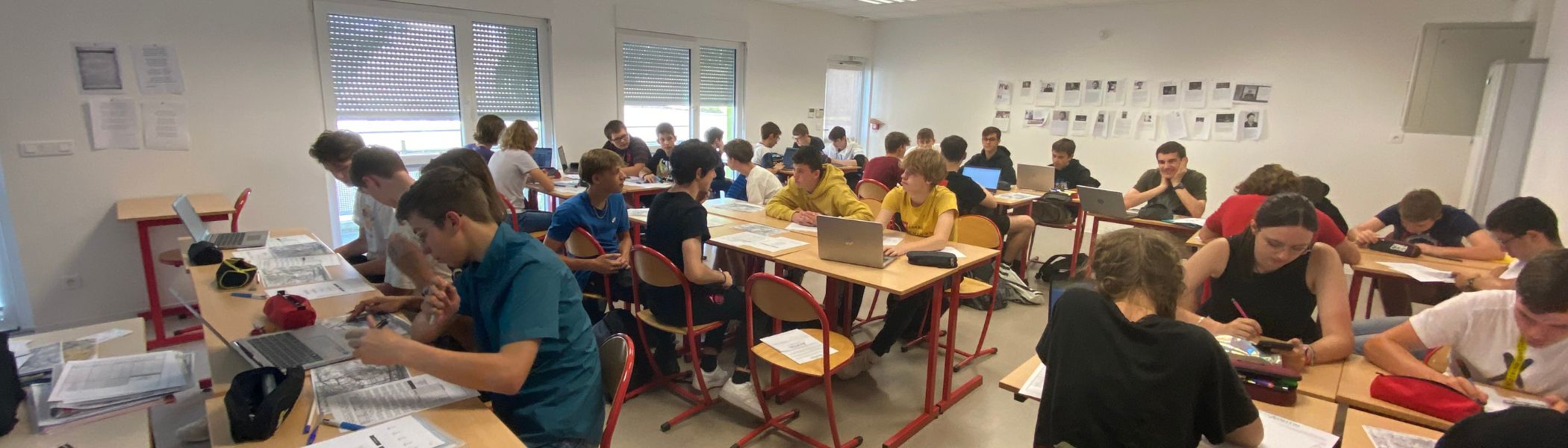
This preparation takes place in your free time. Lesson times vary from school to school, but on average they amount to 2 hours a week.
You will find the BIA exam syllabus in the annex.
You have three options for taking this training:
1. in your own school, if it is offered,
2. in a neighbouring school. To find the list of schools that train for the BIA, ask your head teacher or contact the CIRAS delegate (Regional Committee for Introduction to Aeronautics and Space) at your education authority (rectorat),
3. some microlight clubs can also prepare you for the BIA. Contact the federation, which will give you the contact details of the clubs in your region.
The teacher in charge of this training holds a specific qualification, the CAEA (Certificate of Aptitude for Aeronautical Teaching).
Microlight pilot certificate
The FFPLUM gives financial help to young people under 25 who obtain a microlight pilot certificate by paying them a grant. In addition, there is extra help for young people who hold the BIA. See the federation's website, Getting started / Youth grants page, for the amount and conditions.
YOU ARE A MICROLIGHT INSTRUCTOR
Theory training for the Aeronautical Introduction Certificate (BIA) can be given to young people aged thirteen to twenty-five. An introduction to real flight may take place, but an agreement must be made with the young person's school. In practice, you must submit a document setting out the whole organisation put in place and the responsibilities that fall to the instructor. The Introductory flights document describes the whole procedure to follow.
Microlight instructors who wish to give National Education students training towards the Aeronautical Introduction Certificate must contact the CIRAS delegate (Regional Committee for Introduction to Aeronautics and Space) at their education authority.
The Certificate of Aptitude for Aeronautical Teaching (CAEA) is a National Education qualification issued by the education authority where the applicant lives. It is not required for BIA training itself, only for supervising the training.
At least one CAEA holder supervises BIA training.
Exemptions from CAEA exams are provided for National Education teachers, instructors, coaches and sports educators. The CAEA is therefore obtained by equivalence for any National Education teacher who holds a title or qualification issued by Civil Aviation or by the Ministry for the City, Youth and Sport.
Microlight instructors who are not National Education teachers and who wish to obtain the Certificate of Aptitude for Aeronautical Teaching are exempt from the written eligibility test.
YOU ARE A CAEA TEACHER
If you wish to introduce your students to microlighting by offering them an introductory flight, all you need to do is draw up an agreement between your school and a club affiliated to the FFPLUM. The practical details are set out on the page entitled Introductory flights.
If you are a pilot, you can obtain substantial financial help to become a microlight instructor (see the federation's website).
Introductory flights
For National Education students preparing for the Aeronautical Introduction Certificate (BIA)
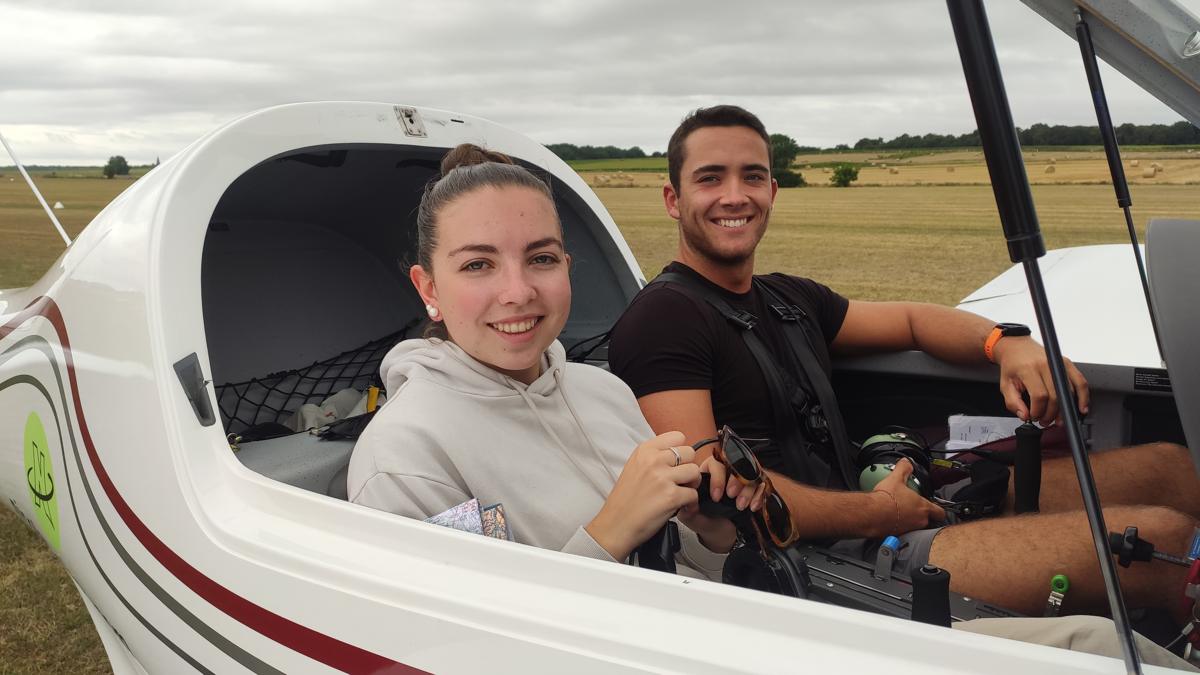
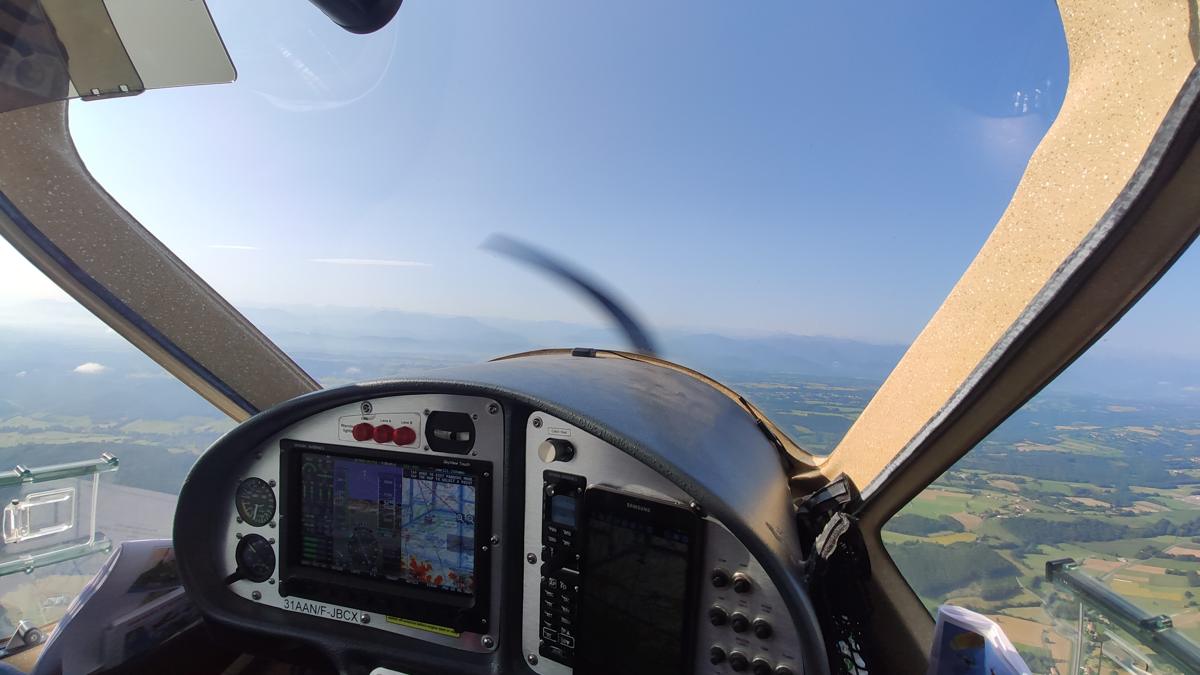
The FFPLUM offers students preparing for the BIA the chance to experience real flight in a microlight.
To do this, the school and a microlight club affiliated to our federation must sign an agreement with the FFPLUM.
The flights are carried out:
• Within a microlight club affiliated to the FFPLUM,
• By an instructor,
• In a microlight fitted with a parachute.
The microlight club must prepare a funding application file containing:
- A copy of the club-school agreement (Model agreement);
- A copy, front and back, of the pilot certificate of the instructor who will carry out the flights. They must be a member of the federation;
- A copy of their two-seat pilot liability insurance with IA and Passenger IA;
- The list of students with parental consent (see Educational Outing) if they are minors;
- A report on the day the young people were welcomed at the club (press article, photos, etc.).
The federation will send a grant for each student who has made an introductory microlight flight, on receipt of a photocopy of the invoice for the flights stating the number of young people involved.
The teacher in charge of BIA training is the coordinator of this activity. They must check that all the students have filled in the documents properly and must send them to the federation themselves at least one day before the flights begin (the instructor who will carry out the flight will probably ask to see the parental flight consent forms).
Students will thus have a practical complement, at a very affordable price, to the theory lessons preparing them for the BIA.
Those who wish to can go on and prepare for a microlight pilot certificate with their local microlight club. Here too, the federation will help them financially by offering a grant to young people under 25, as well as an additional grant to BIA holders.
We ask clubs to send us, before the end of March of the year, the list of registered students who can receive a grant for introductory flights under the usual partnership terms.
That way we will know in advance the amount of funds to set aside.
The list of requests will be passed by the federation to the regional committees for prior information and possible rebalancing.
Approval will be given to clubs by the end of March and flights can take place from the start of spring.
Insurance
Clubs and instructors are insured under "Two-seat Third-Party Liability" for damage caused to third parties, including passengers. Each instructor must be able to show their insurance certificate. Instructors are themselves insured under "Personal Accident" for their own bodily injury and under "Passenger Personal Accident".
Running aeronautical activities
Within the scope of their autonomy, the head of a school may authorise aeronautical and space teaching under the general ministerial and inter-ministerial regulations of National Education / Civil Aviation. They inform the CIRAS for its assessment, opinion and technical assistance.
Most commonly, these activities take place as extracurricular activities, or at least in addition to students' initial education, as a teaching aid.
Cultural activities, model flying, amateur aircraft building and notions about space may form part of this teaching in schools. What is learned in the theory course is validated, after an exam, by a qualification, the Aeronautical Introduction Certificate (BIA), defined by order.
The person in charge of training in schools and universities holds the Certificate of Aptitude for Aeronautical Teaching (CAEA) defined by order. They may call on people with the required aeronautical skills.
THE AERONAUTICAL INTRODUCTION CERTIFICATE (BIA)
It is open to candidates aged at least 13 on the day of the exam. The qualification is issued jointly by the two ministries (National Education / Civil Aviation).
The exam dates and the conditions for individual registration are set each year and published in the National Education official bulletin (generally a single session a year, around mid-May).
Teaching is coordinated by the CIRAS, which is also responsible for organising the exam. From the first term of the current school year, a training centre that has decided to prepare young people for the BIA informs the CIRAS of its intention and gives it a forecast of the number of candidates it wishes to put forward.
AERONAUTICAL ACTIVITIES PRACTISED
These include kites, model flying, aircraft building, BIA introductory flights and so on. These activities are not compulsory and fall within the scope of the Civil Aviation Code (air sports are prohibited in nursery and primary schools).
Particular attention must be paid to the conditions of supervision, transport, reception, risk cover (insurance, CAEA qualification and specialities, experience requirements, etc.) and the arrangements for funding the activity.
Students are accompanied to the sites as part of educational outings. Access to active areas (aerodromes, etc.) may only take place under the guidance of an authorised person.
PARTNERSHIPS
If the sporting activity (model flying, air experience flights, etc.) is entrusted to aeronautical partners, the same rules apply as for any activity organised by aeronautical associations and aerial work companies.
National Education cannot under any circumstances be held responsible in the event of an incident linked to an activity carried out within the framework of the association.
However, in the absence of an agreement between the association and the CIRAS, the activity is at the initiative of the organiser (a CAEA-holding teacher), who must make sure that the association and the people involved offer the regulatory and recommended guarantees appropriate to the nature of the activities. It is also up to them to provide for any special conditions that may be necessary, and to require parental consent after informing families of the conditions of liability in the event of an accident.
In all cases, it is desirable for these activities to take place under an agreement between the CIRAS or the school and the partner organisation.
The BIA syllabus
(Aeronautical Introduction Certificate)
Order of 19 February 2015, as amended – NOR MENE1500688A
The compulsory tests are written and marked out of 20. Their total duration is 2 h 30. The average mark required across all the tests is 10 out of 20. A mark of "0" is eliminatory for all tests except the optional test.
The subjects covered by these tests and their weighting are set out in the National Education Official Bulletin No. 11 of 12 March 2015.
Suggested reading
- BIA teaching sheets (FFA);
- Aeroplane pilot's manual;
- Microlight pilot's manual;
- Glider pilot's manual (Ed. CEPADUES);
- Introduction to aeronautics (Ed. CEPADUES);
- Others, and in particular publications by Météo France, the Air and Space Museum, CNES, etc.
The CAEA holder in charge
a) The Certificate of Aptitude for Aeronautical Teaching (CAEA)
The Certificate of Aptitude for Aeronautical Teaching (CAEA) is a qualification recognising the studies undertaken, in initial or continuing education, by students, teachers and professors wishing to take part in teaching in the field of aeronautics and space in schools and universities. Although the training covers a broad aeronautical and space field, and in particular that of certain sports certificates, it is not a pilot qualification or any other aeronautical title that exists elsewhere.
b) The status of the CAEA holder in charge
The CAEA is a general-education qualification of the second kind, at a cultural level of baccalauréat + 2. It is therefore not ranked in the inter-ministerial table of professional levels, but it represents the skills required of anyone in charge of an aeronautical activity in schools or universities (preparation for the BIA, cultural, scientific, technical and sporting activities such as model flying, rockets, aircraft building…)
c) Obligations of the CAEA educator working in a state school
These are the obligations common to all serving teaching staff:
- duty of secularism;
- duty of discretion;
- duty of supervision.
If the CAEA educator is an outside contributor to National Education, they work within the general framework for outside contributors, under the responsibility of a teacher (teacher, school welfare officer, head teacher)
Back to BIA home
Back to CAEA objective
The CAEA exam syllabus
(Certificate of Aptitude for Aeronautical Teaching)
Order of 19 February 2015 – NOR MENE1500690A
The Certificate of Aptitude for Aeronautical Teaching comprises a three-hour written eligibility test, marked anonymously, and an oral admission test.
Each of the two tests is marked from 0 to 20, in whole points. Only candidates who obtain a mark of 15 or more in the eligibility test may sit the oral admission test.
The oral admission test has two parts:
– First part: presentation of a teaching session preparing for the Aeronautical Introduction Certificate, based on a subject proposed by the panel (sixty minutes' preparation and thirty minutes' presentation). During this part, the candidate may use any personal documents, notes or materials;
– Second part (thirty minutes): discussion with the panel, which allows it to explore any points it considers useful. It also makes it possible to assess the candidate's ability to picture the diversity of working conditions and the obligations of a teacher in charge of training for the Aeronautical Introduction Certificate.
Each part of the oral test is marked from 0 to 20, in whole points. The mark obtained in the oral admission test is the average of the two marks obtained. A mark below 10 in either part of the oral test is eliminatory. Candidates who have passed the eligibility test and obtained an average of at least 10 in the oral admission test, without an eliminatory mark in either part, are declared admitted.
The subjects covered by these tests and their weighting are set out in the National Education Official Bulletin No. 11 of 12 March 2015.