Stall exercise, insufficient height ...
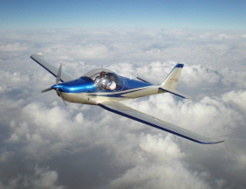 On 17 June 2017, at about 5 pm local time, a 3-axis Skyleader 200 microlight with a passenger took off for a local flight. It carried out 5 stall exercises at an approximate height of 1000 ft. The weather was favourable, with a wind of 320° - 350° at 10 to 15 kt and a temperature of 30°.
https://www.bea.aero/uploads/tx_elydbrapports/BEA2017-0346.pdf
During the last exercise, the right wing dropped and the aircraft entered a pronounced rotation to the right about the roll axis, with large pitch movements.
The Skyleader hit the ground in a steep nose-down attitude. The ballistic parachute was not used, and when the rescue services arrived both occupants were dead.
The owner of the microlight was a 66-year-old pilot with a valid SEP licence and an advanced aerobatics rating. He also held a microlight licence for three-axis, weight-shift and paramotor, and his total experience, as communicated by the authority (DSAC), was established at 620 flight hours.
The Skyview D1000 [Dynon Avionics] shows that the first 4 stalls were followed by a nose drop and a simultaneous nose-down input from the pilot with an increase in power. However, for the last stall there was no nose-down input, and roll commands opposite to the rotation were recorded.
The load factor reached 4 G, the undercarriage was retracted and the flap position remains undetermined.
A stall is characterised by a sudden drop in lift, caused by separation of a large part of the boundary layer on the upper surface, whatever the speed. This phenomenon is treacherous, because lift first increases as the angle of attack increases, then collapses abruptly when it reaches its maximum.
This collapse is not necessarily symmetrical because, depending on the aircraft and atmospheric conditions, the wing is in a random, disturbed flow where only the moving surfaces blown by the engine slipstream can still have an effect (fin, elevator).
Deliberately going beyond the maximum angle of attack requires, on the one hand, a good knowledge of what must absolutely not be done and, on the other, of the position of the flight controls needed to limit and/or recover from the onset of a spin.
The fact that the pilot counters the roll by natural reflex helps to aggravate the stall of the lower wing.
The recommended solution in this case is to put the stick in neutral and apply rudder opposite to the rotation while keeping the ailerons neutral. The height required for this kind of exercise must give a sufficient margin to counter the effect or to deploy the ballistic parachute.
It is accepted that the height lost in one turn of a spin, for light aviation, is between 120 and 400 ft per turn. The pull-out, once the rotation has stopped, requires between 500 and 1000 ft, so it is essential to allow yourself a height of 2500 ft before starting any stall exercise.
Repeating stalls with a passenger on board, the absence of nose-down input and the opposite aileron input all point to an optimism bias on the part of the pilot.
At low speeds, a dropping wing is countered with the rudder: this is the anti-spin effect of the rudder. Any aileron input opposite to the rotation aggravates the stall of the lower wing.