Engine failure exercise, without reconnaissance...
On 24 June 2018, in the Arvieux area (12), a pilot and his passenger took off in a Skyranger for a local flight. The weather is very good with a wind of 5 kt and a temperature of 22°, the microlight climbs to 3500 ft.
BEA2018-0394 Accident involving the Skyranger microlight registered 32GV on 24/06/2018 at Arvieux (12)
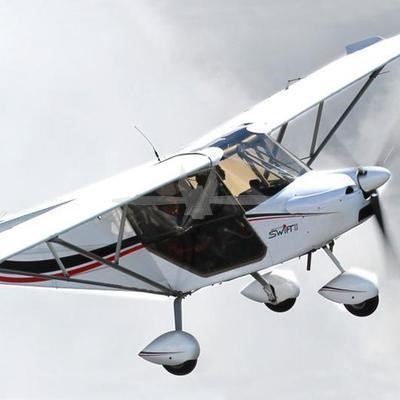 Shortly afterwards, analysis of the memory card of the Stratosmaster Enigma EFIS showed that the crew were apparently practising an engine failure in open country. The pilot chose a suitable landing area and began his descent with the engine at idle. The exercise was carried out down to a height above ground of about 30 ft; during the go-around, at about 60 ft above ground, the Skyranger hit the cable of a 225.000 volt high-voltage line with its nose wheel.
The aircraft came to rest upside down, a propeller blade was broken, and the 2 occupants died.
The pilot was aged 65 and held a valid microlight certificate from 1994. A former instructor, he had chosen not to renew his rating, and his total experience is not known. The passenger, aged 65, also held a valid microlight certificate and a PPL licence with a valid aeroplane (SEP) rating.
This accident highlights the issue of practising engine failures in open country, with which recreational pilots are generally not familiar. Indeed, reconnoitring a landing area in open country for practice can present many pitfalls. Let us remember that in certified aviation these exercises must end at a defined height, but as we all know, there is often a natural tendency, drawn by the success of the exercise, to finish lower.
This principle of practical reconnaissance of a landing area is not really taught to pilots of 3-axis aircraft, though it is more so for helicopter pilots. As height above ground decreases, the terrain stands out and the ground overflown reveals itself in a form that cannot be seen from higher up. Many traps can hide in the relief and vegetation, chiefly wires and other thin obstacles but also antennas of all kinds.
Very low flying cannot be improvised!
Depending on the contrast at the time and the position of poles that may be embedded in the vegetation, a low-voltage line (3 wires), or even a high-voltage line in hilly regions, can be very difficult to spot. In the engine failure exercise in open country, a form of tunnel vision can set in because of the obvious concentration needed to succeed in the exercise and reach the chosen touchdown point.
Without prior reconnaissance, it is hard to detect thin obstacles, absorbed as we are by the success of the exercise and the touchdown point.
Choose a training area in open country, sufficiently far from property and people, and make one or more passes overhead to check that the chosen area is safe.
- Estimate the wind strength and direction (observations on the ground or the prevailing winds of the day).
- Assess the terrain (flat or sloping).
- Look for dangerous obstacles if vegetation could hide them (wires, poles and power lines).
- Choose the safest approach axis (clear escape route), avoiding the sun in your eyes.
If there is the slightest doubt, abstain and/or choose a more suitable training area…
Happy flying!