Flutter, loss of control in aerobatics…
On 14 May 2017 at Villefranche-de-Rouergue airfield, the pilot of a "Volsau 01" three-axis microlight takes off at about 09:40.
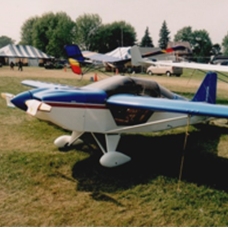 This microlight was built by its owner-pilot from plans for the RANS S-10 SAKOTA microlight, which is known to be suitable for aerobatics (+4 / -2g at maximum weight). Surprisingly, two wing extensions of about 60 cm fitted with winglets had been added to this aircraft. They were slotted onto the wing tips and screwed to the last rib of each half-wing. These aerodynamic additions are, however, not shown on the construction plans! It is therefore impossible to determine when this modification was made.
The case is all the more troubling because the extensions were not mentioned when the identification file was submitted! Adding extensions at the wing tips increases the wing area by about 20%. The aspect ratio of the wing is significantly changed, thereby exposing it to aeroelastic phenomena such as flutter. The total increase in lift is then 20% for each half-wing, the point of application of the forces is shifted, and this inevitably affects the overall aerodynamic balance, which is altered by the addition.
The microlight made a near-vertical climb after take-off, with a reversal and a return to level flight. According to a witness, this was followed by a roll onto its back with a recovery from inverted flight. The pilot then immediately began a loop! According to the same witness, who also flies aerobatics, the last part of the loop was flown at insufficient height; he heard the engine running at high rpm throughout the descent and, at the end of the trajectory, both wings of the aircraft "flapped " making a noise.
At full power, the microlight hit the ground at an angle of 45°, the aircraft was destroyed and the pilot died. Aged 71, he held a three-axis microlight certificate and a PPL (A) private pilot licence that had lapsed in 2012. Basic aerobatics aptitude is recorded in 2002 and advanced aerobatics in 2006. His total experience on aeroplanes is estimated at 505 flight hours. It was not possible to determine his number of flight hours on microlights. According to witnesses, the pilot regularly flew aerobatics in his microlight at Villefranche-de-Rouergue aerodrome.
Note:
The aerodynamic modification of the wing through the pilot's addition of wing extensions very probably favoured the development of an aeroelastic phenomenon during an aerobatic manoeuvre at high load factor and high speed. When the speed of the airflow around a wing increases significantly, the frequency of torsional movements decreases while that of bending movements increases. Divergent "flutter" is then generated and can transmit spurious oscillations to the flight controls, making control of the flight path highly unpredictable.
When designing an aircraft, even a microlight, the manufacturer does everything possible to push back aeroelastic coupling, and hence the aircraft's critical speed, mainly through wing tips designed to limit aerodynamic resonance. Remember that any change to the description of the aircraft counts as a "major modification", which requires the microlight to be checked to ensure that it still meets the technical requirements applicable to microlights.
Any aerodynamic change to the aircraft's description must be handled as a major modification; failing that, the risk taken can be considerable.
ULM Info No 109 page 18 "Insurance questions"
<< You should know that all aviation insurance contracts (whichever insurer) stipulate as a basic condition that the aircraft must always be operated in accordance with the regulations, with the titles, certificates, licences and ratings required for the flights undertaken.
It must also be operated within the flight envelope and in accordance with the manufacturer's manual.
Remember too that while the manufacturer's recommendations (service bulletins) are optional, airworthiness directives are mandatory!
Also, except in cases of force majeure, knowingly and deliberately operating your machine in breach of the rules or in a non-compliant condition amounts to taking a risk on the day of a claim. >>
Happy flying!