Mountain flying: specific knowledge required
Preamble:
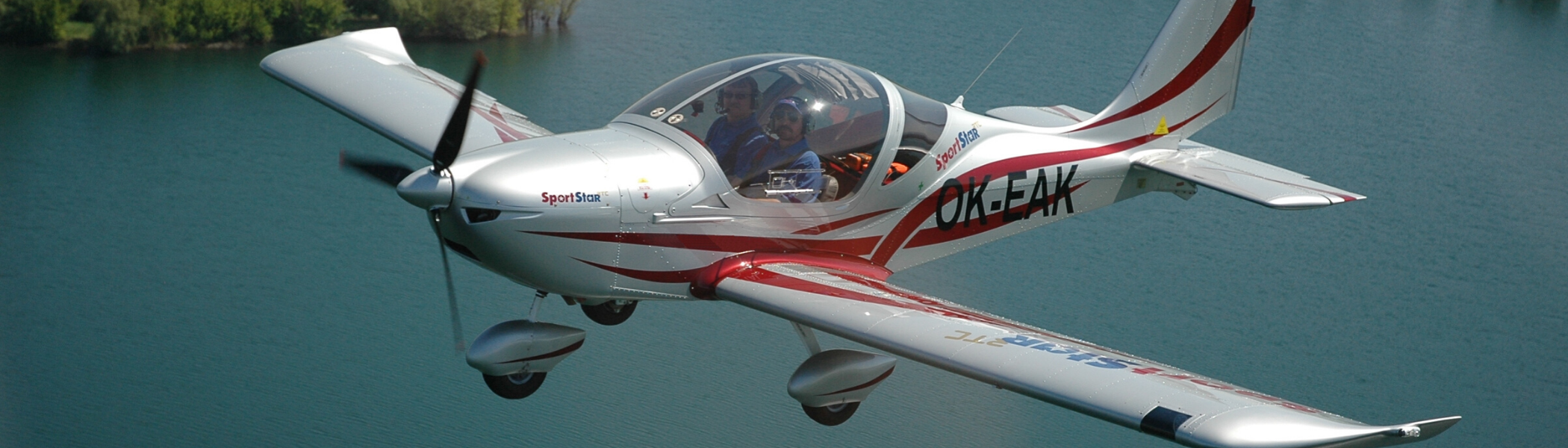
The aircraft involved in the accident was fitted with a FLARM device, which made it possible to extract the flight parameters. The Evektor pilot was travelling from Eshott aerodrome in the United Kingdom to the island of Malta with three other colleagues.
The day before the accident, at Gap Tallard, a briefing was held on the day's weather conditions and the departure and arrival procedures for Barcelonnette aerodrome. Some practical tips for mountain flying were also given: fly on the right in valleys, watch out for cables and for the sun in your eyes, and so on. A French pilot accompanied them in an RV4.
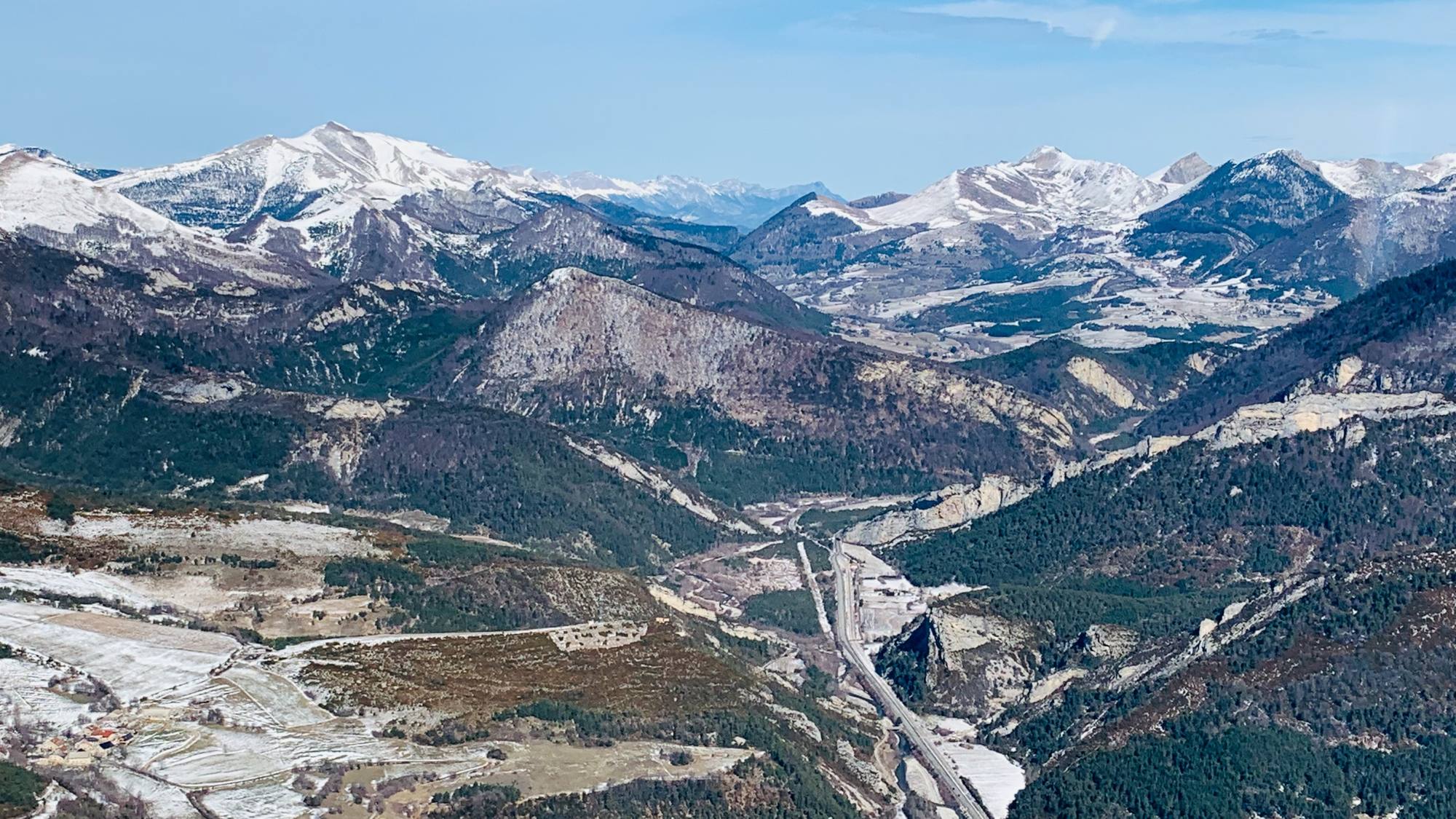
The pilots took off at 09:30 from Barcelonnette, bound for Castelnuovo Don Bosco. Over the village of Larche (04), the pilots circled to reach the altitude of 7000 ft set in the briefing for crossing the Larche pass. The pilot of another microlight entered a valley east of Larche first, followed by the other three aircraft.
Thirty seconds later, the pilots realised they would not clear the terrain ahead of them.
The RV4 pilot, who was accompanying them and flying higher, told them several times that they had taken the wrong valley!!!
In chronological order:
Two pilots managed to turn back.
A third, judging his height above ground too low, decided to make a forced landing; the aeroplane flipped over on impact and the pilot got out unhurt.
The fourth pilot, the Evektor pilot, who had witnessed his colleague's "forced" landing, went into a spin and also hit the ground, while making a half-turn in a "tight" turn. No radio message was heard. The microlight was destroyed, killing the pilot and his passenger.
The Evektor pilot, who had held a PPL(A) aeroplane private pilot licence since 2009, had about 150 flight hours. On the day of the accident the weather conditions were good, the sky was clear, and there was no wind or turbulence.
The pilot's limited experience, combined with the stress caused by his colleague's "emergency landing", probably contributed to the lack of judgement during the turn-back.
The absence of "mountain" training and the slope effect led to a decay in airspeed, a speed that was no longer compatible with a steep bank angle of the aircraft during the turn-back.
The navigation error led the pilots into a valley whose slope was not compatible with the aircraft's performance, and their inexperience led to a decision to turn back that came too late to be made safely.
Epilogue.
It must be acknowledged that the joint preparation briefing for this crossing, and all the electronic aids available, were not enough to protect the pilots from a collective navigation error and a serious misjudgement of the gradient of the valley floor they entered.
Although essential, a briefing with an instructor is not compulsory, in microlights as in aeroplanes, as long as you are not landing on a "mountain landing strip" (altisurface)!
Mountain flying nevertheless requires specific knowledge and techniques, with which it is important to become familiar so that you can fly in complete safety. Taking the wrong valley is a common mistake in the mountains!
Contributing factors:
- Limited pilot experience.
- Possible stress after witnessing a colleague's accident during an emergency landing.
- No stall warning device on the microlight.
- Pilot not familiar with the slope effect in the mountains.
- Navigation error not detected despite the electronic aids.
- Lack of mountain flying experience.
Happy flying!