






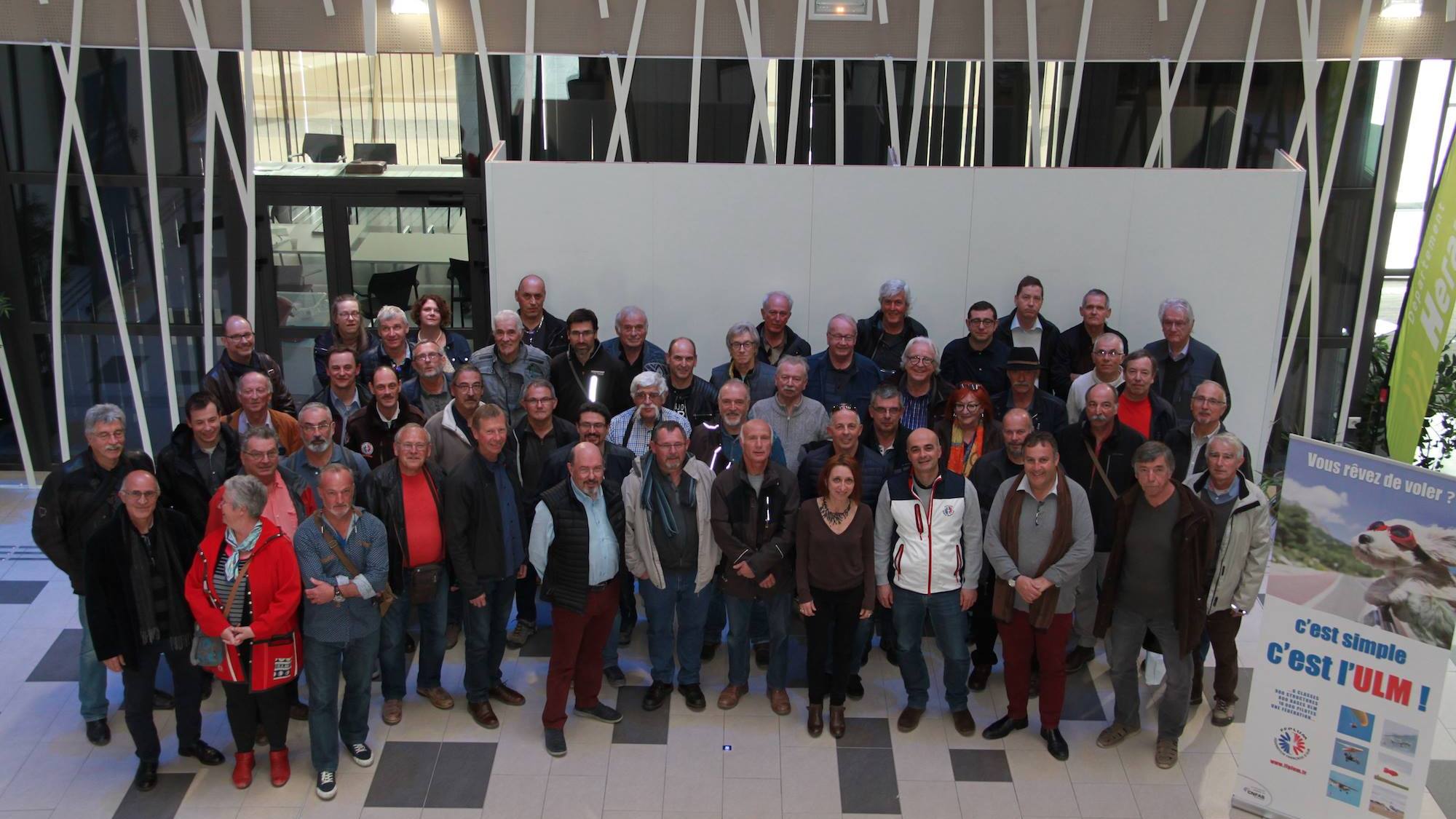
Générations ULM+ Term of office 2021 - 2025
Générations ULM+ 2021-2025
It is a team rich in diverse skills, made up of experienced and new elected members who share the desire to act together in everyone's interest, defending the values of a microlighting that is simple, light, diverse, responsible and accessible to all.
The role of a federation's elected officials is to work around a collective project that has been clearly identified, to do everything internally so that the Federation serves its pilot members and student pilots, club presidents, heads of clubs and schools and instructors, and to do everything externally so that the Federation is a credible interlocutor and a reliable partner.
Over the past four years, most of the objectives set at the previous term have been achieved. The fundamentals are sound (growth in the number of members, growth in the number of clubs and schools, fewer accidents, financial independence). Those who have had the chance to be closely involved in federal life know that a great deal of work has been done on behalf of all pilots.
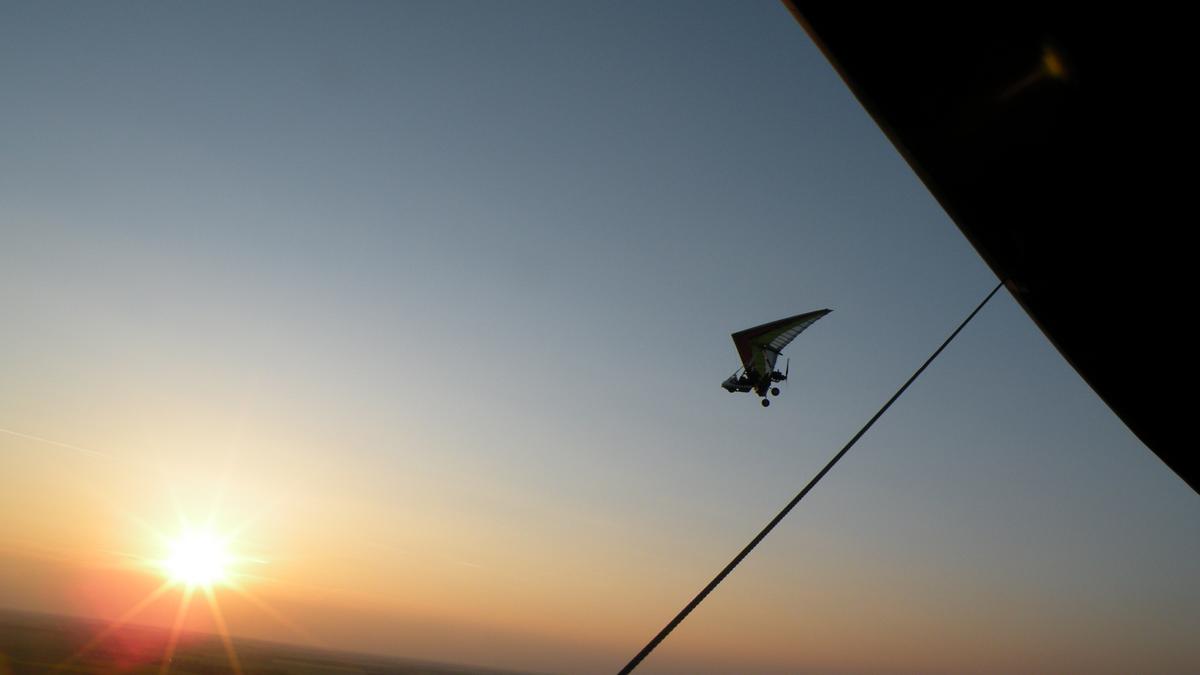
We must sustain and step up the objectives set, bringing in fresh energy and guaranteeing, for the years to come, the stable and solid framework of a central federation, at a time when the aeronautical world is in the middle of a crisis. In a context where the demands of sustainable development affect all our behaviour, microlighting is the activity best placed to respond in an innovative, simple and accessible way to our passion for flight and freedom.
The Générations ULM + team proposes to act in the following areas:
Extract from the 2021-2025 term programme
REGULATIONS
Free and responsible.
- Maintain the current declaratory system and the unity of the six classes as set out in the latest version of the microlight regulations (July 2019), obtained without any new regulatory constraint.
- Defend and promote what has been the DNA of microlighting for 40 years: neither aeroplane with the burdens of its regulations, nor free flying with the risk of the sport fragmenting; this system makes innovation possible and guarantees the greatest freedoms for powered flight, relying on the responsibility of pilots.
- Simplify the regulatory framework as far as possible, in particular making administrative procedures easier for manufacturers and importers, and allowing a lighter procedure for Part 103 type machines (very light single-seaters: 115 kg maximum empty mass, minimum speed 45 km/h…).
- Encourage exchanges and bridges with other aeronautical activities (aeroplane, glider, free flying, balloon, helicopter, amateur building) within the CNFAS or through bilateral relations, while maintaining the identity and specificity of the French microlight regulations, at the risk of unbalancing the whole.
INTERNATIONAL
Promote and maintain our regulatory system internationally.
- Recognise that microlight regulations, or their equivalents around the world, have been a matter of national competence from the start; any attempt at harmonisation has the effect of making the current French regulations heavier, when they are the freest in Europe and the envy of many countries.
- Encourage exchanges and mutual recognition between countries to allow free movement; this is the basis on which microlighting has rested for 40 years; the Mondial de l'ULM at Blois must again become the place for this exchange, extended to all microlight classes and for all budgets.
- Be, through the EMF, a preferred interlocutor of EASA so that the strengths of the declaratory system can be built in upstream; maintain this policy within the EMF, which France has presided over again since 2019.
MEDICAL
- Maintain the current system: initial no-contraindication examination and completion of the QS-Sport multi-sport health questionnaire.
- Oppose all forms of aeroplane-type medical examination that have not demonstrated their relevance and necessity for microlight activity.
- Respond, through the medical committee, to specific issues.
- Raise awareness of risky practices, run a prevention policy and help clubs and schools in the context of gatherings.
AIRSPACE
Preserving our space of freedom
- Maintain the freedom to fly and fight the trend towards ever more complex civil and military airspace by acting within the CNFAS airspace group, through FFPLUM representatives on the CCRAGALS in every region.
- Speed up the development of shared mapping tools for real-time airspace management, accessible to all pilots.
- Be represented on behalf of FFPLUM, in liaison with the CNFAS, on all the discipline bodies.
- Fight the haphazard siting of wind turbines by maintaining minimum safety distances from airfields used for aviation.
- Encourage and promote the development of new collision-prevention technologies: simple, open, inexpensive and non-mandatory, favouring interoperability and the necessary compatibility between systems whatever the type of aircraft, in a non-certified framework.
- Continue developing partnerships with environmental protection bodies (see the Bearded Vulture agreement with the national parks and protection leagues in 2020).
TRAINING
Ensuring the training pathway of microlight pilots
- New syllabus with modernised and simplified programme content, adapted to the different classes for the microlight pilot (summer 2021).
- Production of a new federal manual during the term.
- Delegation of the microlight theory exam, which can be taken directly in microlight clubs and schools (end of 2021).
- ENAC Human Factors course for student instructors or instructors, subject to places (about 25 funded places per year).
- Support for club instructors, support for club instructor refresher training.
- Make instructor training more accessible for classes 1 (paramotor) and 2 (weight-shift).
- Introduction of federal coaching: under the responsibility of the Ministry of Sport.
- Creation of a federal Sports Centre at Blois serving pilots and instructors.
- Four-year extension of the Return to Flying action: voluntary return to flying with an instructor and a Federation grant of 60 euros (1 750 REVs in 2020).
- Maintaining special federal third-party liability insurance for instructors.
- Creation of a second post at the National Technical Directorate devoted to training in connection with sport.
- Continue the specific training within the current regulations and the development of voluntary mountain and seaplane flying, with the federal centres of expertise: the National Mountain Flying Division and the National Seaplane Flying Division and their networks of accredited instructors.
- Finalise with the DGAC the entry of the microlight instructor title in the RNCP, the national register of professional qualifications.
- Finalise with the Ministry of Sport the update of the DEJEPS diploma.
SAFETY
Communicate and raise awareness
- Statistics, information, communication campaign.
- Network of flight safety officers working with the Regional Committees.
- Grant for rescue parachutes for club aircraft, grant for repacking rescue parachutes (2018).
- Ongoing updating of the Microlight Pilot Safety Memo (see the 2021 edition)
- Continued collaboration with the BEA on every accident; leads for each class; training through a microlight module.
- Collaboration with institutional bodies such as GTA, the Armed Forces, Rescue services… and leads on safety topics.
- Safety forums within the Regional Committees.
- Production and promotion of teaching materials, tutorials and guides.
CLUB LIFE
At the heart of practice
- Strengthen support for clubs (health situation, climate incident, flying accident, etc.).
- Development of a federal smartphone-type app for taking out a licence and insurance, information, club locations and flight preparation, linked with the federal BASULM app.
- Make it easier for clubs to acquire simple aircraft and support them in doing so, to allow economical and accessible flying.
- Support club management teams from affiliation onwards and in their development projects, together with the Regional Committees.
- Inclusion of club and officer third-party liability insurance paid by FFPLUM for affiliated clubs and schools. Coverage of air event insurance for clubs organising events.
- Help officials with their role, and with running and promoting their work within clubs (volunteer guide).
- Help officials to formalise their club project in line with the CRULMs and the Federation.
- Support clubs in applying for grants or calls for projects offered by the ANS and the bodies promoting sport development.
- Strengthen the Regional Committees' role as a local interface for club development, notably in the context of the introduction of the ANS (Agence Nationale du Sport).
- Continue to support the CRULMs in structuring themselves to carry out their mission.
- Modernisation of the headquarters to welcome people better, simplify procedures and be closer to members.
- Staff training to better support and help members with their expectations and services.
- Tour ULM: mobilise clubs, volunteers and partners in a major project open to all, with safe educational supervision, to discover other sites and airfields.
- Encourage and support regional rally and gathering initiatives launched by clubs and Regional Committees.
- Continue to welcome young trainees.
- Step up information to our flyers about eco-responsible flying, protecting the environment with mutual respect between leisure activities.
- Promote the sustainable nature and protection of our airfields, which are sanctuary spaces for maintaining biodiversity, compatible with Natura 2000.
INSURANCE
- Guarantee a level of cover that is ever better suited to our sport and to the realities on the ground.
- Strengthen the Federation's independence and its service to members across all insurance products.
AIRFIELDS
Everything starts from the ground
- Defence of airfields through CNFAS action or directly with the Federation (microlight base).
- Acquisition of federal airfields.
- Continued development of the BASULM app.
- Development, within the ULM+ app, of a simple and practical mapping application.
- Continued equipping of bases with safety kits (runway cones and windsock).
SPORT AND SPORTING CULTURE
The term, modelled on the Olympiads, will be special this time with the award of the PARIS 2024 GAMES. The Federation's Sport Division will take an active part, in liaison with the CNFAS (*) and the CNOSF (*), in this world sporting event. As the objectives of the sporting strands of the GÉNÉRATIONS ULM 2017 programme have been achieved, they should be consolidated and taken to a higher level, always aiming for excellence.
The major strands of the Sport Division's new term will be:
- Fully develop and promote access to competitive flying in the regions: sporting events held in as many regions as possible.
- Nurture our pool of competitors and bring in new talent, notably from regional competitions and French championships.
- Energise our French collective and select the best pilots for the French Teams (Classic paramotor, slalom, and Microlights).
- Promote and showcase record attempts and successes with new criteria for energy performance and an even greater reduction in carbon impact across all our microlight classes.
- Be a key player within the International Federation (FAI/CIMA).
- Organise the Microlights World Championships (class 2,3,4) in 2022.
- Organise the Paramotor Slalom World Championships in 2023.
- Take part in setting up the federal sports centre at Blois.
- Take part in building a club culture to achieve a better sporting culture.
*CNFAS > National Council of Aeronautical and Sports Federations
*CNOSF > French National Olympic and Sports Committee
YOUNG PILOTS
- Continuation of the programme of support for young people (under 25) + BIA grant > 400 euros and €500 (grants that were increased during the previous term and are due for adjustment).
- Continuation of the free first licence action (+ 400 actual licences in three years).
- Continuation of the Youth Passport action introduced in 2020, which, together with the Regional Committees, lets a young person try 3 of the 6 microlight classes to better understand the diversity of the different types of flying.
- As part of the partnership with the French Navy, setting up two sea/air classes (10 young people) so that young members can discover both naval careers and microlight flying.
- Continuation of the Dominique Méreuze prize.
- Participation of young people in the Tour ULM.
- Running the Youth Division set up in the previous term.
- Make it easier for young people to take leadership positions in the microlight movement's bodies, and promote this.
WOMEN
- Continuation of the free first licence action.
- Make it easier for women to take leadership positions in all the microlight movement's bodies, and promote this.
- Strengthen, promote and raise the profile of the running of the “Flying as a Woman” Division.
- Strengthen and promote the support scheme for women instructors.
- Improve the welcome for women flyers in clubs and OBLs.
PARAMOTOR
- Continue the process of simplifying the paramotor regulations with the DGAC (Part 103 type).
- Make it easier to set up and create paramotor airfields by adapting specific regulations for single-seat foot-launched and trike aircraft.
- Take account of the specificity of paramotors in the Microlight Theory exam.
- Introduce simplified anti-collision recognition systems for paramotors.
- Develop large paramotor gatherings, at least one per administrative region.
- Encourage the development of very quiet electric and thermal engines.
- Develop the Paramotor village at the Mondial in Blois.
- Take part in preparing the organisation of a Paramotor world championship.
- Continue to defend the French microlight spirit at CIMA (international federation) meetings.
- Welcome other paramotor pilots to run and develop the Paramotor Division, and prepare a future leader for 2025.
ACCESSIBLE FLYING
The policy pursued by the “Vol Handi” Division follows on from initiatives taken for more than 20 years by FFPLUM under “adapted flying” to enable people with disabilities to discover and practise microlighting. It complies with the objectives set by the Ministry of Sport, which commits sports federations to organise the welcome and participation of people with disabilities in a “controlled and sustainable” framework. This inclusive policy thus contributes to the process of integration and social cohesion for groups far removed from sport.
This commitment, which relies on the Regional Committees, is broken down into several lines of action:
- Map existing practices across the country and help clubs to structure their offer so that disabled people can fly with greater independence.
- Communicate internally about individual or collective actions to raise their profile and spark new initiatives.
- Promote “Vol Handi” flying extended to other classes, in particular paramotors, and to other forms of disability, notably sensory.
- Build a network of flyers in order to pool, with the help of the CNFTE, the specific resources used within clubs and schools.
- Make known FFPLUM's work to the bodies in charge of disabled people (local authorities, associations, federations, etc.).
MAINTENANCE AND TESTING (CNFTE)
- Develop a network of accredited microlight maintenance workshops drawing on the CNFTE's expertise, and, through this network, continue pilot training through first-level maintenance courses.
- Draw on the CNFTE's skills and technical resources to test and trial new engines and onboard equipment.
- Set up at Blois, with the CNFTE's help, a permanent microlight maintenance training centre.
- Communicate about the modern, low-nuisance and economical nature of our engines, and about the constant evolution of microlights by manufacturers, with aircraft that have become particularly quiet.
- Encourage experiments with low-carbon engines (electric, hybrid, hydrogen, biofuels), made easier by the flexibility of the declarative system under microlight regulations.
- Production and promotion of teaching materials: tutorials and guides.
MONDIAL DE L'ULM AND THE FEDERAL SPORTS CENTRE IN BLOIS
- Each year the federation organises the Mondial de l’ULM in Blois: an international show bringing together every kind of microlight flying, with the usual exhibitors and new ones, held over three days, with exhibitors' flying demonstrations, a flying display on Saturday, fly-in arrivals with the chance to camp under your wing, a second-hand market, a paramotor village, entertainment, new catering…
- Creation of the Federal Sports Centre in Blois, bringing together the federation's expertise in sport, training, mechanics and innovation, with a museum dimension.
DIGITAL DIVISION
- Creation and development of the FFPLUM app.
- Keeping the federation's digital tools in working order (updates, security, optimisation, etc.).
- Digitalisation of federation procedures (accessible, simple and fast).
- Better handling of member requests (ticketing).
- Improvement of the FFPLUM e-shop.
- Creation and development of the digital tools for the delegated microlight theory exam, "Exam ULM" (session scheduling, and candidate and training centre areas).
- Improvement and optimisation of administrative procedures (secure automation).
- Simpler administration of current and future networks (Blois and others).
- Digital management and administration of the Mondial de l’ULM.
This programme is ambitious and full, and it is not exhaustive. It calls for committed elected members with a sense of the collective, working with everyone who wishes to join in these goals. This cohesion also allows us to react effectively in conditions that are sometimes sudden and unforeseen, as we have done for the past year.









