The back of the power curve, a stage you cannot avoid
Preamble:
A large proportion of fatal accidents are very often linked to a loss of control in the phases close to the ground. Particularly in light aviation, the causes of these accidents are a lack of regular practice, sometimes with a long break from flying, and also an imperfect knowledge of the back of the power curve.
Losses of control at low height are generally fatal! It is therefore strongly recommended, after a marked period of inactivity, to refresh both your knowledge and your flying practice, with an instructor if necessary.
The back of the power curve:
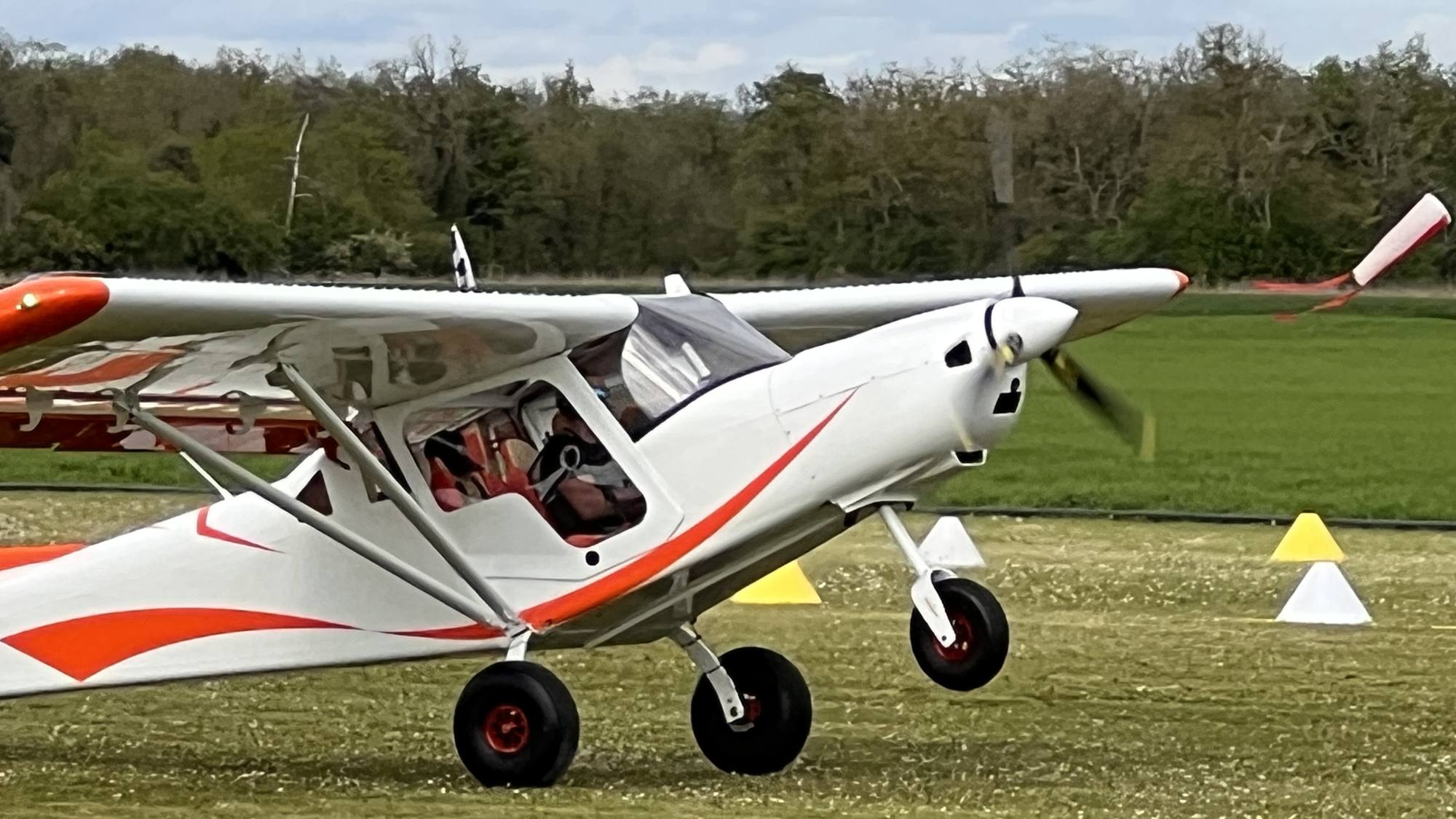
The back of the power curve, rightly reputed to be dangerous, is a stage you cannot avoid on take-off and landing. You inevitably pass through this flight regime, where the risk of losing control of the aircraft is considerable because of too high an angle of attack of the profile, an abrupt input or uncertain aerology:
- A premature pull-up to drag the machine off a sticky grass field
- No acceleration level-off
- Speed decay on short final
- A nose-high attitude that is too steep before touching the runway
The back of the power curve is defined by a disproportionate gap between the power needed to fly and the power delivered by the engine, that is, when more power is needed to fly slowly.
If the required power then exceeds the available power and you are close to the ground without being able to descend to accelerate, the situation is critical.
This situation arises when you try to take off too early, and the result will be a stall or a forced descent.
Take-off:
When the aircraft's weight and balance are within limits, rotation is made at the speed recommended by the flight manual and the aircraft leaves the critical zone of the back of the power curve fairly early. It accelerates because the rolling friction of the main wheels disappears and because the angle of attack, and therefore the drag, gradually decreases.
If the pitch-up is too large and made too early or too abruptly, the aircraft can remain in the critical zone of the back of the power curve: it does not climb and, if nothing is done quickly, the gain in speed is penalised and the aircraft's aerodynamic balance is altered.
Approaching the stall corresponds to very slow flight where the angle of attack is close to the critical angle of the back of the power curve, just before the loss of control that occurs at the stall angle of attack.
Landing:
During landing, the stall itself can sometimes occur unintentionally, following an unexpected drop in engine power or turbulence, with or without shear, when the wind gradient is large.
With enough "water under the keel", recovering from a stall is not a problem: it is enough to reduce the angle of attack and then pull out gently. Close to the ground this is no longer possible, you can no longer "ease off", and only engine power can save a situation of sinking at constant angle of attack.
The difficulty of flying is therefore to reach the ground at low speed to avoid bouncing, on the main wheels for a tricycle undercarriage and on 3 points for a conventional tail-wheel undercarriage. All this with an angle of attack that guarantees control of the aircraft, in roll in particular, hence at a speed above the stall speed, and then to roll out over as short a distance as possible.
Go-around:
In a go-around, it is vital to avoid the critical zone of the back of the power curve in order to fly at an angle of attack where the available power is in excess. The idea of the manoeuvre is to go from a descending to a climbing flight path, with a gentle pitch rotation up to the level attitude and then to apply climb power.
Ground effect:
At the precise moment the condition is met, the aeroplane takes off at a speed V barely above the minimum lift-off speed VS, or sometimes even below this VS, mainly thanks to "ground effect" and the change in airflow around the wing, which provides greater lift a few metres above the runway.
This increase in efficiency changes the aircraft's aerodynamic attitude: for equal lift, it can reduce the angle of attack and its induced drag. This improves the lift-to-drag ratio, and hence the glide ratio, but the friction drag due to viscosity remains constant.
Ground effect is considered significant only when the distance between the wing and the runway is clearly less than one wingspan.
Beyond that, the airflow returns to normal and so does the VS, so it is easy to understand why staying in the risk zone of the back of the power curve without the benefit of ground effect is very dangerous.
To conclude:
The take-off, climb, final and landing phases are flown on the back of the power curve without danger if:
- You first assess your knowledge of slow flight at high angles of attack.
- You build a mental plan of decision-making before take-off: height, speed, turn.
- You stay focused for better situational awareness.
- You shorten the critical zone of the back of the power curve as much as possible.
- You fly smoothly.
- You reach, in ground effect, a speed above the roll control speed.
- You know the aircraft you are using well.
After a break from flying, even a fairly short one, preparation remains very important for a while, because it must allow you to become familiar again with the particularities of the machine and refresh your knowledge to perfect your situational awareness when the time comes.
Stay rational in your approaches, and do not let worries and emotions overwhelm you!
Only vigilance lets you "stick" to the situation and perceive drifts very early so as to act as promptly as possible.
Good situational awareness relies far less on a quota of flight hours or on the year you got your certificate than on regular practice and a good knowledge of your machine.
After each flight, take a minute or two to think it over.
Happy 2020 flying and stay safe,