






The birth of FFPLUM
News from 3 February 2021. Last updated on 4 February 2021: some information may have changed. Latest news
Having flown free flight since its beginnings, I eventually grew tired of driving miles by car and waiting for hours at the top for a favourable wind. With a gang of friends from Avignon, Georges Kany and Edmond Aupy, at the start of 1979, I tried to motorise our wings with chainsaw engines, the propeller driven directly, so that we could fly close to home. The power was too low, and after much destroyed equipment our enthusiasm cooled somewhat, until I came across the miracle machine, the “soarmaster”, which had a reduction gearbox. It was horribly unstable, but for those with long legs it allowed take-off on the flat (though not always!).
From September 1979, I flew all over the place with this system until I was stopped by the gendarmerie for flying an unauthorised machine. The report, and my account of a clothes peg in my mouth as a throttle lever, made the judge laugh out loud, but I could not reoffend. We had to get organised in order to fly in peace, all the more so as we were not the only ones trying to fly by motorising our free flight wings, so we created the club “Ailes ultra-légères motorisées d’Avignon”. This way of flying was nevertheless very delicate and it was hard to make it accessible to everyone. Then Roland Magallon had the brilliant idea of putting the pilot on a trolley. More and more people could thus fly, but at the same time more and more infringement reports were issued. It became urgent to organise at national level.
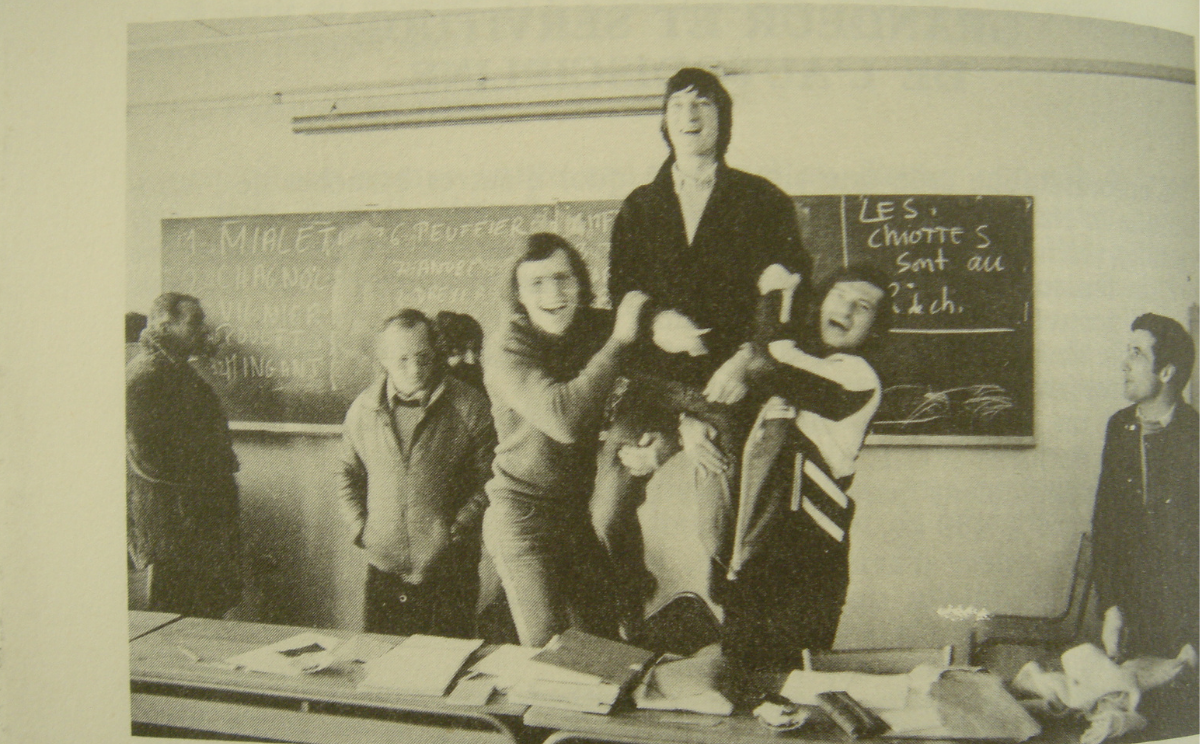
On the initiative of “Vol Libre Magazine”, a meeting was scheduled in 1980, somewhere near Mâcon, to bring together enthusiasts of powered flight. Amid the howling of a completely wild, libertarian audience, one could make out that we needed to band together and organise ourselves as a federation. Someone had to be found to take charge. There was no election; René Coulomb shouted, even louder than usual, “Dreyer”. I was reluctant because my business took up a lot of my time, while acknowledging that I was the only one in the audience who had both the qualifications of an IFR aeroplane and helicopter pilot, the administrative back-up and the means to create a federation.
We decided to meet again in a kind of General Assembly to write the statutes. The choice of name alone took a day; the whole audience was shouting and nobody agreed. If the name “Fédération Française de Planeurs Ultra Léger Motorisé” had a difficult birth, it had the merit of making its abbreviation, “Ultra léger Motorisé”, famous. The federation was thus created, and its registered office address was for a long time that of my offices: chemin de la Folie in Montfavet, quite a programme when I went to the DGAC……. We were near the asylum, and one day a DGAC representative I had an appointment with got the wrong address and ended up in the asylum!
Putting in place a regulation that satisfied pilots, instructors and the DGAC was difficult. There was the weight-shift camp and the camp of 3-axis aircraft (which at the time often had no truly defined axis at all!). There was the camp of “low wing loading, low power, able to land anywhere”, but which could not take off again without ending up in a tree or a fence, and the camp of “let us increase the wing loading to have more defences and to be able to travel”, but which could not go far because engines gave up the ghost after an hour in those days. The old hands, the inventors of this kind of flying, shouted very loudly and refused to submit to the tests to become instructors. There were those who flew for pleasure and those who wanted to be paid and make a career of it.
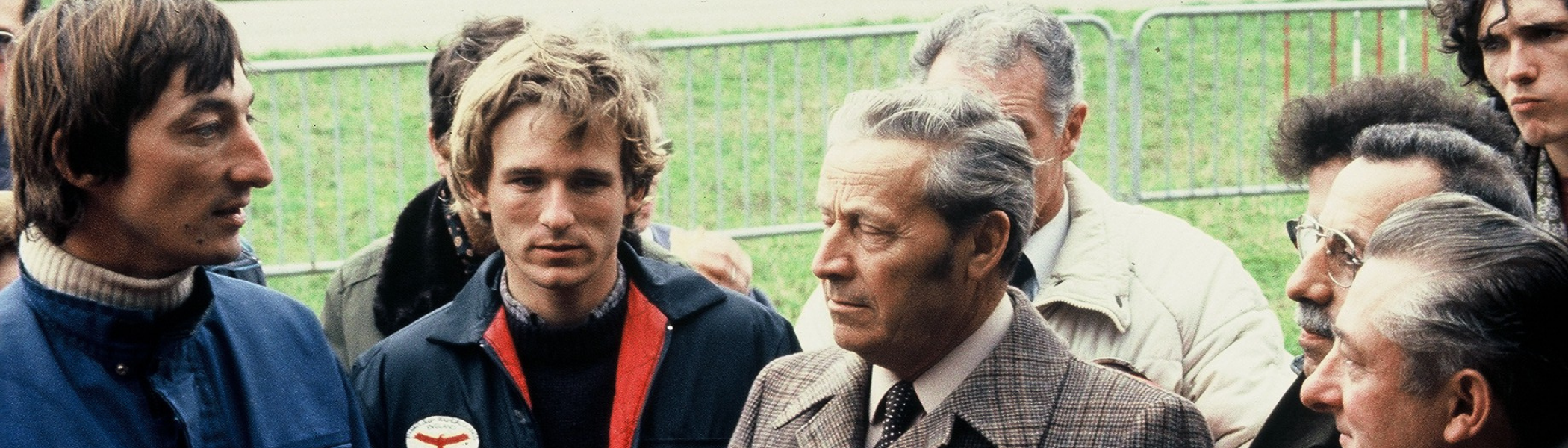
Fortunately I flew in every camp, which allowed me to find a consensus. Board meetings were an opportunity for everyone to practise their vocals in howling mode. A brawl was never far away, so passionate were the pilots. Everyone had an eye on us; the FNA, which looked down on us at first, tried to swallow us whole. The very liberal regulation that we had managed to obtain thanks to the understanding of the DGAC made people envious…. Every time there was an accident, I had to provide explanations to the DGAC. It was hard to explain why a man in his microlight was hauling up free flight wings by hooking them in flight with a grapnel!
Our youth and sport accreditation was obtained by the skin of our teeth; an unfortunate two-seater accident at the start of the Tour de France nearly called it into question, and the vivacious Minister for Youth and Sport of the day, whom I had taken flying in front of the cameras, was reprimanded in the Council of Ministers.
Little by little the federation matured, it had the means to buy its head office and its running became democratic, so I felt it was time to leave……. In short, it was instructive, fascinating and colourful, and it was an excellent time in my life.
Happy flying,
Alain Dreyer
First president of FFPLUM
Article published in ULM Info no. 58









