Why ban banner towing?
News from 13 May 2021. It has not been updated since it was published: some information may have changed. Latest news
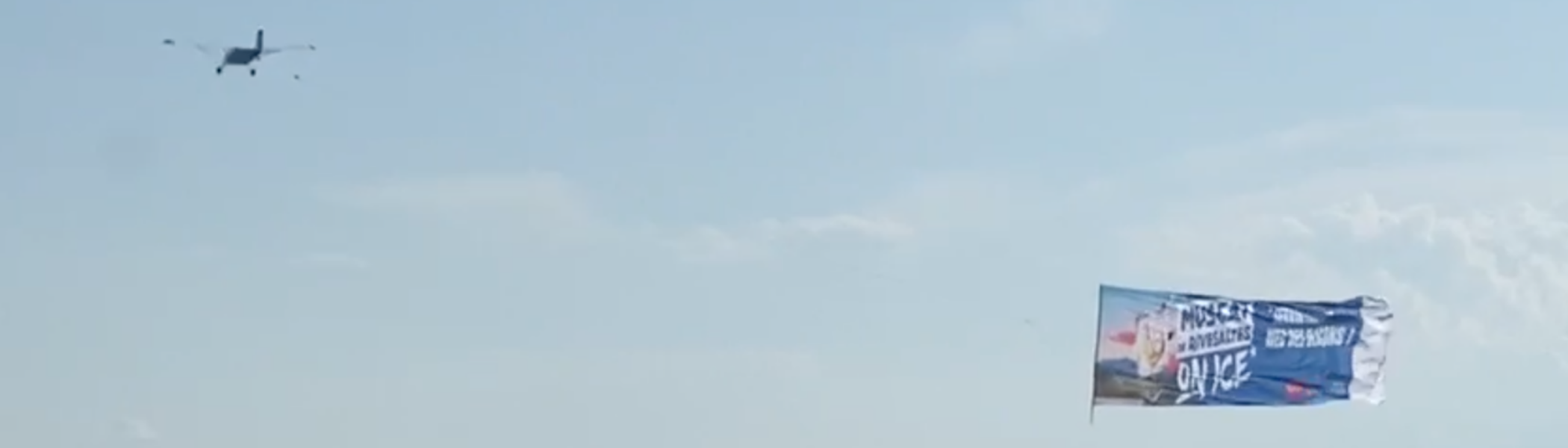
Proposal C.2.2.4 of the Citizens' Convention for the Climate mentions: "banning advertising aircraft". This proposal falls under the "Consuming" theme, in the "Advertising" chapter, which aims to regulate advertising to reduce incentives to overconsumption, alongside banning billboards in public spaces or limiting digital advertising. This proposal is not linked to the "Getting around" theme, which more explicitly sets out to "limit the harmful effects of air transport" and which does in fact affect recreational aviation (fuel taxation in particular).
Since August, professionals in the sector (around thirty), the federation, the SNPPAL and the professional general aviation organisations have been alerting public opinion, through reports (television news, mainstream press) and targeted actions, to how entirely disproportionate such a measure is, which was taken up by a parliamentary group. There are mainly three reasons why this bill makes no sense.
In terms of consumption, it is well established that banner towing is a seasonal and marginal activity, mainly on beaches, carrying messages that are often friendly and tied to local activities (funfair, wedding announcement, local market, blood donation campaign) which have little to do with the well-known issues of advertising and our consumption patterns in public and digital spaces. This is another world. An end to banner towing will have no effect on overconsumption.
In terms of transport, the aircraft that carry out banner towing are mainly microlights. The carbon footprint of light, recent machines is negligible. An end to banner towing will have no impact on the carbon footprint.
In economic terms, the professionals in this sector are respected and dynamic. There have never been any major safety or nuisance problems. On the other hand, it is certain that an end to banner towing will have a direct economic impact on this niche activity. In the current context, it would be particularly sad to pass a measure whose only real effect would be to leave skilled professionals out of work.
To these sound substantive reasons we must add an argument of form and procedure. In a modern democracy, it is parliament that makes laws. A convention of citizens chosen by lot, full of good intentions, and the stated will of the executive to push through certain aspects of the plan are not in themselves sources of law. Parliament has every reason to be informed too, and equally, by intermediary bodies (federations within the CNFAS, unions, professionals, users) that have real knowledge of the field. It would also be desirable for the competent authorities to give informed opinions on such specific subjects.
There are plenty of good things to be done for the climate.
By targeting banner towing, we miss the mark and create unemployment.
The final text will be put to Parliament for a second reading in the coming weeks. Without prejudging the outcome, particular attention must in any case be paid to the situation of banner-towing operators. A reasonable period should accompany this text to allow them to adapt their business, with compensation for the financial impact.
Several companies are seriously affected by this decision. Here is the distress call of one of the banner-towing operators :
YouTube video: playing it loads it from YouTube (Google), which receives your IP address and sets its trackers. Your consent will apply to YouTube videos on this site for six months. Manage my cookies