






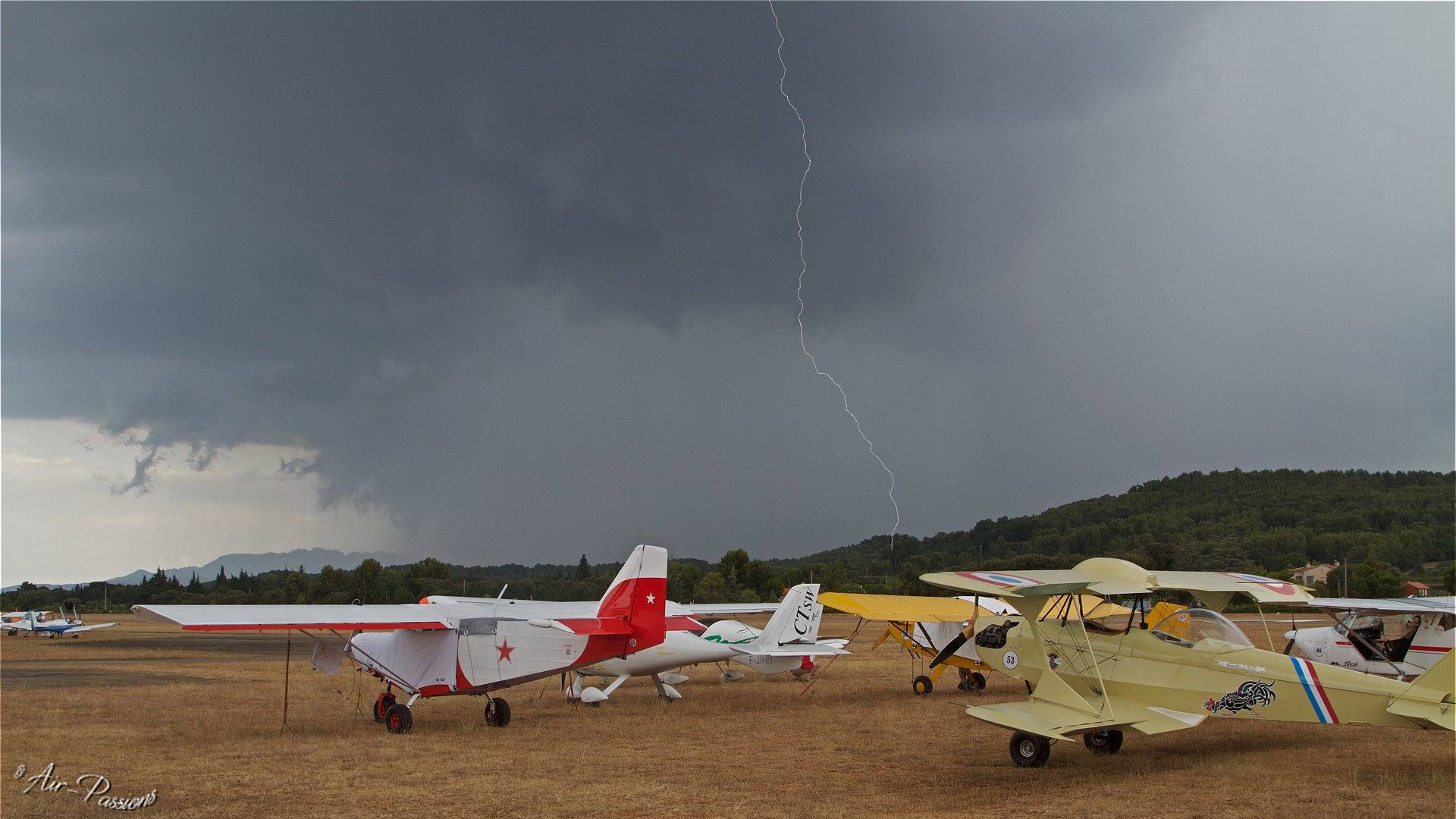
Flight Safety Flash Info - Thunderstorms
News from 19 July 2023. Last updated on 20 July 2023: some information may have changed. Latest news
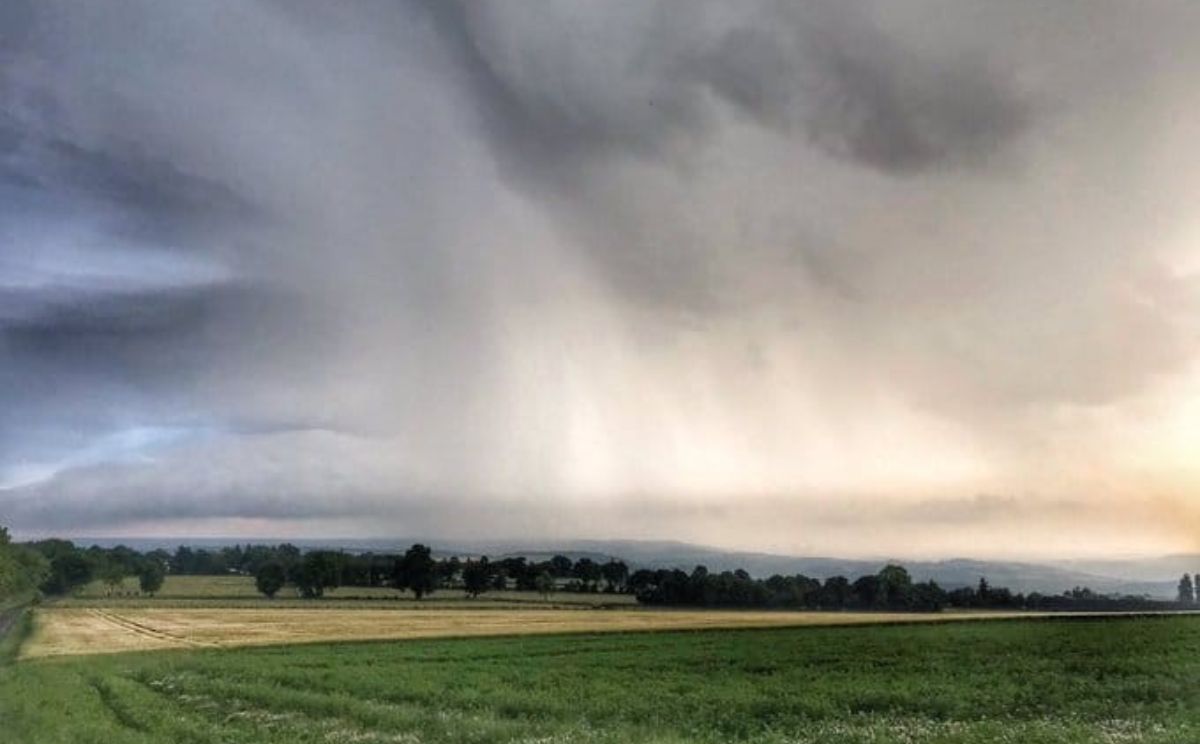

A timely reminder for the summer season: let us apply a rule well known to all: See and Avoid. See dangerous cloud formations and Avoid them…
Many air accidents have occurred near thunderstorms. It is often said that turbulence can be extreme inside a cumulonimbus and tear an aircraft apart.

Thunderstorm phenomenon dangerous for our activity: © Météo France
In general, turbulence under a thunderstorm can be fairly light or even absent, but most crashes happen close to the ground when a pilot is caught out by wind shifts that cause a stall. A wind shift is a sudden change in wind direction, sometimes accompanied by an increase in speed or by gusts. It can be caused by various phenomena, including the passage of a front or a pressure trough, a downburst under a thunderstorm, a gust front ahead of a squall line, a katabatic wind, and so on.
Do not come within 20 nautical miles (37 km) of a severe thunderstorm, even though a glider pilot might try to use the updrafts found in or under this type of cloud, combining performance and danger…
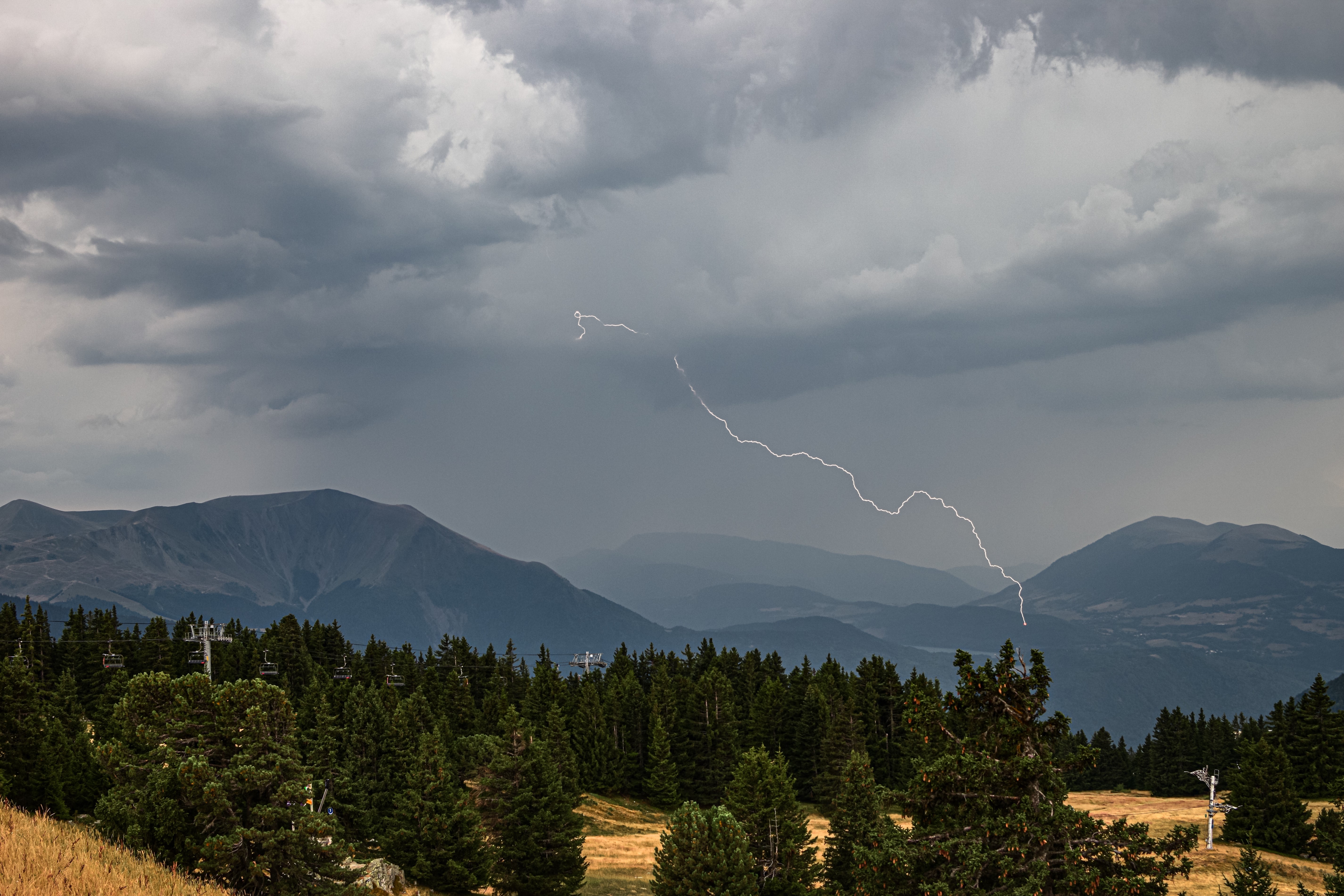
Approaching a thunderstorm is very dangerous in flight: © Météo France
Cumulonimbus clouds, for example, are known to be extremely dangerous for air navigation, and it is recommended to avoid them as far as possible. They can be extremely treacherous, and an inattentive pilot can find themselves in a very dangerous situation while flying in air that appears perfectly calm. Our "ultralights" are also more sensitive to turbulence and need to get away without delay, preferably with the wind behind them, from a growing thunderstorm formation (going round it is not always the best solution).
Even so, thunderstorms vary in severity. There is little quantitative difference between a nasty shower produced by a cumulus congestus and a small storm with 3 claps of thunder produced by a small cumulonimbus. In general, thunderstorm-related accidents do not involve the aircraft breaking up but result from their secondary effects, with an aircraft dented by hail or a wing torn open by torrential rain. Forecasting the severity of a storm is not an exact science, and there are many cases where pilots have been caught out by underestimating a storm's violence, which has sometimes strengthened abruptly.
Fly cautiously, observing cloud formations and identifying the associated threats. Remember that giving up on a flight or postponing it is often the best decision.
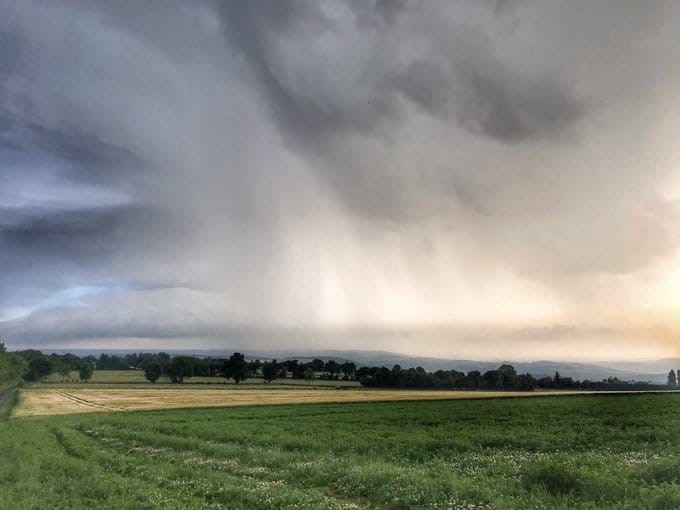
© Météo France
If you have any questions, remember to ask your club or your flight safety officer!
Aeronautically speaking.
The Flight Safety Division









