






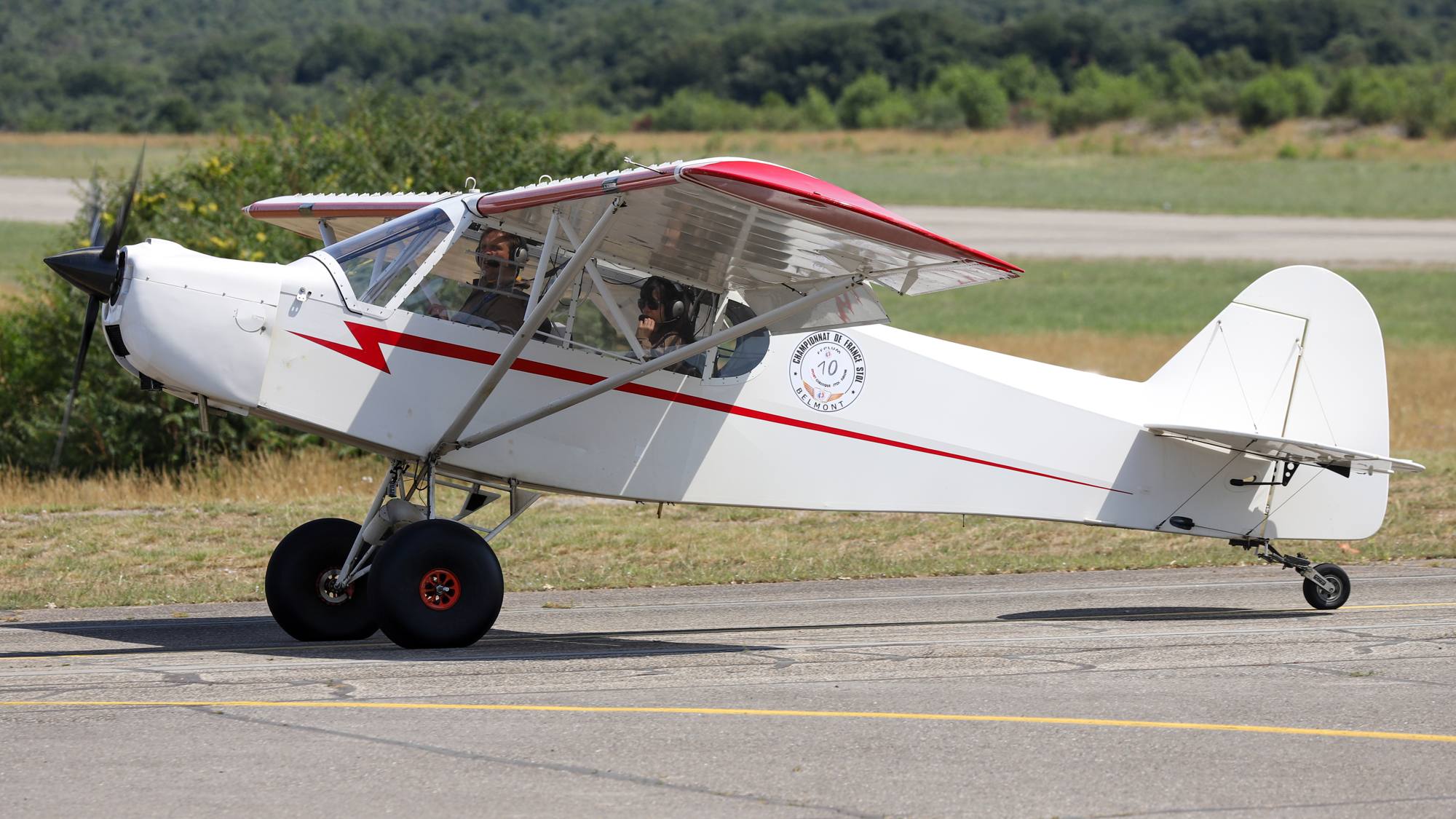
Editorial: moderation is above all lightness!
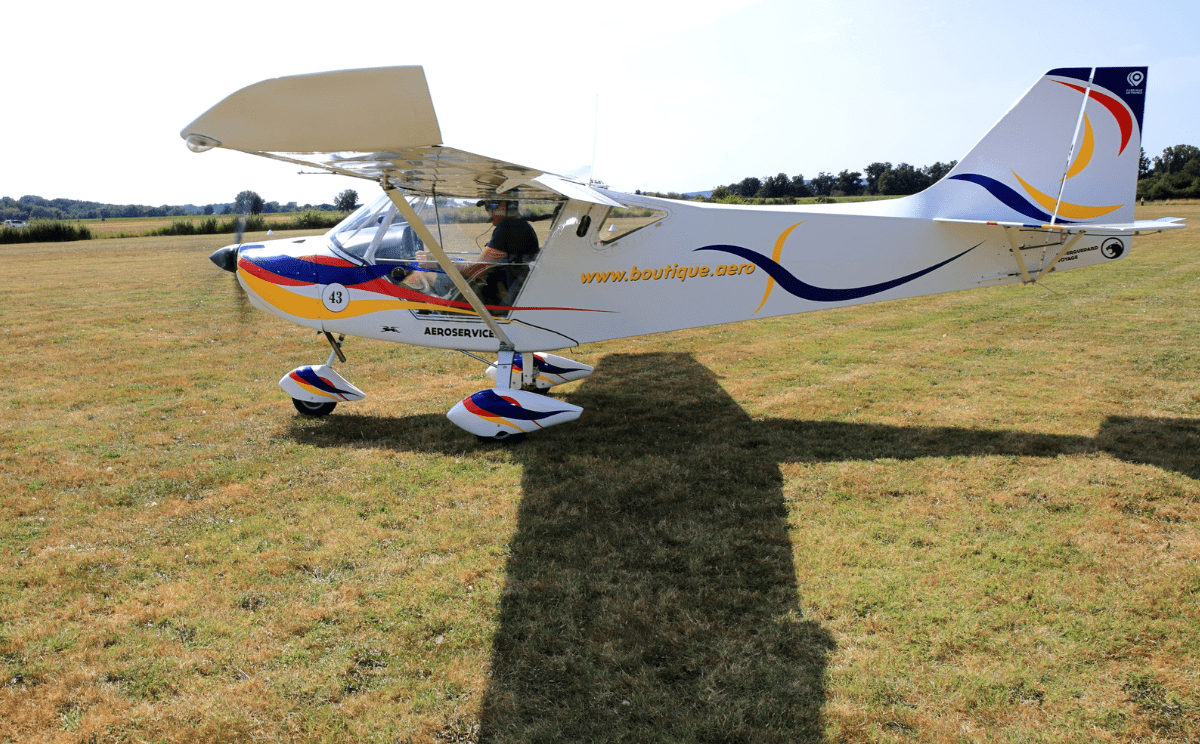
Sobriety is above all lightness!
On the occasion of the Friedrichshafen show held in Germany 15 days ago, the "European microlight village gossip" was buzzing ("aerobuzzing") about a 600 kg microlight project that had supposedly been approved by the DGAC. This information was clearly denied by the federation ("For us, it's 525 kg!").The federation and the DGAC have never considered raising the maximum mass of our microlights from 525 kg to 600 kg.The arguments are well known, and the federation has set out its positions at length in "our regulatory choices".
The subject flared up because some protagonists read in their favour an ambiguous letter from the DGAC about a proposed change to the regulation for innovative machines on an experimental basis. It seems that the word "innovation" was forgotten by some. They read (mostly in English, a little in German, sometimes in Flemish) "600 kg = new market". Nothing new under the sun: defending microlight regulation has never been a walk in the park! Lobbies and short-term interests have always existed, and it is the federation's role to take the long view, for pilots and the general interest, in liaison with the DGAC of course, and with the manufacturers who play the game! Starting with the French manufacturers!
So we must return (urgently) to the essence of innovation in aviation, from Santos-Dumont's Demoiselle to the A320neo: lightness! Beyond the declaratory system, which has its virtues (but also its limits) compared with the certified system, it is above all the pursuit of lightness that makes innovation possible. The idea of the microlight was born in the 70s from a double reaction: to the oil shock on the one hand, and on the other to the "gentrification" of traditional aviation, with a trend towards heavier aeroplanes, twin-engined and flying IFR. Lightness is therefore needed more than ever for thermal machines as for electric ones, but we must admit that the market trend always pushes towards weight and higher prices.
The data from the Agence de l'Environnement et de la Maîtrise de l'Énergie (ADEME) for cars are edifying. In 30 years the average mass of vehicles (leaving aside hybrid and electric vehicles) has increased by 30%. Some safety factors can certainly be invoked, but the main explanation for this weight gain lies in consumption habits. The analogy with aviation has its limits, but it reveals a trend. What is more, increasing the speed of aircraft physically increases their structural strength requirements and therefore their mass. If some people want to fly fast and heavy, they should not choose the microlight! The future is rather one of (relative) slowness and lightness.
The irony of the story is that one of the main players behind this push to 600 kg is a turbine engine maker (a stranger to the microlight world) which made a magnificent effort to lighten a small turbine so as to fit into our regulation! The obvious gain for the APUs (Auxiliary Power Units) of certified aviation is easy to see, but having failed to meet the specification within the current masses of microlight regulation, it is not very "fair play" to want to push up the mass limit of our regulation. Let's get back to simple things and stop tinkering in the service of private interests.
It is physically obvious that for electric machines the empty mass allowed by our current regulation for thermal machines is not optimal. Subtracting from 525 kg the flat-rate 156 kg for the pilots, the 25 kg of the rescue parachute and the 45 litres of fuel at a density of 0,8 kg, we arrive at about 330 kg. But it is also physically obvious that the specific energy of batteries is much greater than that of thermal energy sources, and although we save on the weight of the electric motor, the energy-and-propulsion chain for equivalent performance is heavier. It is also physically obvious that the energy carried by an electric aircraft is constant, so the 45-litre reserve makes no sense. We must also allow for the new stresses that come with such a mass, which could be close to 400 kg empty. But before anything else, manufacturers will have to aim for lightness and strength in the structure. That is also what some car makers are doing, by ending the arms race on weight!
This is, moreover, the project of a well-known French manufacturer from the Aveyron that has always known how to make light, high-performing and well-regarded microlights: to offer a platform that could be fitted with different versions of electric propulsion. The subject has a future, and we must do everything to support it intelligently, without giving up anything in our current framework. It is within this scope, and only within this scope, that the federation has agreed to take part in drawing up an experimental framework between 525 kg and 600 kg for electric and innovative machines, which we could call ULM-Neo to avoid any confusion. This will of course mean new requirements for the machines and for the pilots, and it necessarily goes through an experimental phase.
It is therefore an off-topic shortcut, one that some have taken with gusto, to claim that the regulation is going up to 600 kg. Not with us! There certainly remains, but it is a totally separate subject, the matter of allowing foreign microlights (often close to certification) to fly in France under more pragmatic conditions. We propose that these machines be allowed to come and fly for 6 months, for tourism only, under conditions to be defined with the DGAC. But that is also the downside of our advantages. It is easier to fly machines built under light regulation in countries with heavy regulation than the other way round.
One last point, and not the least: sobriety is also affordability in terms of price. Being lighter and flying slower is, in fact, relatively more affordable. The subject of microlight classes must not turn into class warfare in the social sense of the term because, as in the car industry, prices are becoming indecent. Good for those who can afford machines at 400 000 euros, but that must not steer the standard in that direction. Unless the aim is eventually to privatise leisure aviation completely, turning it into a ghettoised and inaccessible activity with an oligopoly of manufacturers imposing their own standard and a public authority standing back.
Fortunately we are not there, but we must stay vigilant while remaining constructive.
Happy flying, light and sober!









