See and be seen
A story of technical and non-technical skills
Recent events, together with the analysis of near misses that occurred in 2024 and at the start of 2025, remind us of the crucial importance of flight safety. Ensuring your own safety, and that of third parties on the ground, remains the absolute priority of every free and responsible pilot.
-
Flight preparation: an imperative
Flight preparation is an essential step in guaranteeing your safety. It begins with a careful study of charts and aeronautical supplements, or of the aeronautical federations’ websites, to identify sensitive areas.
Finally, a rigorous briefing is needed: consulting NOTAMs or other AIP SUPs and information on areas of intense activity, or the AIP, in particular ENR 5 “navigation warnings”, is essential. Careful preparation is the first guarantee of a safe and serene flight.
-
Avoiding free-flight hotspots
Free-flight sites, often located in the mountains or close to tourist areas, are “hotspots” of intense activity that require extra vigilance from microlight pilots. To minimise risks, it is essential to keep sufficient altitude, as paragliders and hang gliders generally operate between 800 and 1 500 metres AGL and often close to the terrain. Taking these areas into account, plan a detour if necessary, adjusting your flight route accordingly. A well-thought-out flight path and careful navigation preparation contribute significantly to the safety of all airspace users.
- You can also consult the SpotAir FFVL website to find free-flight sites: https://www.spotair.mobi/
-
Make the most of electronic systems for e-Conspicuity
Electronic conspicuity is now a major asset for flight safety.
With technological progress, flight safety now benefits from high-performance electronic tools that considerably improve collision avoidance. These systems, specifically designed to make aircraft more visible, play an essential role in increasingly busy airspace. Adopting these modern tools is a sensible investment in flight safety. By combining technology and discipline, pilots increase their ability to detect and avoid potential conflicts
Here are a few solutions that are particularly effective and accessible to pilots:
- Safesky : a partner of FFPLUM, this free, connected and intuitive app gives a real-time view of the aircraft around you. Easy to use, it fits seamlessly into flight preparation and management, while allowing better anticipation of risky situations.
- Microtrack: a future partner of FFPLUM, this compact and discreet system improves your visibility to other pilots. By transmitting precise location signals, it helps reduce collision risks and makes it easier to identify your position in the airspace.
- Flarm: this system, widely adopted in light aviation and particularly by glider pilots, is designed to prevent collisions by providing alerts on the position and trajectories of other equipped aircraft. Its effectiveness and reliability make it a benchmark tool for safety-conscious pilots.
In an increasingly shared sky, electronic conspicuity is an asset, accessible to pilots of all microlight classes.
However, these systems are operated solely at the initiative of airspace users and are in no way mandatory. The traffic identified therefore represents only a more or less significant share of potentially conflicting aircraft. Moreover, the attention devoted to watching a screen is an additional workload on top of the essential outside visual lookout in flight, and particularly in the mountains.
-
A reminder of the basics of “see and avoid” and visual flight
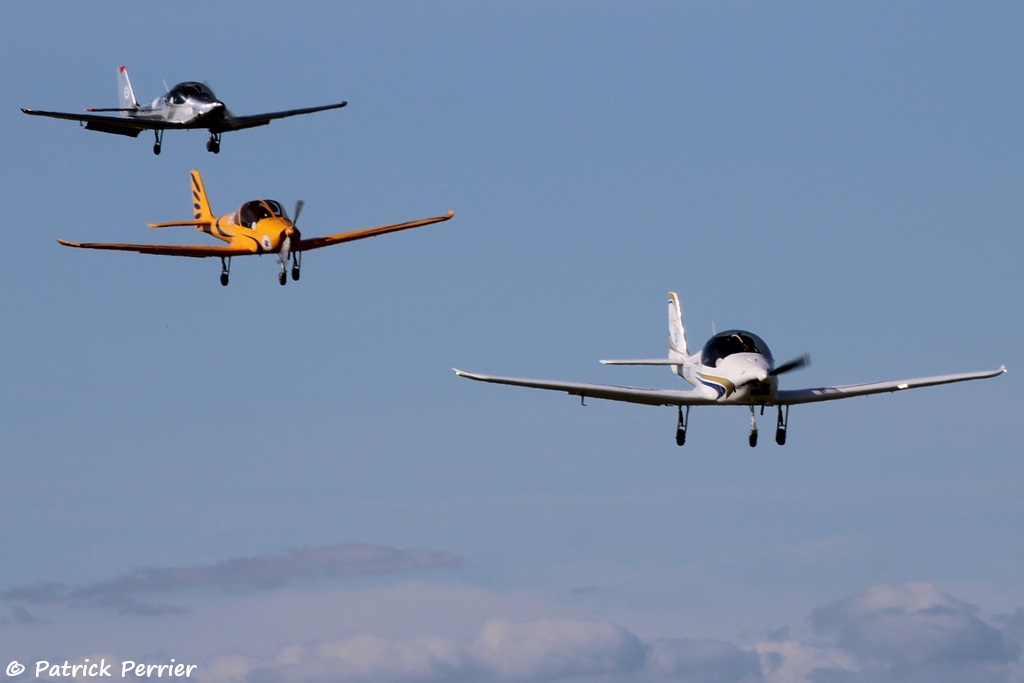
The golden rule of “see and avoid” is an essential and fundamental skill for ensuring everyone’s safety in flight. This skill rests on simple but crucial principles which, when properly applied, considerably reduce the risk of incidents and accidents in flight.
1. Constant visual scanning
To detect aircraft around you, it is essential to scan visually all the time.
Divide your field of vision into sectors and review them regularly, paying attention to any movement. This method makes it possible to quickly identify conflicting flight paths and maintain optimal situational awareness.
2. Maximising visibility
Visibility is a decisive factor in the “see and avoid” principle. A visor, a windscreen or a pair of flying goggles in good condition are obviously decisive for seeing what is happening around me in flight.
If you are equipped with them, keep your navigation lights and anti-collision lights on at all times, even by day, to increase your chances of being spotted by other aircraft. Good visibility, coupled with predictable behaviour, improves collective safety.
IN CONCLUSION
Flight safety for us microlight pilots rests on simple, common-sense principles learned during our pilot training. Applying “see and avoid”, which is not only a rule but a habit to cultivate, combined with rigorous preparation and the use of modern tools, will actively contribute to air safety, protecting not only your own flight but also that of others.
As accomplished pilots, you know it: in flight, every detail counts. Stay alert, visible and proactive. By applying these principles, we contribute to safer aviation and considerably reduce risks.
Maintaining your skills, together with good preparation for all our flights, remains the watchword for increasing collective safety!
In all cases, talk to your instructor for detailed additional advice!