






Editorial - BSV no.50
 Weak signals
In our search to improve flight safety, several lines of action are possible and should be used.
There is improving your knowledge, which means staying curious about regulatory changes, flight theory, methods, training, reading the BSV, and so on. There is also keeping up your experience on your machine by training regularly, alone or, better, with an instructor (think REV!!), like a highly experienced pianist who never stops practising scales every day to keep perfect command of their instrument.
Finally, there is flawless upkeep of your microlight, following to the letter the recommendations of the manufacturer and the engine maker, who alone can guarantee you unequivocal reliability.
However, as in any activity or process, with use, deviations from the reference standard will inevitably creep in, more or less insidiously. In aviation, we call these deviances.
These deviances are the seeds of a drastic reduction in your flight safety. They may be a pre-flight inspection that is neglected, a navigation that is not prepared, weather reports or NOTAMs that are no longer checked systematically before a flight, an engine cowling that is no longer opened, piloting habits that no longer follow good airmanship, and so on.
To avoid getting to that point and always keep the margin needed to fly safely, learn to spot the weak signals that show a change in your behaviour as a pilot.
Indeed, these bad habits known as deviances are picked up gradually and originate in a very small change in the way you fly.
So, despite the ease and experience that grow with every flight, always stick to your fundamentals: the methods, manners and behaviours learned during training. Stay “by the book” in your preparations and in your pre-flight and post-flight checks, and take care to keep your flying smooth and precise, with adequate attention and a concern to do things properly.
Do not rush; work through your checklists or mnemonics calmly and rigorously.
If you correct your deviances quickly, while they are still weak signals, your flight safety will start rising again, whereas if you let them develop, flight after flight, an incident or accident will become inevitable....
This BSV is issue 50 and marks 4 years of flight safety publications by your federation.
On the ffplum.fr site you can find all the “Flight Safety Letters” and “BSV” issues, sorted by year.
Do not hesitate to read and re-read them: they are a considerable and timeless mine of information that helps you think about improving your flight safety. This reflection is essential and must never stop, at the risk of reducing our margins and worsening our accident record.
Indeed, as I write these lines, we have to mourn no fewer than 5 microlight pilots killed in 3 accidents over a short period of 10 days.
As is often the case, a minor element was enough: an oversight, a clumsy move, a rush, and tragedy followed.
Be attentive and listen to your weak signals and correct them immediately; it is your safety and your life at stake, and you must be aware of that.
Fly safely.

Eric Galvagno
Head of the Flight Safety Committee
Safety in Figures
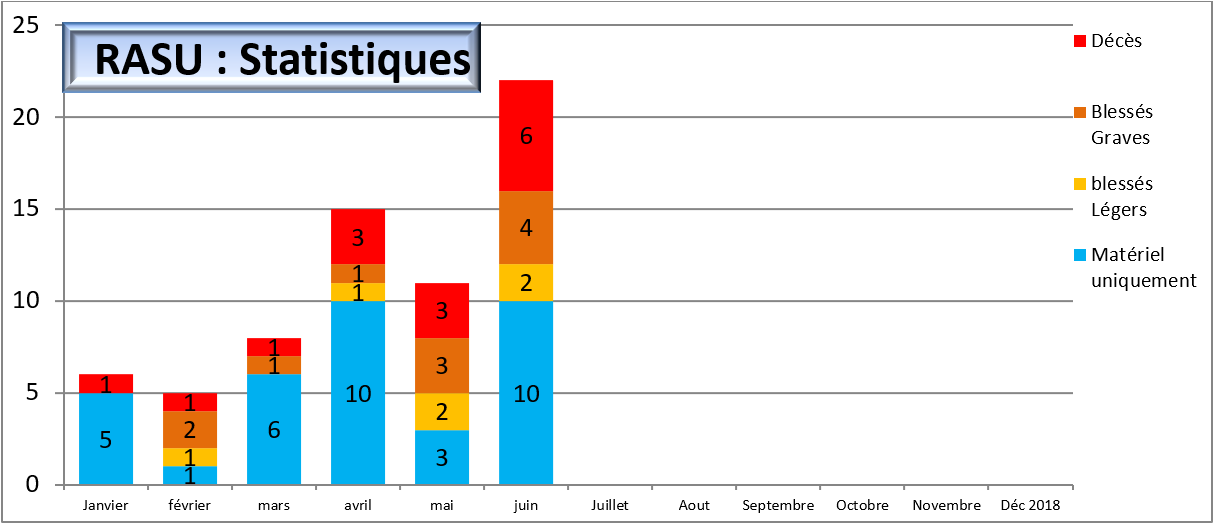
The table below summarises the accident statistics recorded from 1st January to 30 June 2018, ranking casualties by severity and distinguishing purely material-damage accidents. The second table shows microlight accidents involving French-registered aircraft that took place abroad with foreign crews.
The Analyst's analysis
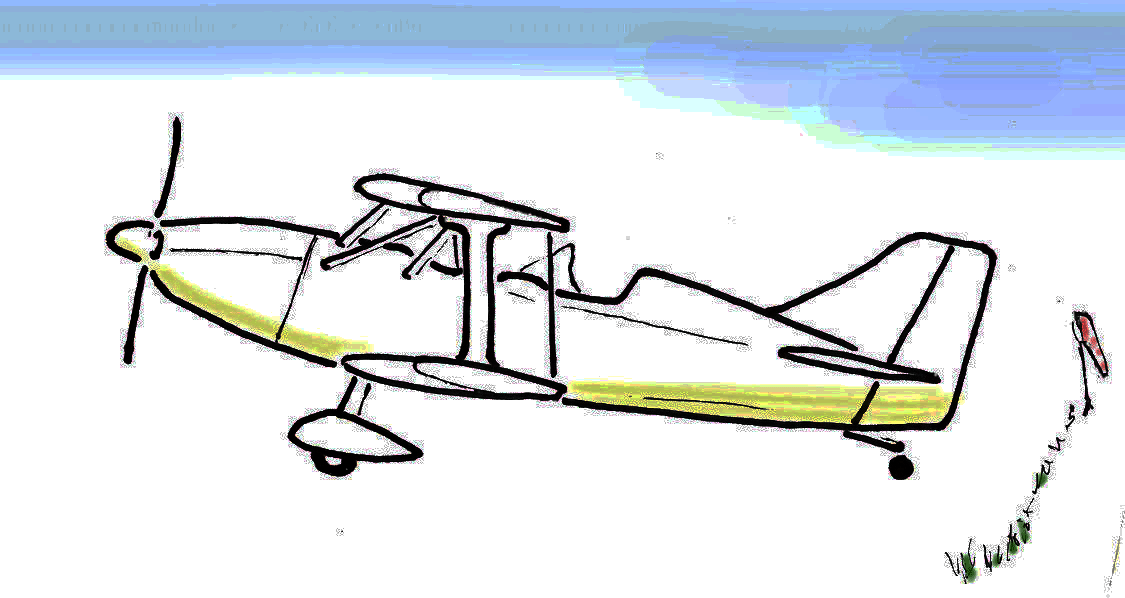 In May 2017, the BEA published the report on the accident involving the FK12 Comet microlight registered 974-GJ, which occurred on 27 August 2016 at Sours (28). Both occupants of the aircraft were seriously injured.
Training Corner

The holidays are coming, and the sky is going to fill up with aircraft of every kind, just like the roads of France.
With good weather back, we can at last put an end to our flying frustration, as the season really got going later this year.
What about doing a REV? > video guide
A question about the REV programme? > see our dedicated FAQ









