






Editorial - BSV no.54
 Recreational pilot
Our favourite activity, flying motorised ultralight aircraft, is a recreational and leisure activity.
Of course, this activity is extremely demanding in terms of training, practice and keeping knowledge up to date, because it is the only way to guarantee a high level of flight safety when practising it.
But whatever the case, we must keep in mind that we are “amateur” pilots in the noble sense of the word and that, even for microlight professionals, there is no professional microlight licence.
However, and the recent accident record reminds us of it, too often some pilots go beyond the status of recreational pilot and become, deliberately or not, test pilots.
Indeed, on buying a new aircraft, on test flights after maintenance work, on flights after modifications or changes of settings; without realising the risk they are taking, some pilots do not hesitate to climb into a microlight to see whether everything is fine, in disregard of the precautionary principle and the basic rules of flight safety...
Do you know that to become a test and acceptance pilot, not only is selection draconian and training very demanding at a dedicated school, the EPNER (Ecole du Personnel Navigants Essais et Réceptions), but the lucky few can be counted on the fingers of one hand each year?
Test-flying a microlight cannot be improvised, and even after a minor intervention on your machine, you must realise that the flight that follows has to be flown with caution, thought and specific preparation. I can only advise you not to take off without having talked it over with another pilot, who can not only give an opinion but also help and advice.
Every year, the testing of a microlight by its pilot-builder, pilot-mechanic or pilot-tuner ends in serious or fatal accidents.
When you have just acquired a machine, take care to fly dual-control flights with an instructor until you have mastered it perfectly. Likewise, after maintenance work, a part replacement or adjustments, do not skimp on the time needed for ground tests; ask a pilot friend to back you up, help you and check your work, and only take off when no doubt remains about the airworthiness of your microlight.
Your flight must never be a test flight; you have not been trained for that. It must always be a recreational flight, which is what you earned your microlight pilot certificate and licence for.
If necessary, call on a microlight professional, an instructor or an importer, to give you the help you need and the assurance that your newly modified aircraft is fit to fly.
Flying safely means not overstepping your limits, your privileges or your skills.
None of your flights should be a test flight; doubt is never acceptable in aviation, and even less so if you have to make a flight to clear it.
Happy recreational flying.
Eric Galvagno
Head of the Flight Safety Committee
The Analyst's analysis
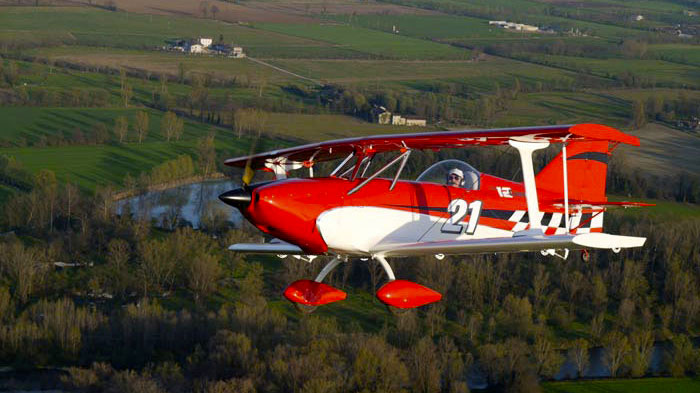 On 8 October 2017, a Funk FK12 Comet S1 three-axis microlight took off from Nogaro aerodrome, in clean configuration, and made a tight 180° turn to fly over friends.
The Mechanic's Tutorial
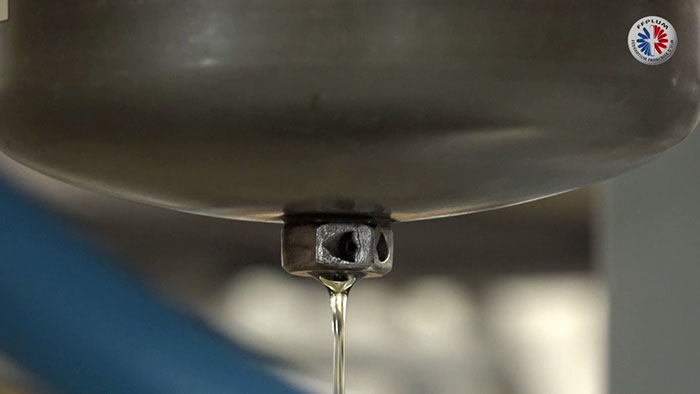
In this autumn episode, Thomas and Peyo explain how to change your oil. It is a simple job, as long as, as always, you follow the steps carefully and the few little secrets our friends share with us!
Safety in Figures
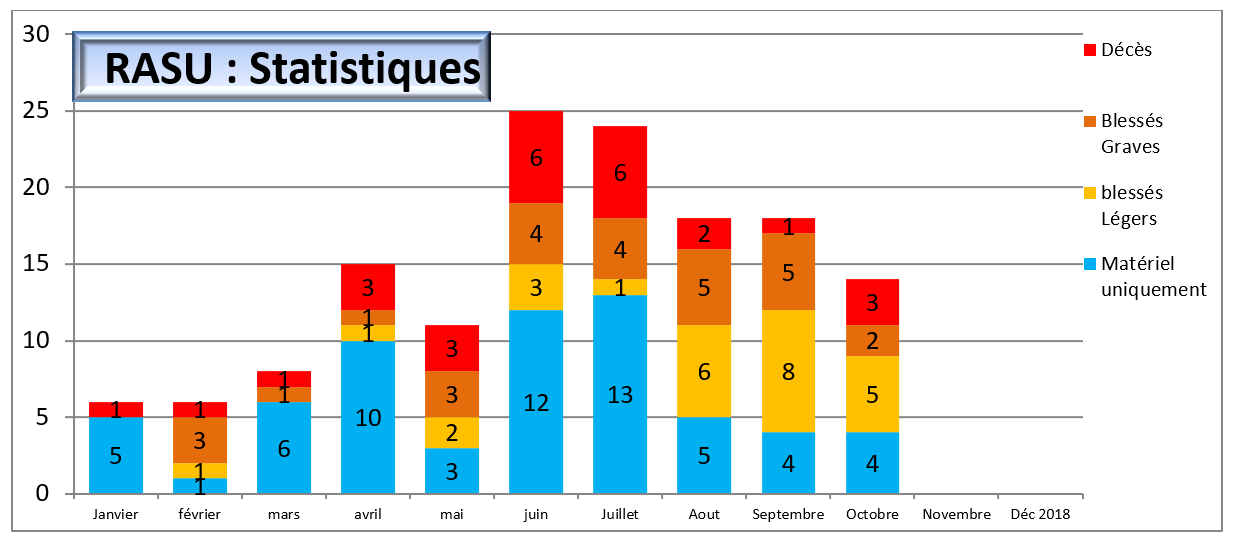 The table below summarises the accident statistics recorded from 1 January to 31 October 2018, classifying victims by severity and distinguishing purely material-damage accidents.
What about doing a REV? > video guide
A question about the REV programme? > see our dedicated FAQ









