






The Analyst's analysis - BSV no.54
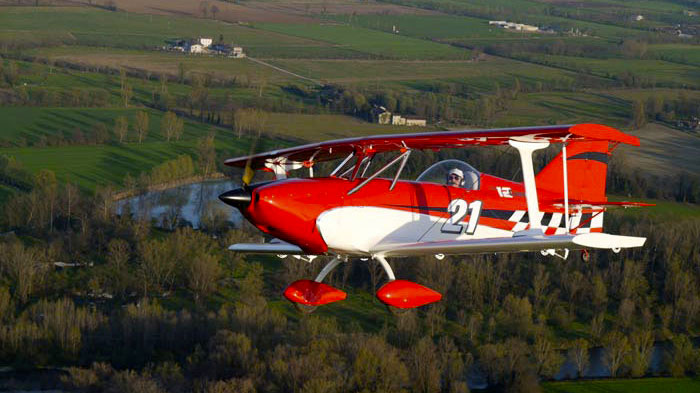
On 8 October 2017, a Funk FK12 Comet S1 three-axis microlight took off from Nogaro aerodrome, in clean configuration, and made a tight 180° turn to fly over friends.
It hit the ground about 8 seconds later and caught fire immediately.
Despite the very rapid response of the emergency services, the violence of the fire made it impossible to get the pilot and passenger out, and they did not survive their burns.
Full report available on the BEA website, file BEA2015-0134
https://www.bea.aero/uploads/tx_elydbrapports/BEA2017-0579.pdf
The FK12 is a three-axis biplane microlight, described as manoeuvrable and responsive for demanding pilots. It remains the case that aerobatic manoeuvres, including spins and turns with bank angles above 60°, are prohibited. Moreover, its clean-configuration stall speed is 75 km/h.
The tight reversal manoeuvre carried out just after take-off reached the aircraft’s aerodynamic limits during the pull-up. The low height above ground did not allow the FK12 to recover from the stall.
It is important to understand that a stall can occur at any speed, as long as the angle of attack exceeds the maximum lift coefficient.
Many accidents linked to loss of control in flight follow an abrupt manoeuvre in pitch or roll, combined with insufficient speed. Indeed, a dynamic stall can occur at a speed above the stalling speed (Vs).
A dynamic stall is not due to a loss of speed, but to a loss of lift caused by too great an angle of attack; the phenomenon is made worse if asymmetry develops.
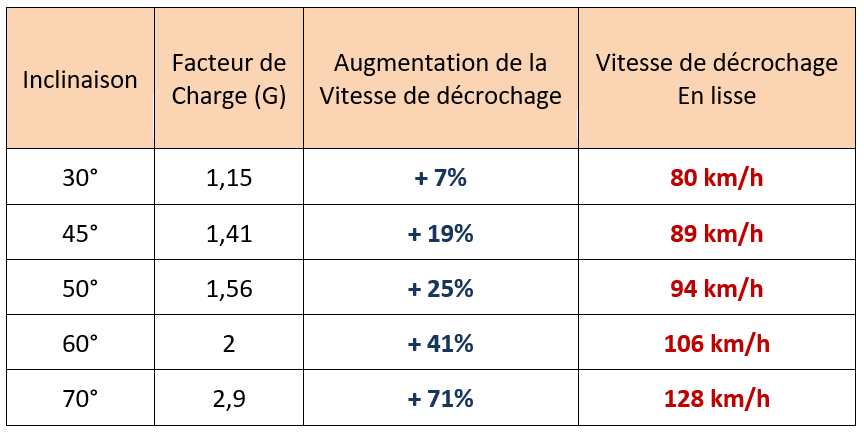
Let us look here at the ratio by which stall speed increases with bank angle and load factor.
On this flight, the pilot in command’s reasoning and decision were based on a perception of risk drawn from his own experience alone, to which his previous career certainly contributed.
Optimism bias, selective perception bias, overconfidence: the mental pollution that may have affected this pilot’s decision concerns us all.
Seeking thrills can lead to non-compliant use which, in the end, takes this microlight outside its flight envelope.
Whatever the type of aircraft, let us remember that the aerodynamic rules on performance loss with bank and load factor apply to microlights too.
Respecting your machine’s bank and speed limits keeps a vital safety margin in hand at all times.
Laurent Kerbrat
Flight Safety Analyst
Editorial
 Recreational pilot
Our favourite activity, flying motorised ultralight aircraft, is a recreational and leisure activity. Of course, this activity is extremely demanding in terms of training, practice and keeping knowledge up to date, because that is the only way to guarantee a high level of flight safety when practising it.
The Mechanic's Tutorial
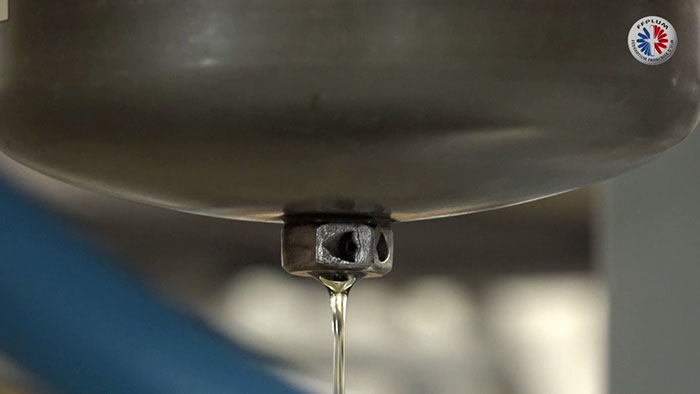
In this new episode of the Mechanics Tutorials, Peyo and Thomas show us how to change the engine oil on your machine properly.
Safety in Figures
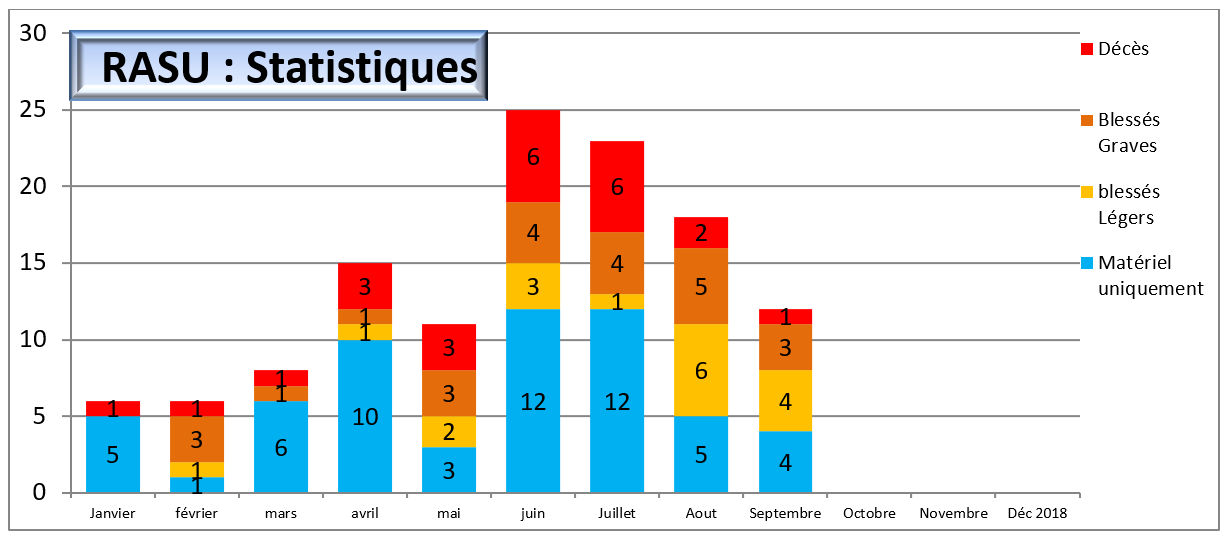 The table below summarises the accident statistics recorded from 1 January to 30 September 2018, ranking casualties by severity and distinguishing purely material-damage accidents. The second table shows accidents involving microlights registered in France that took place abroad with foreign crews.
What about doing a REV? > video guide
A question about the REV programme? > see our dedicated FAQ









