






Skip to content
French Microlight Federation
Home
Flying Entry to the Flying section

Fly

What is microlighting?Where to fly?Licence and insuranceMedicalHandivolMechanics

Become a pilot

The pilot certificateMicrolight examTrainingTrial flight

Regulations

Regulatory documentsAirspacePlan your flightsAirfieldsOPS ULM — order of 17/02/25

Federation support

Support for young peopleThe BIAGrants
Instruction Entry to the Instruction section

Network

Clubs and schoolsInstructors

Instructors

Microlight instructor trainingList of instructors by départementKnowledge refresherThe teaching programmeTeaching and technical sheets
Sport
Safety Entry to the Safety section

Prevention

DirectivesParachutesFederation prevention

Safety reports

REX — submit and browseFlight Safety BulletinReturn to Flying (REV)ECCAIRSCSV flight safety officersList of REX reports

Alerts

Safety news

Files and quizzes

Good practice
News Entry to the News section

Read

Federation newsULM Info — the magazineClub life

Calendar

EventsSubmit an eventFederation events

Media

Documents to downloadPractical guides

Stay informed

Frequently asked questions
The Federation Entry to the Federation section

The institution

Elected membersThe divisionsRegional committeesThe DTNEthics and professional conductSafeguarding in microlightingThe federation in figuresOfficial textsGeneral Assembly

Federation events

The Youth Microlight Tour (Tour ULM Jeunes)Microlight World ChampionshipsFesti'ULM

Join us

RecruitmentContact
Report Member area Federation shop Site map 2026 Licence

SafetyPrevention

Parachutes

The rescue parachute, the safety feature unique to microlights: the federation’s help in fitting training aircraft, and the right reflexes for using it.

Prevention

The rescue parachute, the safety feature unique to microlights: the federation’s help in fitting training aircraft, and the right reflexes for using it.

Parachutes

  • €1 200federal grant towards buying a parachute (paramotor with trike, weight-shift, three-axis, gyroplane)
  • 450 kgmaximum flying mass of the microlight, which allows it to be fitted with a parachute
  • ≈ 90 %of the microlight fleet produced by professional manufacturers

Every form of flying carries some risk, whatever aircraft you fly. Flying is an activity that must be practised with great rigour, scrupulously following the rules in force and paying extremely close attention to weather conditions.

Statistics today show that microlighting is no more dangerous than other forms of aviation.

But microlighting still suffers from a negative image inherited from the early days and the approximations of the early 1980s, whereas the activity is now perfectly mature.
para sauve

About 90% of the microlight fleet is produced by professional manufacturers who fully master the rules of the trade. A modern aircraft, whether of “tube and fabric” or “composite” technology, if properly maintained and used according to its manufacturer’s instructions, provides a level of safety comparable to that of a light aeroplane.

The ability to land a microlight easily is an additional safety feature.
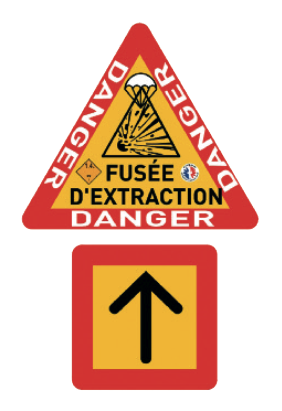
rocketLikewise, the low flying mass of a microlight (450 kg maximum) means it can be fitted with a rescue parachute which, in the event of serious difficulty making the aircraft uncontrollable, can bring the whole machine and crew down to the ground.

Analysis of the most frequent causes of accidents shows that, unfortunately, as with road traffic, it is often the pilot's behaviour that is at fault. Low flying, aerobatics, inadequate weather conditions, fatigue… are often the origin of accidents that could be avoided.

Parachute funding grant

€1 200 towards purchase (paramotor with trike, weight-shift, three-axis, gyroplane)
€300 towards purchase (paramotor without trike)
€500
for refurbishment (paramotor with trike, weight-shift, three-axis, gyroplane)

The RESCUE PARACHUTE scheme provides financial help to clubs and schools affiliated to the FFPLUM, whether associations or OBL, accredited or not, to equip the microlights they use for training with a rescue parachute.

All FFPLUM training centres can access this grant.

To be eligible under this scheme, the training centre must:

  • be affiliated to the Federation with a club project
  • have at least 10 licences attached to its affiliation number
  • be the owner of the microlight that will be, or has been, fitted
  • undertake not to resell the aircraft that benefited from the grant for a period of 2 years (or, if it is transferred, to ensure the replacement aircraft is fitted with a rescue parachute).
Rescue parachute grant application form

Rescue parachute scheme

The federal equipment grant

All FFPLUM training centres can claim this grant: associations or OBL, labelled or not, for microlights used for training.

  • €1 200Towards purchaseparamotor with trike, weight-shift, three-axis, gyroplane
  • €300Towards purchaseparamotor without trike
  • €500For refurbishmentparamotor with trike, weight-shift, three-axis, gyroplane

To be eligible, the training centre must

  • Be affiliated to the Federation with a club project.
  • Have at least 10 licences attached to its affiliation number.
  • Be the owner of the microlight that will be, or has been, fitted.
  • Undertake not to resell the aircraft that benefited from the grant for a period of 2 years (or, if it is transferred, to ensure the replacement aircraft is fitted with a rescue parachute).


Rescue parachute grant application form (PDF)

The federation’s other grants for clubs and pilots: federal grants.

The “Save your lives” feature file

When should you deploy the parachute?

  1. 01When the aircraft goes out of control in flight
  2. 02If there is a mid-air or bird collision
  3. 03If visual references are lost
  4. 04If the engine fails and would force an emergency landing on unsuitable or hostile terrain: water, forests, mountains, high ground
  5. 05If the pilot loses consciousness or is incapacitated (a briefed passenger may activate the system). The new in-flight passenger training scheme (FAV) can usefully be put to use

“When in doubt, the option of deploying the parachute must be taken, because it will save lives.”

You must know the deployment sequence perfectly: handle position, force and travel needed to deploy, engine cut-off. Simulate it regularly before setting off, and brief your passengers.

Read the feature file

Getting ready

Quick-reference sheets and video tutorial

Le parachute de secours Tuto formation de la fédération, saison 1, épisode 2

YouTube video: playing it loads it from YouTube (Google), which receives your IP address and sets its trackers. Your consent will apply to YouTube videos on this site for six months. Manage my cookies

The rescue parachuteFederation training tutorial, season 1, episode 2

Frequently asked questions

A frequently asked question

What happens if the engine stops?

By design, a microlight is an aircraft capable of gliding.

Consequently, if the engine stops, the pilot can manoeuvre the microlight to land it on an improvised landing area (a procedure called an ''off-airfield landing'' in official language, or ''going to the cows'' in pilots' language!).

Engine failure is in no way a cause of accidents in microlighting.

This is one of the incidents that can happen at any moment of the flight. That is why every pilot, during training, learns to land their aircraft with the engine off.

As a safety measure, a pilot must plan their flight so as always to be near a field suitable for an emergency landing, which also means flying at a sufficient height (300 to 500 m above ground minimum) to be able to carry out this manoeuvre with maximum safety.

The full question

Federation office

A question on this subject?

The federation office answers members, clubs and schools, and the press. The easiest way is the contact form.

Contact us

They support the federation

All our partners
  • Ministry of Ecological Transition
  • DGAC
  • Ministry of Sport and the Olympic Games
  • National Sports Agency
  • CNFAS
  • FAI
  • Aéro-Club de France
  • CNOSF
  • EMF
  • Air and Space Museum








