






Editorial - BSV no.57
A well-balanced microlight is vital for your safety!
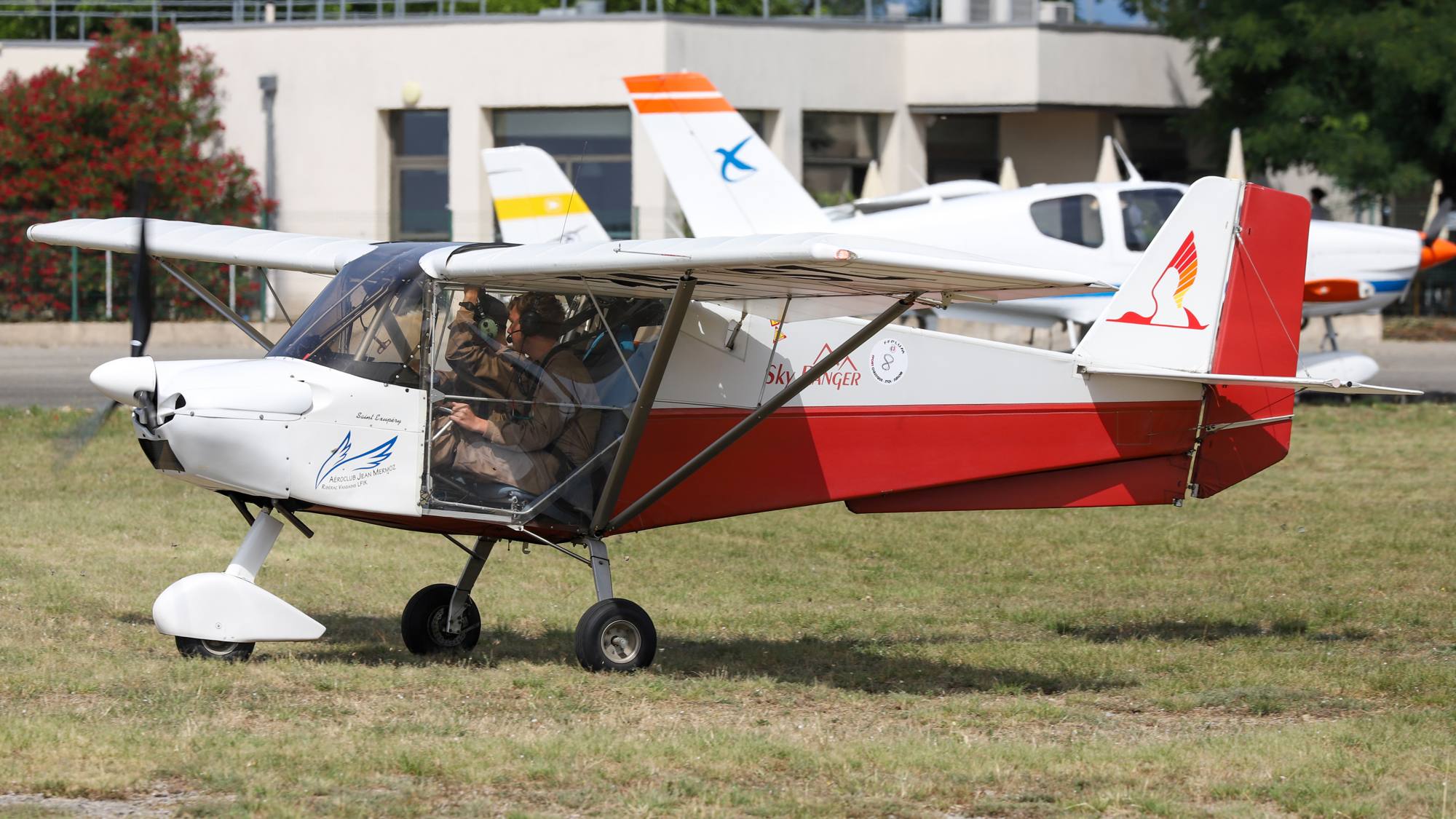
Balance is a major notion that applies in many fields. We say a person is well balanced (or not...), and the same goes for a company agreement, a decision, a budget, and so on. In aviation, this notion of balance is extremely concrete and is tied to an aircraft's ability to fly well, to handle correctly and to stay within its flight envelope in all circumstances.
Indeed, while every microlight pilot has heard of the importance of keeping the centre of gravity within the limits defined by the aircraft manufacturer, it is important to understand the effects and to be fully aware of the significant consequences of a forward or aft centre of gravity on the behaviour of your microlight.
First of all, when designing an aircraft, the manufacturer assesses the distribution of masses and arranges for the position of the centre of gravity to lie in a zone that allows balanced aerodynamic flight when the aircraft is flying with pilot, any passenger, load and fuel, taking into account, of course, the burn-off of fuel.
The manufacturer then defines a range of centre of gravity positions forward and aft of the centre of gravity, this range corresponding to the forward and aft limits beyond which the aircraft would no longer be controllable and would inevitably lose control.
For us pilots, the regulations require us to make sure on every flight that we stay within the centre of gravity limits throughout the flight.
To do this, we must load the aircraft correctly, following the manufacturer's instructions.
However, this assumes that all the modifications we may have made to our microlight (change of propeller, added instruments, modification of a paramotor harness, moving the battery, adding a parachute, modifying the wing attachment of a weight-shift microlight, etc.) since the manufacturer delivered it have been taken into account and that we have a precise idea of the position of the centre of gravity of our machine when it is ready to fly, by calculating the moments of each of the masses that have been changed.
So, if the microlight has a forward centre of gravity (CG towards the forward limit), the pilot will have a stable machine and will have to apply large pitch inputs for the aerodynamic effects to be felt. The feeling will be of pitch controls that are a “bit soft”.
Conversely, if the CG is towards the rear of the range, the microlight will be less stable and the pitch controls sharp.
The forward limit is therefore the limit beyond which your microlight is so stable that it can no longer be manoeuvred even with maximum pitch control deflection. The aft limit is the limit beyond which the slightest pitch input leads to loss of control of your microlight.
In other words, a forward centre of gravity increases stability but reduces manoeuvrability, whereas an aft centre of gravity reduces stability but increases manoeuvrability.
On paramotors in particular, the manufacturer uses the length of the lines to change the balance, so it is out of the question to alter the lines unless you are a professional, as there is an extremely high risk of making your wing impossible to fly.
Likewise on a weight-shift microlight, the various positions of the wing on the mast must be properly understood so as to know what to expect if the attachment point is moved forward or back. Here again, tinkering with an attachment point different from those offered by the manufacturer would be reckless behaviour that can only end in tragedy.
A microlight close to the forward or aft centre of gravity limits is hard to fly and will behave unpredictably when at the limit of its flight envelope.
A well-balanced microlight is pleasant to fly and gives its pilot a significant safety margin whatever the flight conditions.
There were many losses of control in flight in 2018 that led to fatal accidents. While lack of training, experience on the machine or practice are causal factors we have identified, there were also some microlights that had been modified without taking into account the influence of the modifications on the balance, making these microlights extremely difficult to handle in all circumstances even for a good pilot.
Take advantage of February to check the balance of your microlight: your microlight's manual, a hoist, a few scales, a calculator and a friend are all you need. Aim for a centre of gravity in the middle of the manufacturer's range; that way your microlight will behave as “balanced” as possible.
Safe flying.

Eric Galvagno
Head of the Flight Safety Committee
The normalisation of deviance
Deviance is the act of departing from what should be done: for example, no longer systematically and rigorously carrying out a thorough pre-flight check, complete vital actions, or other procedures that contribute to our safety.
The Analyst's analysis
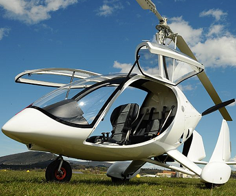
On 30 April 2016, at Montélimar Ancone aerodrome, a gyroplane microlight with its side doors removed takes off from grass runway 20 to fly circuits.
A witness sees the aircraft level off to accelerate at about 20 metres above ground, then bank slightly left and quickly right until it ends up on its back.
Safety in figures
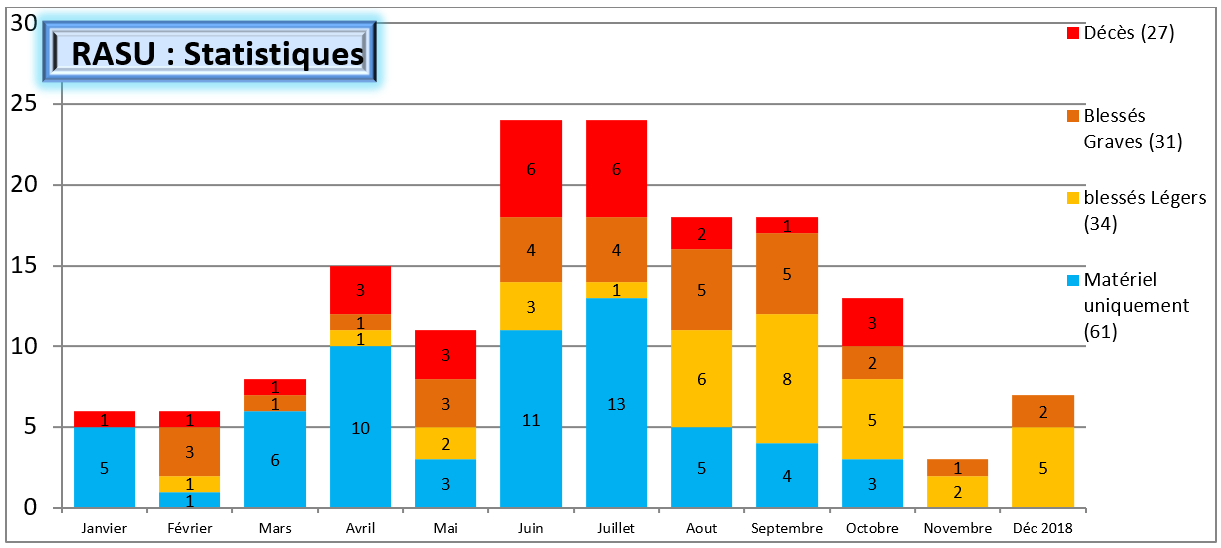
Since the start of this year, we have had no fatal or serious accidents, nor any with minor injuries, to record. The last fatal accident dates back to October 2018, so for three months in a row no death has been recorded in microlighting, which is extremely encouraging and exceptional.
What about doing a REV? > video guide
A question about the REV programme? > see our dedicated FAQ









