







The Analyst's analysis - BSV no.57
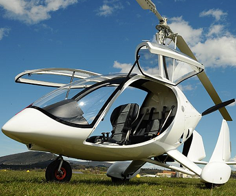
On 30 April 2016, at Montélimar Ancone aerodrome, a gyroplane microlight, side doors removed, took off from grass runway 20 to fly circuits.
A witness sees the aircraft level off to accelerate at about 20 metres above ground, then bank slightly left and quickly right until it ends up on its back.
The gyroplane collided with the ground, the pilot was thrown out and died.
https://www.bea.aero/uploads/tx_elydbrapports/BEA2016-0230.pdf
No mechanical malfunction can explain this loss of control, as the engine was delivering significant power at the time of impact.
The harnesses were found open, with no traces of failure or damage; moreover, no mark likely to be left by the harness was observed on the pilot's body during the medical examination.
The principle of flying this type of aircraft requires a permanent compromise between the thrust of the engine's pusher propeller and the tilt of the rotor disc relative to the relative wind. The pilot must therefore constantly manage an “imbalance”. The manufacturer of this machine states that << when the pilot releases the controls in level flight, the rotor tilts slightly to the left >>.
It is probable that the pilot, seeing that he was not strapped in during the acceleration level-off, tried to do so in flight. This could explain the drift to the left, then the abrupt correction to the right and the loss of control that followed.
For the year 2018, the Bureau d'Enquêtes et d'Analyses (BEA) points out that take-off and initial climb are the phase of flight most exposed to the risk of instability, collision with obstacles and loss of control.
This tragic accident reminds us that the checklist before any take-off is not a figment of the imagination, but a genuinely beneficial tool whatever flight is planned.
Too often this checklist is neglected, out of routine, out of habit, when it represents the first line of defence against the unexpected and omissions and unequivocally raises the level of safety.
Let us stay convinced of this.
Laurent Kerbrat
Flight safety analyst
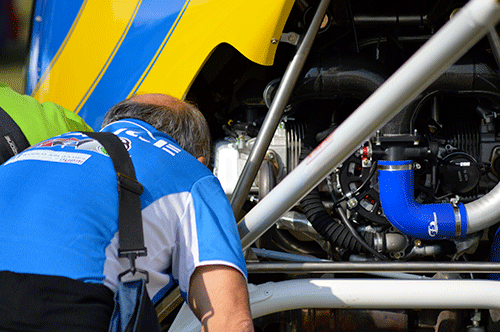 A well-balanced microlight is vital for your safety!
Balance is a major notion that applies in many fields. We say a person is well balanced (or not...), and the same goes for a company agreement, a decision, a budget, and so on. In aviation, this notion of balance is extremely concrete and is tied to an aircraft's ability to fly well, to handle correctly and to stay within its flight envelope in all circumstances.
The normalisation of deviance
Deviance is the act of departing from what should be done: for example, no longer systematically and rigorously carrying out a thorough pre-flight check, complete vital actions, or other procedures that contribute to our safety.
Safety in figures
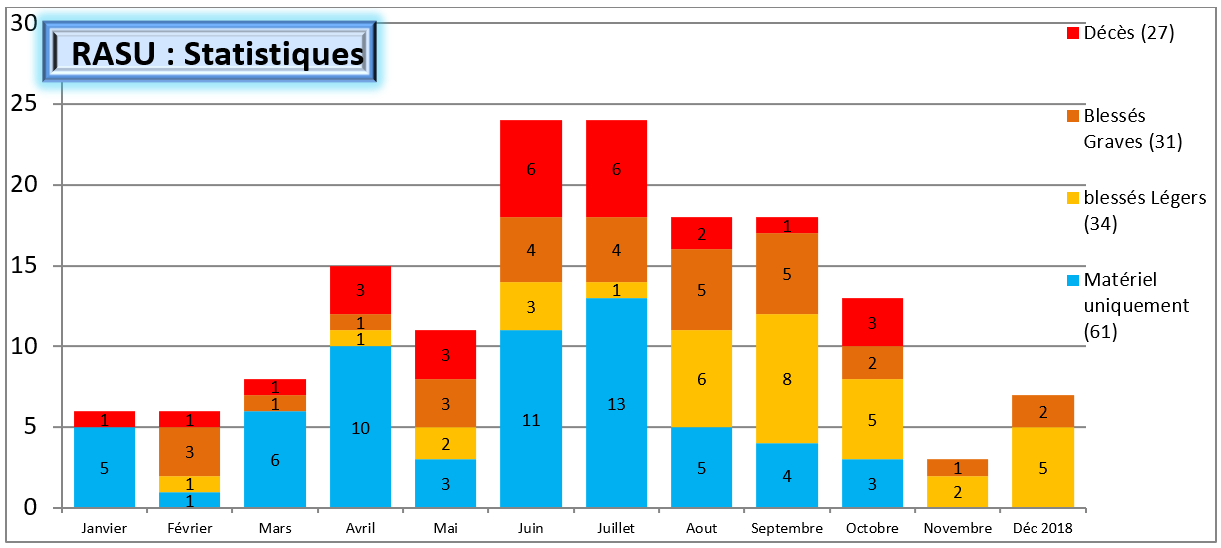 Since the start of this year, we have had no fatal or serious accidents, nor any with minor injuries, to record. The last fatal accident dates back to October 2018, so for three months in a row no death has been recorded in microlighting, which is extremely encouraging and exceptional.
What about doing a REV? > video guide
A question about the REV programme? > see our dedicated FAQ









