







Training Corner - BSV no.59
Fellow pilots,
Some news for the spring:
1 - Flight preparation
Rigour in preparing your flights is fundamental to your own safety.
Unfortunately, it is sometimes possible to be misled by information systems.
Below you will find a REX published by the DSNA explaining how to use the SIA website to consult NOTAMs.
Please circulate this information as widely as possible among your members, students and pilots.
2 - Return to Flying
To date, 75 REVs have been validated, the target being 1 000 !!! for the year.
It is also essential that instructors fill in their profile correctly in Exalto. Very few instructors appear in search results, which is a problem when pilots are looking for an instructor.
This year the REV is open to everyone: owners, clubs. The only requirement is to hold an FFPLUM licence.
3 - Lithium batteries
Saving weight is a key concern in our activity, but let us not do just anything.
Several incidents have already been reported to us since the start of this year, with batteries running away thermally and releasing toxic smoke into the cabin.
Laurent Kerbrat, flight safety analyst, gives you his view of this equipment below:
Now that they have become affordable, many pilots are fitting their machines with Lithium-Ion batteries without further ado, helped by manufacturers' advertising stating that they can be installed without modification.
The weight saving, from 4 to 5 kilograms, is not negligible, so this is going in the right direction. But beware: replacing the original battery with this type of battery is far from trivial.
Indeed, the charging circuit fitted to Rotax 9 series engines does not supply current of a quantity and quality compatible with Lithium-Ion batteries.
These lithium batteries are very efficient but are even more sensitive to overvoltage, and when they malfunction they must absolutely be checked (cell balancing). Some brands build a BMS (battery management system) into the battery to monitor cell balancing; make sure of this beforehand.
The latest thermal runaway events (REX) on LiFePO4 batteries, described as the most stable, remind us to be cautious.
The regulator is also a rectifier: it converts the alternating current produced by the alternator into direct current, calibrates its frequency (Hertz), manages its flow (Amperes) and regulates its voltage (Volts), while making power (Watts) available. Some models (SILENT) can be installed without any problem in place of the original Ducati (plug and play), with the same connectors, at a cost of around 220 euros.
The voltage sensitivity of a lead-acid battery is of the order of plus or minus 0,5 Volts; that of a lithium battery is 0,05 Volts. As a corollary, recharging a lithium battery on the ground after it has accidentally been discharged also requires a specific charger.
To conclude, fitting a lithium battery without taking care to adapt the electrical charging circuit increases the risk in flight.
Forewarned is forearmed…
An example of a specific regulator with plug and play fitting.
http://www.silent-hektik.de/UL_R_912.htm
Laurent Kerbrat
CSV Haute Normandie
Safe flying

Jean-Christophe Gibert
Head of the Training Committee
Editorial
 Unusual attitudes: reply to the article on page 24 of ULM Info No 107
The Federation has received a few requests for explanations from pilots following the article "Unusual attitudes: how to get out of them?" published in the latest ULM Info.
So that no doubt can remain on this subject, here are some clarifications on the chapter dealing with recovery from an unusual "NOSE HIGH" attitude.
The Analyst's analysis
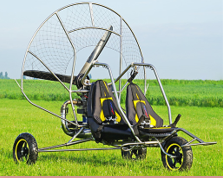
On 15 August 2018, a group of 4 paramotors decided to fly to the microlight airfield of Courseulles-sur-mer LF1451 to make local flights.
After a first flight, the group decides to wait for the wind to calm down. Around 17, the 3 foot-launched paramotor pilots, who are more experienced, set off to scout the airflow and decide on the return to their departure base.
West wind at 7kts, so the weather is estimated consistent for the return.*
Safety in figures
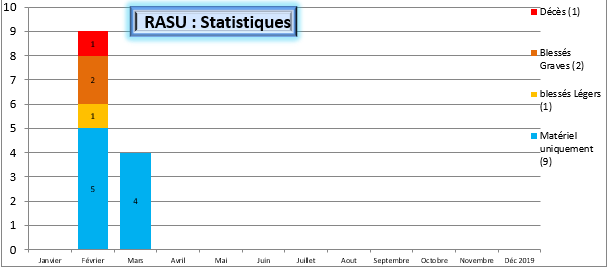
The season is under way again and, fortunately, we have so far recorded no new fatalities in March; the figures are even below the usual values for fatal accidents.
What about doing a REV? > video guide
A question about the REV programme? > see our dedicated FAQ









