






The Analyst's analysis - BSV no.59
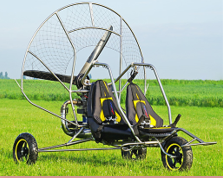 On 15 August 2018, a group of 4 paramotors decided to fly to the microlight airfield of Courseulles-sur-mer LF1451 to make local flights.
After a first flight, the group decides to wait for the wind to calm down. Around 17, the 3 foot-launched paramotor pilots, who are more experienced, set off to scout the airflow and decide on the return to their departure base.
West wind at 7 kts, so the weather is judged consistent for the return.
The two-seat wheeled paramotor of the least experienced pilot was a 50-RV, fitted with a beginner's reflex-profile wing suited to solo flights on a two-seat trike, with the trims set to neutral. The pilot of the wheeled paramotor took off at around 19:25; the other pilots stayed on the ground and reported that on take-off the microlight veered to the left and the pilot applied the right brake to counter it. This brake input appeared poorly coordinated and too large, and a significant roll followed, with the trike starting to swing like a pendulum.
The oscillation grew, and after 2 or 3 turns the trike ended up above the wing.
The paramotor hit the ground violently, nose first, during a descending phase of the oscillation. When the group arrived at the scene of the accident, the front of the trike was heavily crushed, the nose wheel was in contact with the front seat, which was itself touching the rear seat, and the pilot had died.
The 60-year-old pilot had been qualified in paramotoring since 19 December 2017 and had about 25 flying hours. His initial training had been carried out on a single-seat trike with a beginner's wing different from the one involved in the accident, and he had no other experience in this area. His brake inputs may be seen as over-controlling, which sustained the oscillation, and the engine remaining at full throttle suggests that panic set in when faced with this unfamiliar flight situation. This pilot had mentioned the strong torque produced by the 30 hp engine, which probably unsettled him. In trying to counter it inappropriately, he eventually lost control of the aircraft.
The flight manual states that engine torque can cause oscillations and that in this case the simplest solution is to reduce power and stop any brake inputs.
This pilot took up paramotoring late and had very little experience of this class at the time of the accident. A dual-control flight on his machine with an instructor could have allowed him to deal more effectively with this oscillation phenomenon and very probably avoided the worst.
Note:
When making microlight trips to other airfields, let us not forget to contact the airfield operator when this is indicated on the airfield chart; this is the very least we should do. In the case discussed in this analysis, the airfield operator, who had not been notified, was informed of the event by email at around 20:00 and was unable to make any contact with the group of pilots, who had already left. The operator patiently stayed on site to remain with the victim and to see the administrative procedures through until 23:30.
Laurent Kerbrat
Flight safety analyst
Editorial
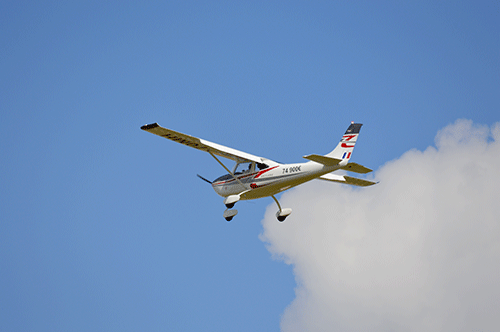
Unusual attitudes: Reply to the article on page 24 of ULM Info No. 107
The Federation has received a few requests for explanations from pilots following the article "Unusual attitudes: how to get out of them?" published in the latest ULM Info.
So that no doubt can remain on this subject, here are some clarifications on the chapter dealing with recovery from an unusual "NOSE HIGH" attitude.
Training corner
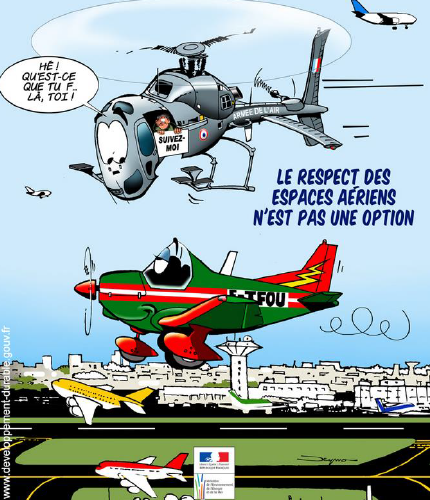 Some spring information: Flight preparation; The Return to Flying programme; Lithium batteries.
Safety in figures
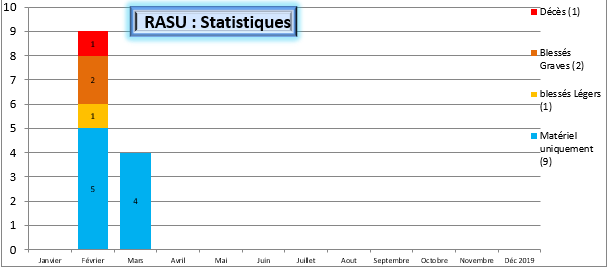
The season is under way again and, fortunately, we have so far recorded no new fatalities in March; the figures are even below the usual values for fatal accidents.
What about doing a REV? > video guide
A question about the REV programme? > see our dedicated FAQ









