






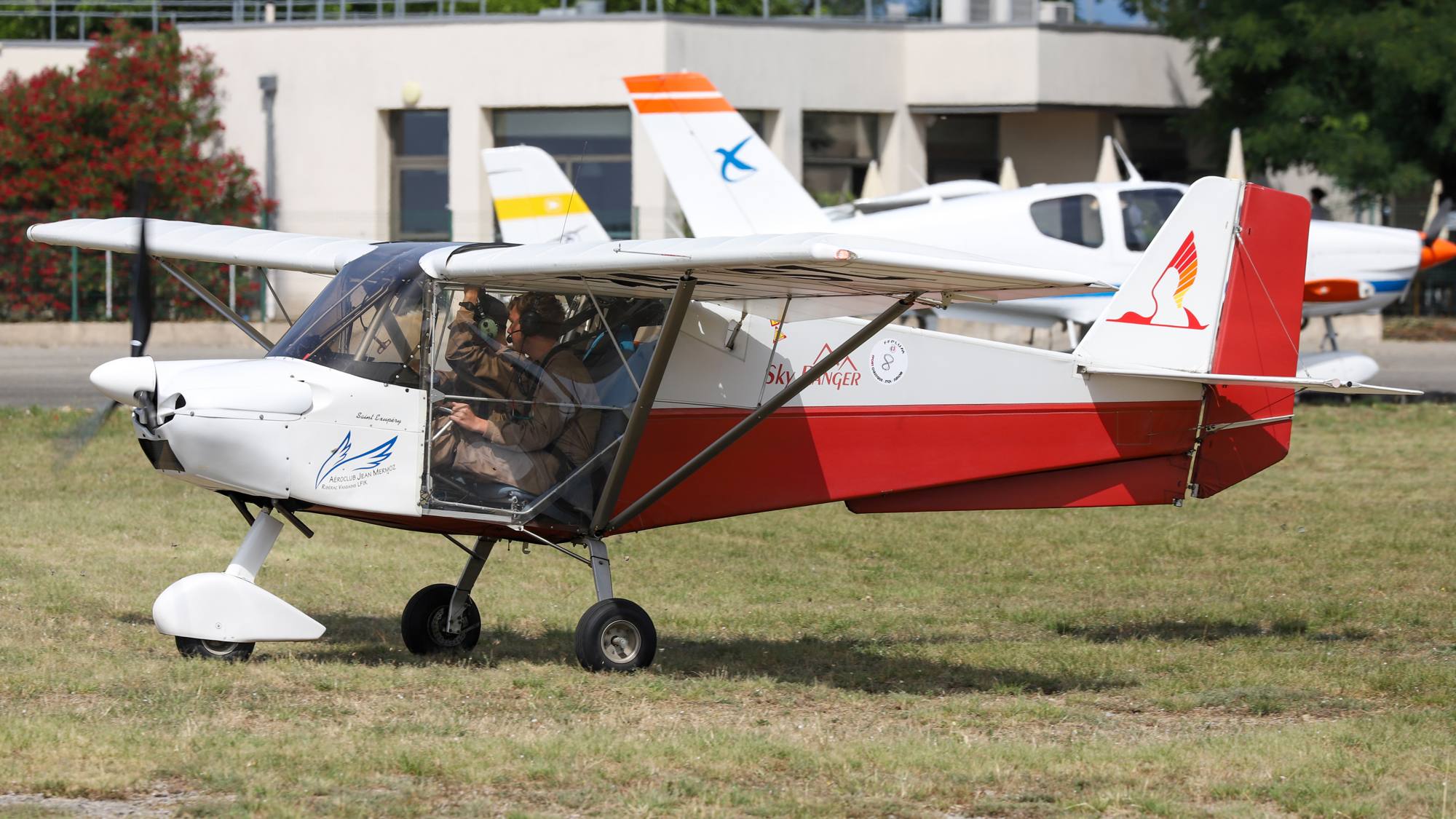
Between aeroplane and free flight
News from 18 December 2020. It has not been updated since it was published: some information may have changed. Latest news
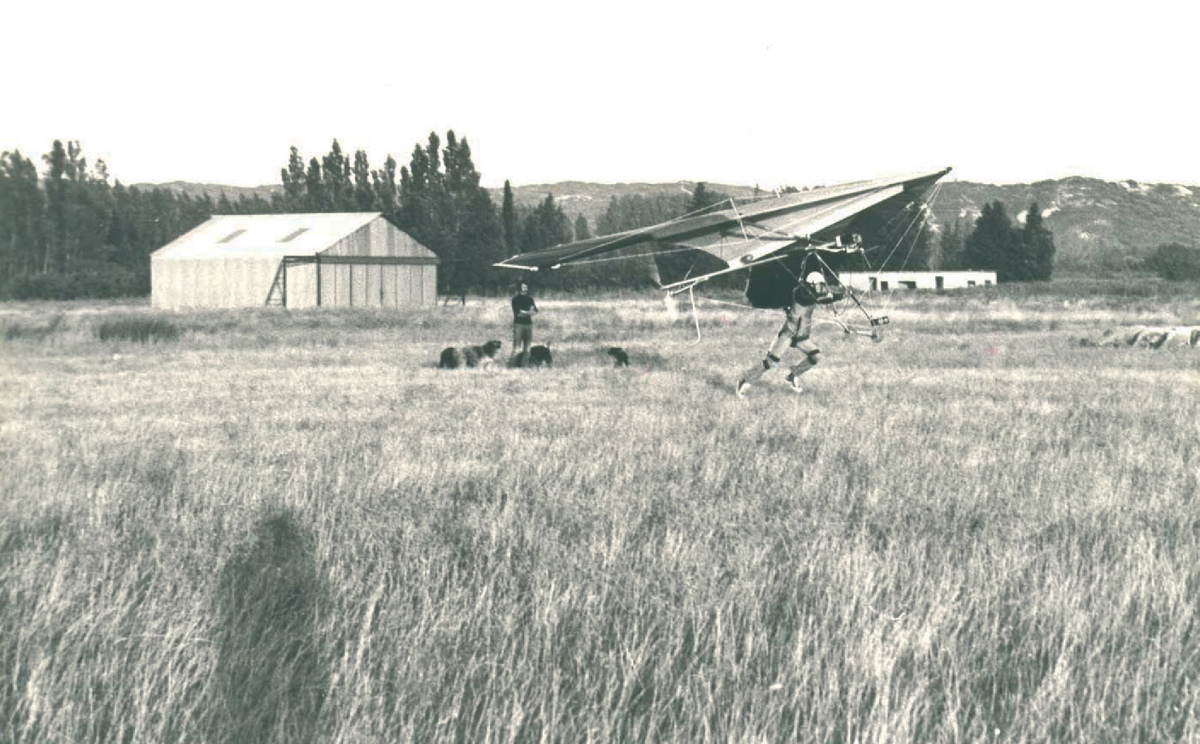
Very early in its short history, the microlight sought to find an identity of its own between its two origins: free flight and the aeroplane.
In the early 80s, the administration was therefore approached by the new microlight federation, FFPLUM, and its President Alain Dreyer, to develop rules guaranteeing both the safety and the freedom of those who flew. It was by sheer chance that in 1984 I found myself with Maxime Coffin, Dany Blanchet and Yves Morrier in the SFACT team in the rue du Louvre, tasked with drafting this new regulation and proposing it to the Minister of Transport.
The good fortune of the microlight world was no doubt that it managed to convince politicians and the administration of its ability to organise itself outside the constraints usually applied to aviation. And yet it was not so simple, but its strong dynamism made the difference.
The early days of the microlight were indeed marked by particular media attention to what appeared, sadly confirmed by certain incidents, to be an activity reserved for a few daredevils. Politicians would have had every reason to worry about this activity and to ban it. Yet that is not what happened.
I see several reasons for this:
The early 80s coincided with a change of political direction in France. For some, microlighting could recall what popular aviation had been in 36, and the federation undoubtedly knew how to play on this image with its supervising ministry. I remember, for example, the photo of the Minister of Transport, Charles Fiterman, helmeted aboard a microlight flown by the president of FFPLUM.
The SFACT team to which I belonged had no preconceived idea of what the safety requirements should be, and above all it considered that conventional certification rules could be applied to microlights neither technically nor economically. We therefore had to define new principles that would guide us in drafting these requirements. All the while knowing that these principles would undoubtedly offend the sensibilities of those, and there were many, for whom safety came only through certification and ever more regulation.
It was therefore decided jointly between the administration and the federation to propose requirements graded on a scale of risk. Risk was simply estimated according to the energy carried. Maximum weights, minimum speeds and the number of people carried were thus defined and limited, creating a “preserve” within which the freedoms of microlighting sit. One can then understand the determination shown by both the federation and the administration to preserve these limits, which safeguard those freedoms.
Safety was to come mainly from making those involved responsible and aware. This meant strong federal involvement and an accepted willingness to involve the representative organisations in implementing the regulations: FFPLUM, but also the manufacturers through the SCAUL (the ultralight aircraft manufacturers’ union), and the professionals through the SNPPULM (the national union of microlight pilots and professionals). It meant publishing simple, easily applicable regulations whose implementation would not limit the creativity of manufacturers. Raising awareness among those who fly meant we needed a pilot licence whose conditions of issue would be accepted by them.
We should have been followed by other European countries, for which the responsibility of federations is part of the national culture, and in particular by our British colleagues. Strangely, this was not the case. France remains atypical. This particularity of our regulation, which I believe played a major part in the development of microlighting in France, is currently confronted with the drive for European harmonisation.
One of the many unusual features of the rules governing microlight flying is that they stem not from any real political will to subject an activity often wrongly judged dangerous to safety requirements, but from the will of the people who practise it, who were seeking recognition of their identity and the preservation of their freedom.
This direct and constant involvement of those who fly, and of their federation, in defining and implementing the regulatory requirements imposed on them is in my view the hallmark of microlighting’s regulatory identity and of its success. Knowing the determination of President Dominique Méreuze, I know that, faced with European challenges, this identity will remain intact in the years to come.
Alain Vella
Deputy head of mission of the MALGH
Article published in ULM Info no. 58









