






Sallanches, a textbook case
News from 29 September 2020. It has not been updated since it was published: some information may have changed. Latest news
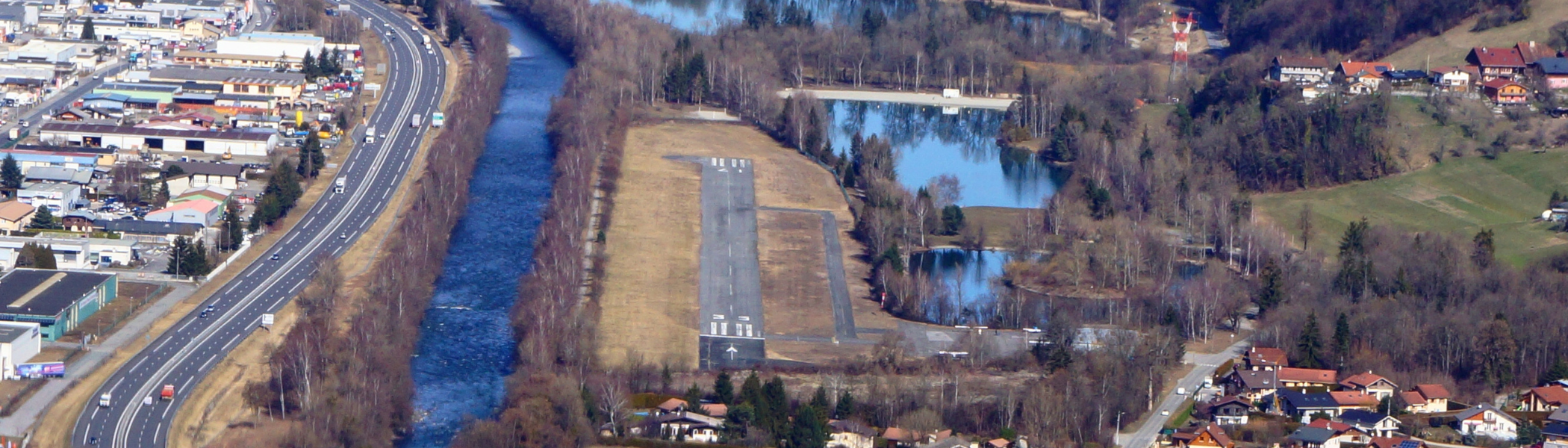
Over the summer, the federation, the CNFAS and the local associations called on a panel of experts to establish, independently, that Sallanches airfield is necessary for air safety in the Arve valley. This step complemented the legal proceedings that the same parties had brought against the municipality a year earlier, in which we had obtained the annulment of unlawful decisions. They had also been widely supported by a petition launched by Swiss glider pilots, which gathered more than 17 000 signatures. There are therefore two legal strands in the defence of Sallanches: a first on the dispute concerning the buildings, since closed, and a second on the value of the airfield itself, notably for flight safety over the local mountain ranges. The defence now rests on this last point alone.
Incomprehension
In July 2020, we discovered with astonishment and incomprehension the order closing the airfield, which was issued with surprising speed by the Minister for Ecological Transition on behalf of the DGAC. We immediately lodged an informal appeal with the minister and are still waiting for a reply. The municipality of Sallanches, taking advantage of the enforceable nature of the closure order, very quickly had the hangars... demolished! And blocked access to the airfield!
The regulations allow citizens to ask the administration for the documents on which administrative decisions are based. It was therefore with some astonishment that we received and... discovered, through our lawyer, three very instructive items.
Sallanches: a useful airfield
The first is an internal technical study dated 11 February 2020, intended for the Air Transport Directorate, which concludes that the value of Sallanches lies in being the only emergency landing aerodrome in the Arve valley for aircraft that need to land without delay. Sallanches is also regarded as a useful airfield for rescue services. The DGAC study concludes: "An emergency landing area is important in this region. If the aerodrome is closed, it appears necessary, in terms of safety, to identify a new emergency landing area." This study, carried out by the administration itself in accordance with the law, reaches exactly the same conclusions as the panel of court-appointed experts we had commissioned! The DGAC therefore closed the airfield in full knowledge of the facts, without proposing an alternative.
Closure procedure
The second point concerns the procedure for closing the aerodrome. Before any decision to close Sallanches airfield, the DGAC's legal departments had required that the views of the airfield's users be gathered, which is also good practice in general. Yet it is established that no official face-to-face meeting with users, associations or federations took place throughout the period before the closure.
How can such radical decisions be taken without making the effort to bring the stakeholders together? Is it not the role of the administration to facilitate dialogue while asserting the principles of the general interest?
Alternative proposals
Lastly, it is established that neither the administration nor the municipality of Sallanches put forward alternative proposals, although these were required by the DGAC's legal departments. The mayor of Sallanches did make simple informal requests to neighbouring airfields to relocate the aircraft - doomed to fail! - but this certainly did not meet the obligation to actually propose a replacement solution. What a waste, and what a lack of pragmatism!
We obviously have all the elements needed to go to the Conseil d'État and in particular to seek suspension of the closure order for illegality, although the cost of the proceedings already brought over Sallanches is extremely high. But the stakes are decisive for all the other airfields.
Compromise
Could we not reach a compromise solution in which an alternative site, a microlight strip for example, could serve everyone's interests in the same area? This is the avenue on which we prefer to focus our resources, without ruling anything out. Until then, the Sallanches runway must technically remain usable. It seems that since the start of the new term, helped by the informal appeal, the ministry has recognised the extent of the failings committed and become aware of the need for a constructive approach, by asking the administration to favour a compromise solution.
A textbook case
Sallanches is a textbook case of what not to do and, let us hope, in the end of what should be done! Although each airfield faces specific problems, a general doctrine needs to be set out in a context where the threats to airfields keep growing, while a mistaken perception of sport and leisure aviation is spreading among the public.
- First of all, our airfields do not match the image the general public has of an aerodrome (from Roissy to Nantes, the ones within the scope of the citizens' convention). They are generally small airfields with a long history, large green spaces that serve a land-planning purpose, just like sports facilities.
- By closing these small airfields, we lose green land, we fragment the activity and concentrate it on other airfields, creating nuisance, and we make it less accessible. We create tension with elected officials and users.
- It is essential that the State has a clear vision. It would be desirable for every plan to close an airfield to give rise to an effective mediation procedure and, in all cases, to a proposed alternative solution. And it is normal that, at first, the DGAC begins by defending existing airfields with constructive arguments.
- We must also show imagination. The federation is embarking on a programme to acquire airfields (but we need the help of the public authorities). One could also imagine offering users the chance to buy them. Nothing should be ruled out, but we must rethink the terms of access to our activity rather than passively accept closures or permanent, sometimes insidious, threats.
We therefore want the episode of power struggles and litigation to give way to a clear partnership around shared goals. Sallanches must set a precedent in the good sense of the term!









