






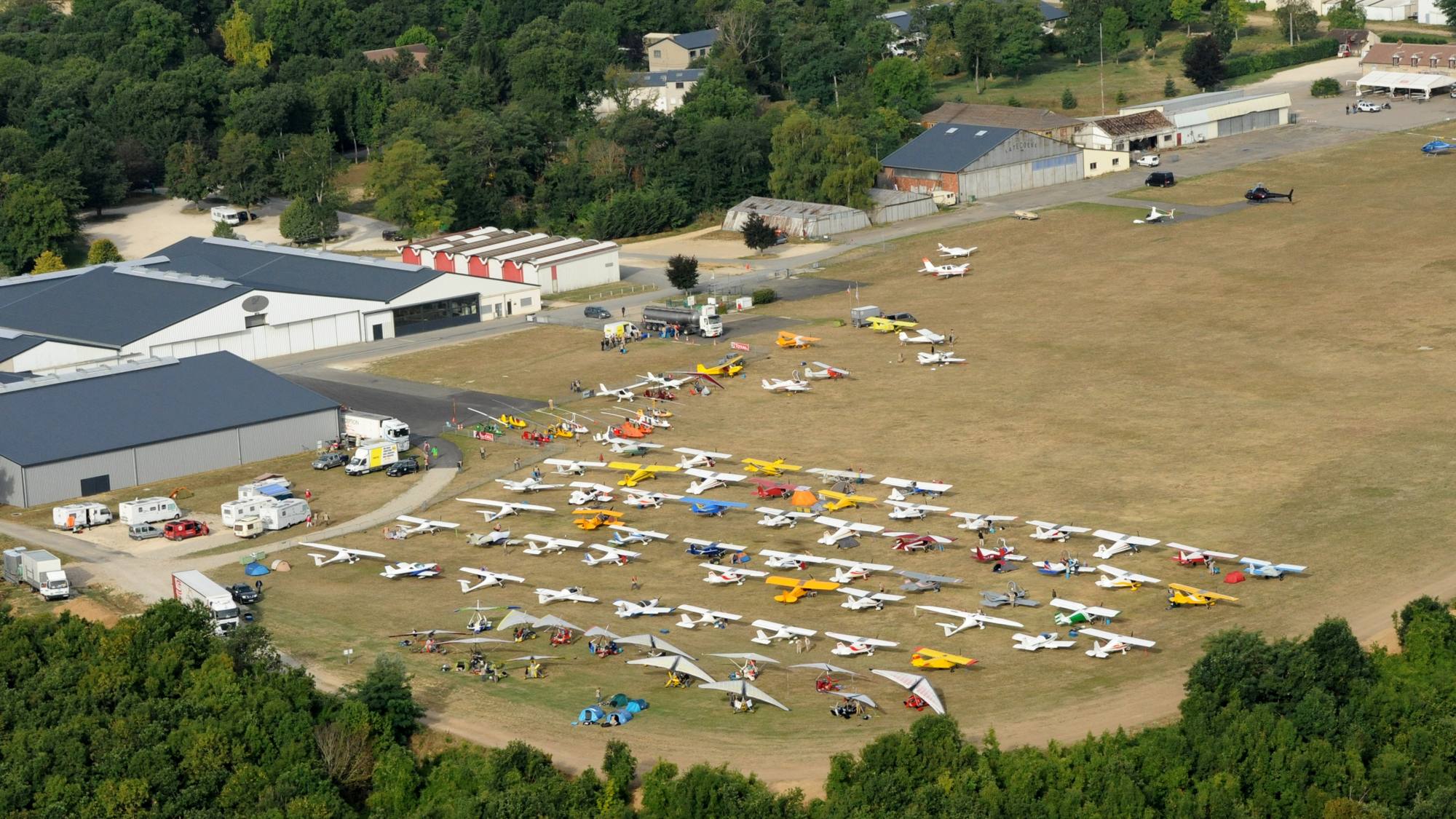
Hubert de Chevigny has left us
News from 30 December 2022. Last updated on 26 May 2023: some information may have changed. Latest news

Article from ULM Info no. 58
Roots and wings
The sky was forbidden to us, but not for long: the appearance of the first hang gliders raised every hope. The long climb under the blazing sun, set to the rattle of the harness and a pounding heart.
At the school of wild flying
The shoulder tormented by the bundle of the wing that sways in the turns and swings like a weathervane in the wind. The long, cheerful waits at the summit. The careful watching for the first signs in the air. The frantic take-off run in religious silence, the dive towards the valley, the recovery, then the explosion of the senses. Far from everything, flooded with happiness, we were free men, we had mastered the sky. And we answered to no one.
When we began to fit our wings with 6000 spluttering engines and so to free ourselves from the mountains, the microlight was born. Hidden away in the back country, our wild take-offs, always different, our flights almost always cut short in a hurry, delighted us. We cultivated the art of go-anywhere flying, deeply committed and very responsible. A happiness, a freedom that we owed to no one. Our machines did not come out of subsidised design offices; they had been devised empirically by people thirsting for flight. But technological progress was bringing us closer to the big players. One day we would have to compromise. In the meantime, it was already too late for anyone to steal our independence.
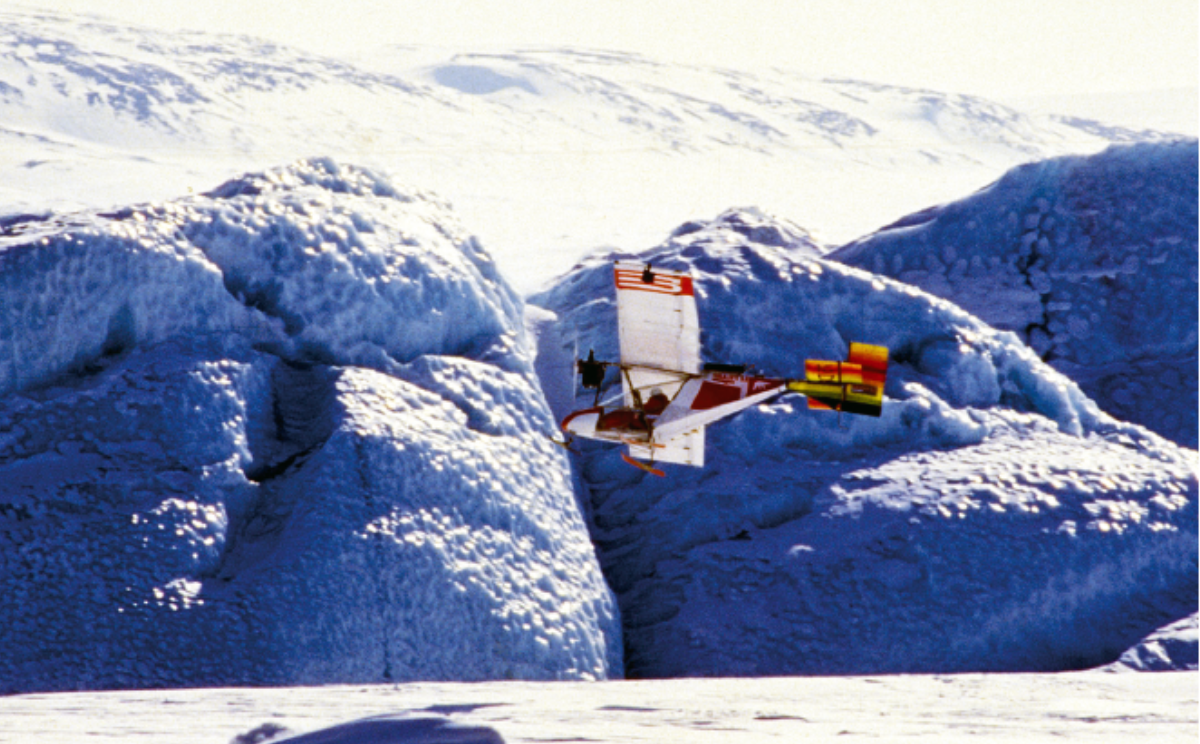
The FFPLUM, homeland of human rights
Last winter, at the Etats Généraux de l’Aviation at the Aéroclub de France, I listened to our leaders take stock of sport aviation and its rather gloomy future. In the surrounding greyness, the microlight stood out as a ray of sunshine: a rapidly expanding population, falling accident numbers, and an exporting industry. Better still, to try to save airfields today, they are being opened to microlights. How did the ugly duckling get there? A unanimous finding: the microlight owes this success to a well-understood freedom, one that makes the pilot responsible, makes the manufacturer responsible, and respects the individual in a society where infantilising safeguards are multiplying. It was the high mass at which the sacrosanct certification and the repeated blaming of the pilot were buried. The FFPLUM looked like the homeland of human rights.
France had De Gaulle, the microlight had Dreyer
I closed my eyes and sank into my seat. Transported back 25 years, we were around a table facing the Administration, summoned to be told the rules of the game. But the one leading the dance, with his gaunt and energetic face, was Alain Dreyer. He had the legitimacy of the horde of air pariahs who had elected him the first President of the FFPLUM. Before entering the room, he had told me: “Hubert, I know them, we will have to fight to keep our freedom. Our strategy: do not allow them to separate the three-axis from the weight-shift. The latter baffles them, it is our only weapon.” And every time an official tried to alienate the microlight by talking to us about certification, qualification and controlled airspace, a very conciliatory Alain Dreyer replied with floating cross-bars and recovery lines and, spreading his elbows, flew a virtual control bar to explain how to land safely in an unknown field. Enough to flatten our three-axis, tarmac-bred, certified interlocutors, who had no way out but to tailor a declarative regime for us and let us deal with training our own way. The tone was set, weight-shift and three-axis solidarity had worked, and nothing could now hinder the great microlight adventure built on this culture of responsible freedom. France had De Gaulle, the microlight had Dreyer.
A sky without limits
We were able to express ourselves fully, sometimes with a little arrogance and provocation. The creation by Patrick Poulet of the ENAC, the Ecole Nationale d’Aviation Champêtre (National School of Country Aviation), under the colours of a cow’s head with a daisy in its mouth, earned us a lot of mail from indignant airline pilots. Even more mail from the same people when I declared that, as a passenger on our airlines, I would rather know there was a former bush pilot in the cockpit, used to every situation, than a brilliant student who graduated top of one of our prestigious “prépas”. When it came to off-road flying, we had our convictions.
We gave lessons, but we received some too. In 1980 at Brienne le Château, the RSA’s annual high mass, I had quietly put my Vector down at nightfall at the end of the 3000 m runway, opposite the brightly lit big hangar teeming with real pilots. Hubert Ferté, the grand organiser from whom nothing escaped, arrived at full speed and mischievously summoned me on the spot, with my machine, under the spotlights. What he had sensed, he the tireless and eternally enthusiastic pioneer, was the wind of freedom that the microlight represented, and of which he would become a great servant.
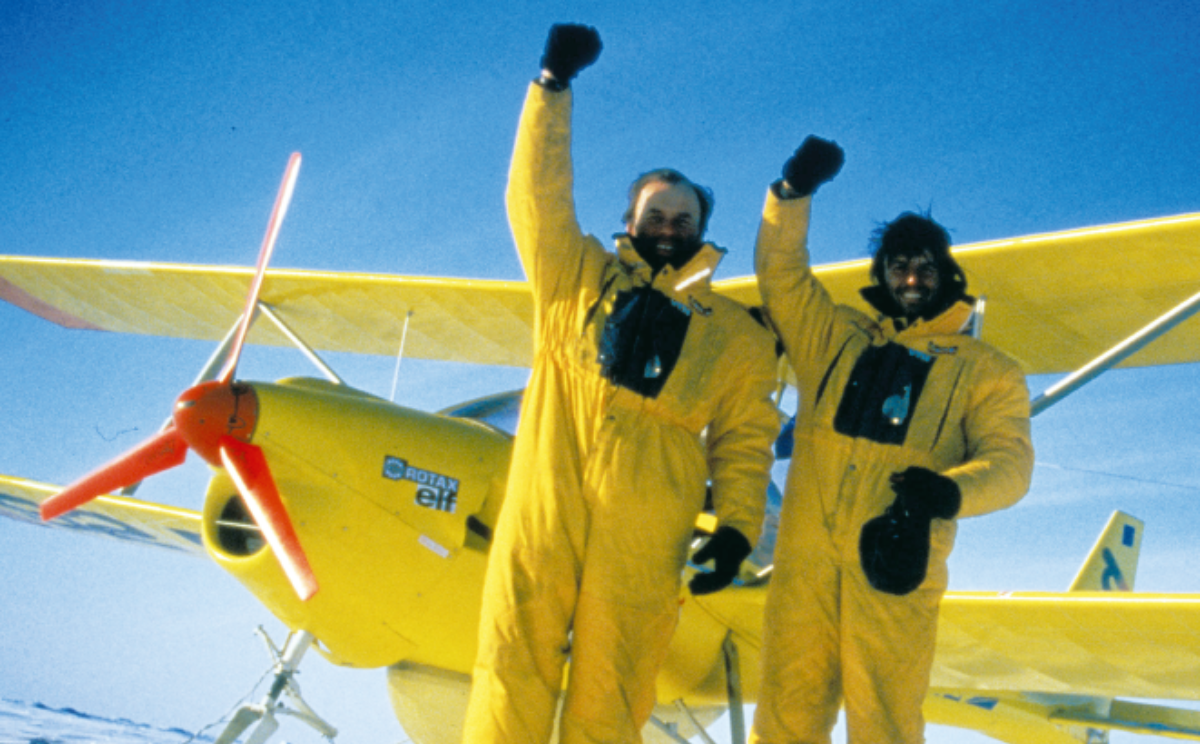
Microlighting in the Arctic
Microlighting was then the only way to fly away from an aerodrome. In cross-country flying, we were our own mechanic, chief pilot, instructor, controller and weatherman. Our aviation in short trousers was a real school, and a very complete one.
I very quickly understood what I was going to do with this marvellous tool of exploration. In 1982, having discreetly brought my “tube and fabric” machine into Canada thanks to the disorder of a carriers’ strike, I was able to reach the North Magnetic Pole by air, alone and as a stowaway, in a state of deprivation that still astonishes me. A few fuel caches thanks to a boat I guided through the ice, a rifle for bears, a few ship’s biscuits in my pocket and a fierce determination to take my mount through the traps of the Arctic. A real breath of oxygen.
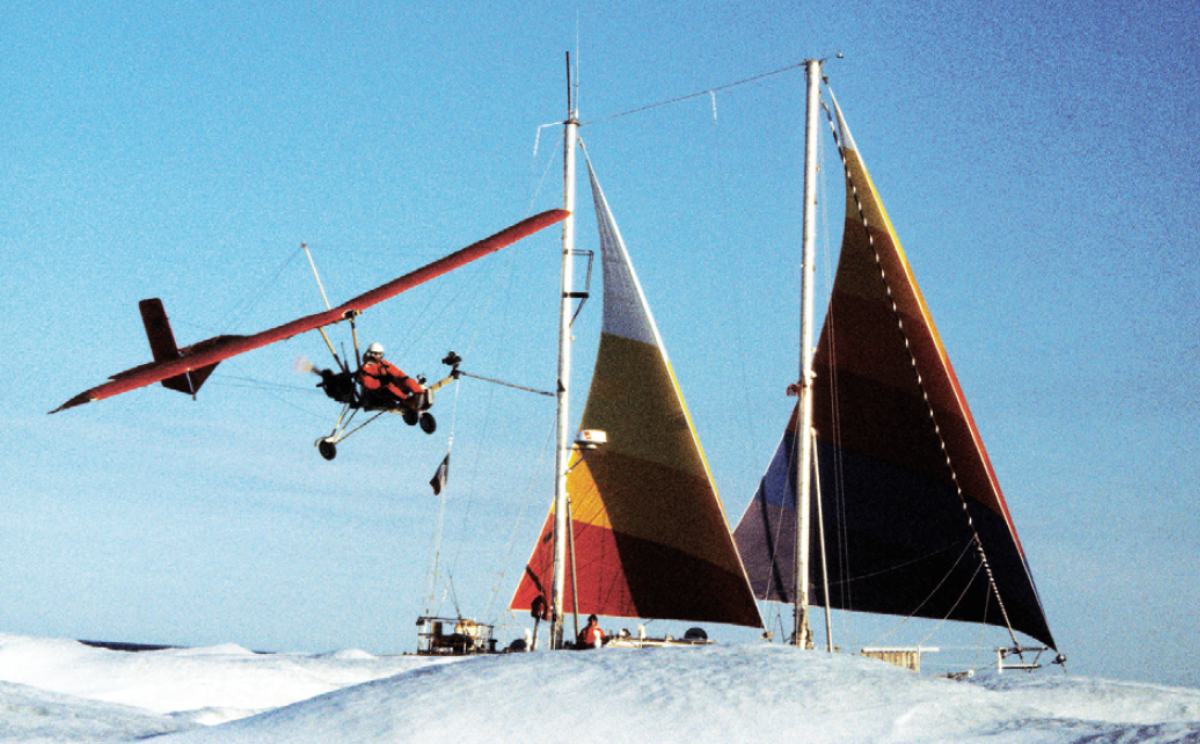
So in 1986, I attempted the real North Pole, the one that requires flying over several thousand kilometres of pack ice at an average temperature of -30°. Officially this time. My talented companion, whom I had taught to fly a year earlier, was a young France Inter journalist, Nicolas Hulot. We endured storm after storm, progress was slow, and a downdraught finally got the better of his machine. I carried on alone with a bare minimum of survival gear in a ride with no witnesses, drawing on all my resources to push back the limits of reason. I think there is only a very short span in a man’s life when the experience already acquired, combined with the risk-taking still permitted, propels you to peaks of performance. Which did not stop me from failing and giving up in my turn…
The following year we reached the Pole together, with a media impact which, though it came at the right moment for the microlight’s image, allowed Nicolas to move from radio to television and me from the microlight to the Explorer series. The ultimate exploration machines, born of a bubbling imagination, deep in a sleeping bag in an icy tent when I was pinned to the pack ice by a blizzard. For my part, had I not gone to school in that creative pioneering era of the microlight, I would never have had the nerve later to carry through my Explorer and Private-Explorer projects. That is no doubt why Tisserant then headlined it the biggest microlight in the world. It was in the spirit.
When you have wings, it is sometimes good to draw on your roots to better project yourself into the future.









