






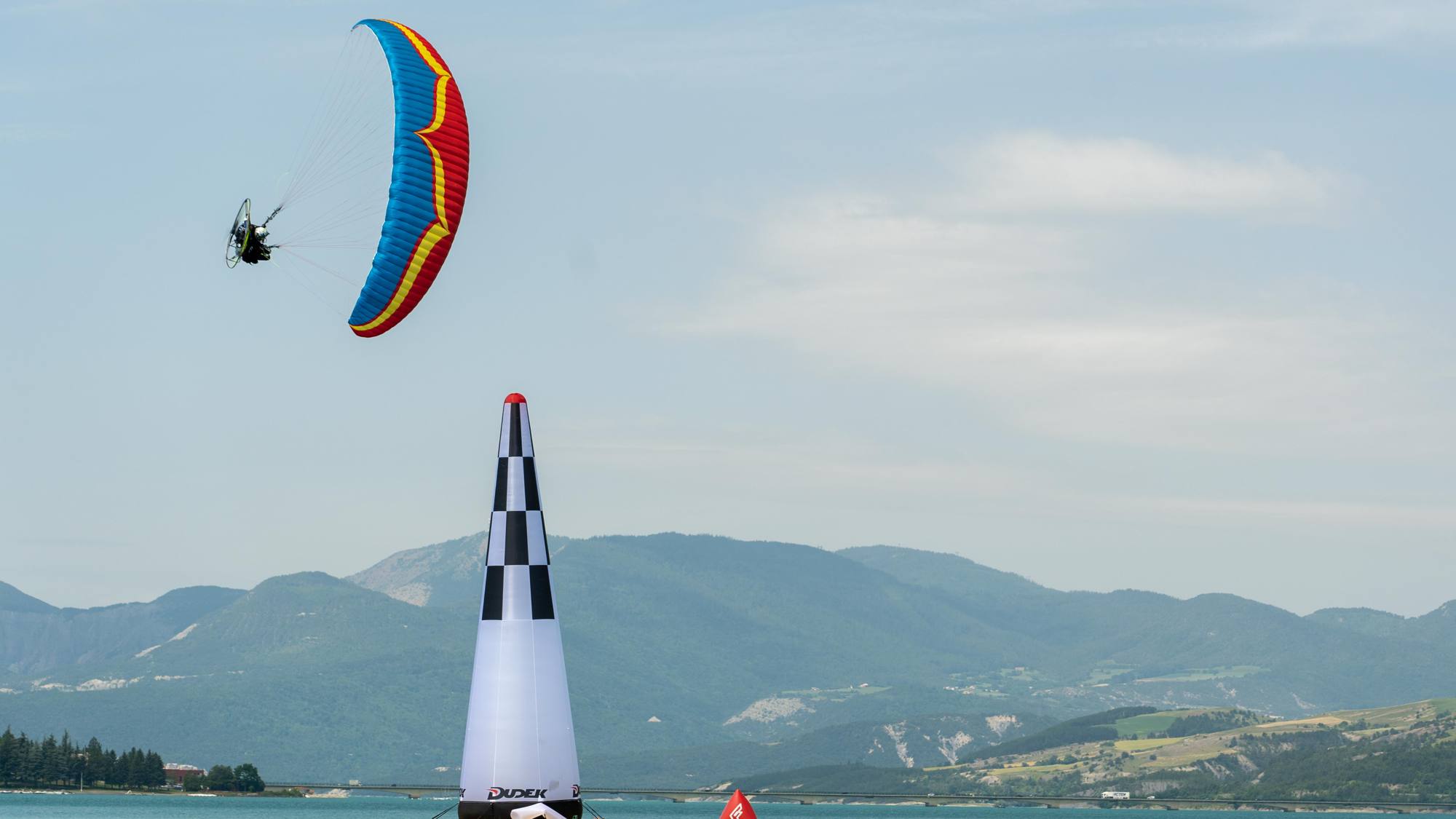
The federation label
Drawing on its teaching experience, the FFPLUM has written a training syllabus for each microlight class and created a federal label. These labels offer clubs that wish to apply recognition based on the rigorous training they provide. In the same spirit, the MOUNTAIN FLYING, SEAPLANE MICROLIGHT and MECHANICS TRAINING labels meet more specific needs. These labels are above all strategic tools and a source of progress for microlight flying.
INTRODUCTION TO THE FEDERAL LABEL
The federal labelling process offers those who wish to apply recognition based on the training they provide.
Drawing on its teaching experience, the FFPLUM has written a training syllabus for each microlight class.
This syllabus sets out the phases that are essential to any microlight pilot training, specifying the unavoidable minimum.
The head of training keeps full teaching freedom, but must check, and where necessary ensure, that their own programme fully incorporates the federal syllabus.
Everyone wins!...
• For students / customers, the label gives assurance that the training course offers an environment that favours learning to fly microlights. It guarantees that the behaviour taught suits our ultralight flying culture
• For schools and clubs, the label will bring greater appeal through greater recognition. It is a strong brand image with the public.
• For the FFPLUM, the label is above all a strategic tool and also a tool for progress in microlight flying. The label must establish a climate of trust and seriousness. It is a brand image with the supervisory authorities.
- The Label rules
- The Label application file
- The microlight pilot certificate training contract
- List of labelled schools
PRESENTATION OF THE LABELLED TRAINING COURSE
The training course has three phases in each of the different classes:
- Award of the microlight pilot certificate.
- Authorisation to carry passengers.
- Award of the radio rating (for pilots who wish to take it)
The certificate:
The instruction phase is defined by the new training programme specific to each microlight class.
It is based on:
* around fifty practical lessons for the three-axis class certificate.
* around thirty practical lessons for the weight-shift class certificate.
* around forty practical lessons for the paramotor class certificate.
* around fifty practical lessons for the gyroplane class certificate.
Every student is unique, so the duration is adapted to each person's abilities.
Carrying passengers:
This is the advanced training phase leading to authorisation to carry passengers.
* Additional training in cross-country navigation. (theory and practice)
* Handling with a passenger on board.
The radio rating:
During the student pilot's training course, they may, if they wish, be awarded the 'RADIO' rating, following the theory programme for radiotelephony training in French.
After specific theory and practical instruction, acquired alongside the rest of their training, they can take the final test.
This consists of a navigation flight with their instructor, crossing a controlled zone and landing at a controlled aerodrome.
To pass this test, they simply need to show that they have mastered standard phraseology, the rules of the air and the various procedures.









