






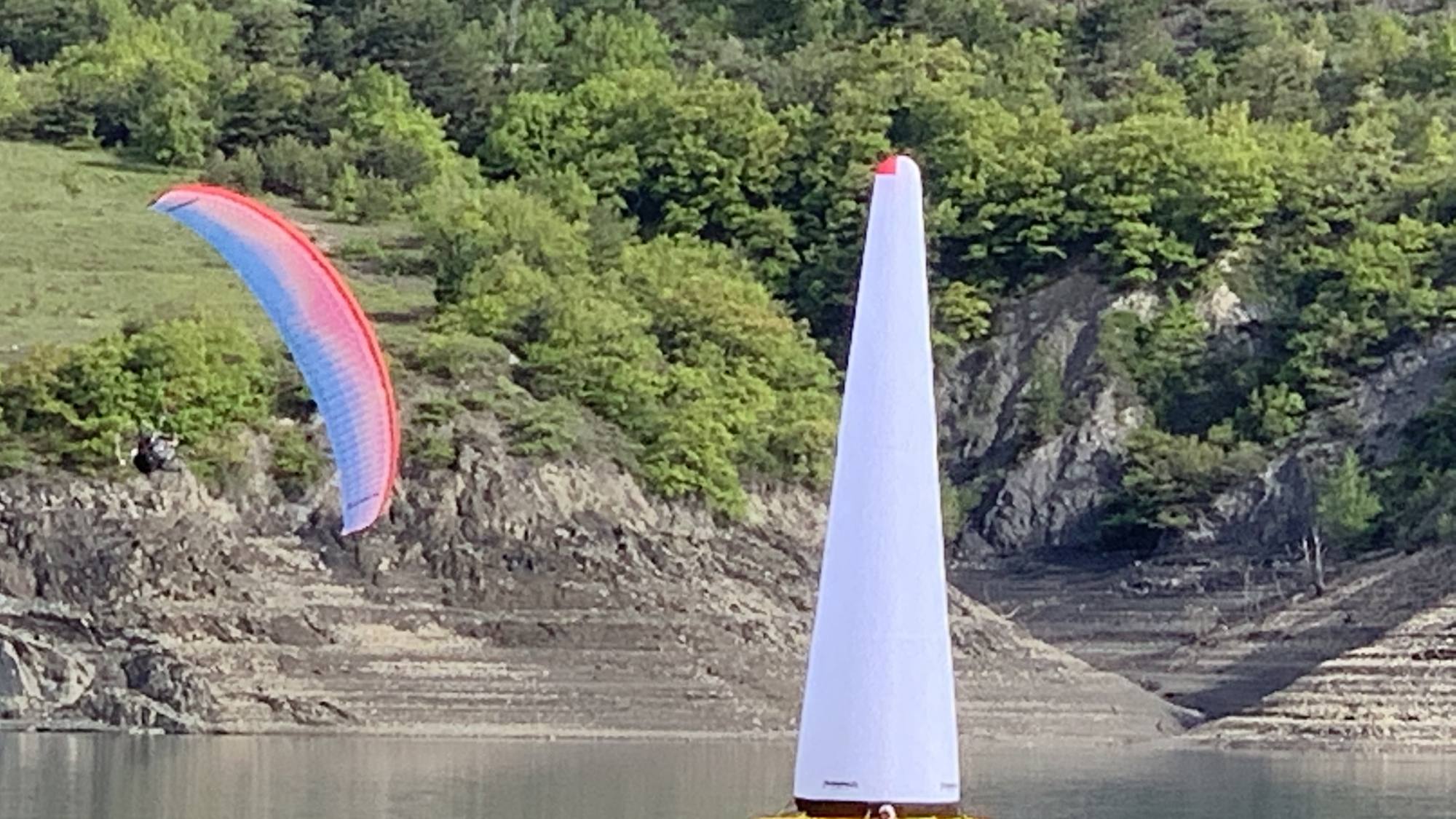
Microlighting and Sport - Slalom becomes a high-level sport
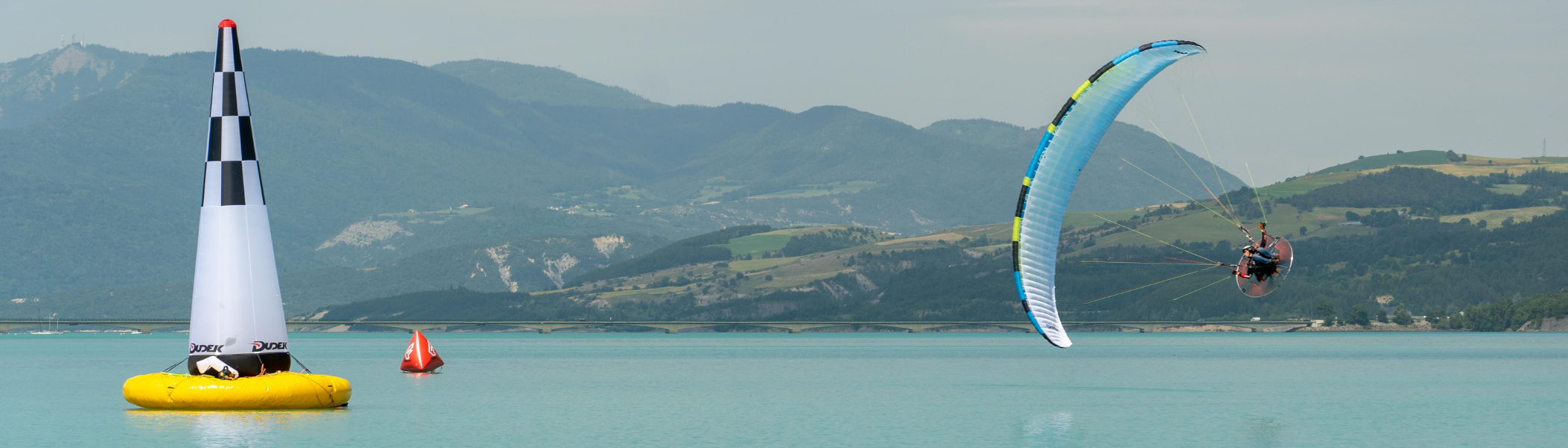
The Ministry of Sport has just published the list of high-level sports (available by clicking here). For the first time in its history, microlighting enters this category, for paramotor slalom competitions. This request by the Federation, which has been granted, recognises the national and international profile of this sport; it also gives access to greater resources and offers competitors a training pathway and professional equivalence.
Beyond distant sympathy for this good news, most microlight pilots will surely wonder how it affects their own flying. This legitimate question is fuelled by prejudices and misunderstandings about the role of sport, which is too often seen as an elite activity reserved for competition.
Without rewriting history, it was the Ministry of Sport, to which the Federation is a delegate, that defined microlighting more than 40 years ago, by choosing to give regulatory form to a sport that is neither aeroplane nor free flight while being a little of both. Without this founding gesture (the Federation is the "youngest" of the eight aeronautical federations), microlighting would have been drowned in the certified world or diluted in free flight.
On a very practical level that concerns us all, the medical requirement carried by sport, often misunderstood by the certified world, has spared us the aviation medical examination, whose requirements are not suited to a sporting and leisure activity. Entities that boast of not being attached to sport in fact benefit from this protection thanks to the Federation. Without affiliation to sport, we would long since have been within the scope of the certified medical regime, which keeps getting more expensive in consultation costs and more depleted in our regions with the scarcity of aviation doctors.
On another very practical level, sport is above all training and skills. A federation therefore has a vocation to take charge of training. This was more explicitly the case at certain times in our movement (right at the beginning, or in the days of the national microlight centre, for example). The training aspect is of course defined by the Ministry of Transport, but with syllabuses that are again often imported from certified practice. The recent delegation of the microlight theory exam goes in this direction, and our Federation's National Technical Directorate is there to guarantee the consistency of all our training arrangements and our welcome of the public (starting with minors). Club and Regional Committee officials also know the importance of sport in the development of our organisations and airfields. More generally and very concretely, the best way into improving one's flying is through sport and play (navigation, precision, handling…).
But sport is above all a driving force that carries our whole sport forward through the image and values it conveys. Those who were at the Microlight World Show remember the magnificent display by the French paramotor team. The success of regional competitions (in paramotoring but also in the other classes, though more timidly), the appeal of new activities such as STOL, and the very many records (in fuel consumption in particular) benefit everyone: ordinary pilots, clubs, manufacturers, professionals. The Federation will further increase the visibility of sport and of our activities (in the next ULM-info, for example). Over time, sport guarantees the consistency and continuity of our sport. And if we go back to the prehistory of aviation, it began with "sportsmen" before becoming military and then commercial.
The high-level delegation for paramotor slalom is therefore good news for everyone!
Safe flying.
Sébastien PERROT
President of FFPLUM
PS: our 16 000 member is a paramotor pilot!
Access the 12 teaching sheets created to better understand paramotor sport!
Discover STOL at Belmont - Learning & Competition
Slalom photos: © Antoine Taillefer
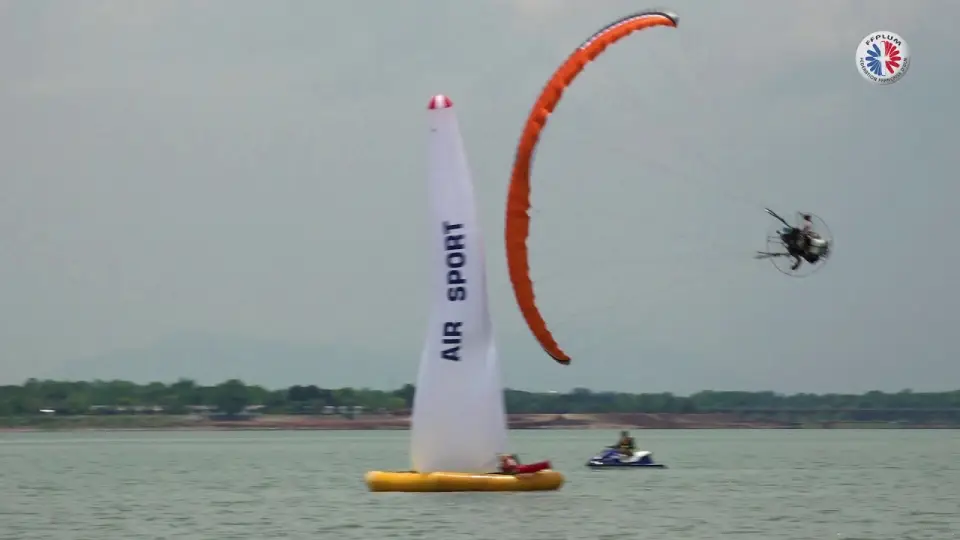
Discover slalom flying with this video of the 2018 World Championships in Thailand!
YouTube video: playing it loads it from YouTube (Google), which receives your IP address and sets its trackers. Your consent will apply to YouTube videos on this site for six months. Manage my cookies









