






From our history to our future
At the start of 2025, a new team is steering the fortunes of our fine federation, Horizon ULM 2028; within it, Valérie Barillet and I are in charge of the brand-new history, heritage and innovation committee. For some of us, these two notions may seem opposed. To them I put a very simple question: what tree grows without roots?
We know little about the future… it depends on our local environment, on our local and national authorities and administrations. The nature of an administration is to “produce rules”. We must therefore take care to maintain the best possible relations with the ministries that oversee us, so as to remain a source of proposals, support them better in their thinking and safeguard our activity.
What holds for the federation at national level also holds for our Regional Committees and our clubs, which must not only cope with the legislative environment but also fit into a local area, taking local policies into account.
So let us think about raising awareness among local elected officials (members of parliament, mayors, county councillors) and regional and county administrations. These local authorities are our first point of contact, since we are very often housed in premises they own.
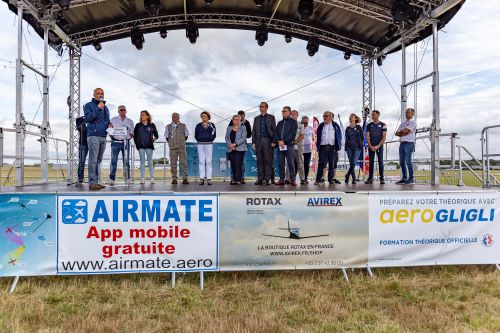
A respectful and constructive dialogue absolutely must be established, bearing in mind that these representatives are there to manage all of their constituents, and not just a few enthusiasts of a much-criticised pastime. It is therefore up to us to raise their awareness, which means informing them, and so meeting them.
So let us think about informing the mayor, the county councillor and the member of parliament about our every event. Several means are available to us, besides the regional daily press, which is sometimes hard to reach. After every general assembly, every coffee-and-croissant morning and every event, send an article with photos under an eye-catching headline. It may not be published, but you will have made the editorial committee aware of you, and they will eventually get in touch. Of course, remember to invite all these dignitaries to these events. If they cannot come, they will send you a short note, which you can remind them of when you meet. If you also make a phone call and push a little, rest assured they will end up taking an interest in you and visiting you. There, glass in hand, you can set out your projects and arouse interest.
Finally, do not position yourself as a supplicant. Be a source of proposals… “No, Councillor, I need nothing! But let me explain what my club brings to your area, and perhaps one day we could walk part of the road together.” We train hundreds of young people in ultralight flying every year, we build links in the area, we take part in local history, we attract tourists, and so on. Among the many projects bubbling up in our clubs, there is surely one that will catch their attention, and they will be the ones to offer you help; at that point, be careful…
Do not ask the mayor of a municipality of 3 000 inhabitants for a grant of 25 000 euros that he could not give you even if he wanted to. Bear in mind that all grant applications must go through a vote of the municipal council for municipalities, and the standing committee for the larger local authorities. Unless you fit into a local or regional scheme, you will have little chance of success.
If, on the other hand, for your next gathering or the competition you are hosting, you ask them for… barriers, the marquee or marquees from the village fair, the big coffee urn from the festival committee, help with your dealings with the administration, who knows what else, you may hit the jackpot, and the elected official will be able to answer yes without calling yet another meeting where he would have to argue his case, with the risk of a refusal whose consequences you would pay for. “Because of the microlight club, I got a rough ride at the council”… Our elected officials have memories too! In a word, give them the power to say yes!
To support you in your efforts and advise you, the club life committee is of course at your disposal; please do not hesitate to call us, and we will do what we can to help.
That is the future, which, as you will have understood, belongs only to us and depends on the actions we take every day in our clubs. Let us take them together, it is in everyone’s interest!
As for our history and our heritage…
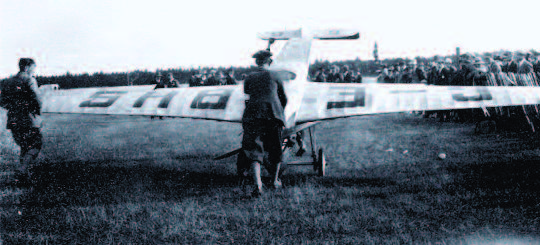
Microlighting is at the origin of our aviation… well, almost, but at a time when energy was not as well tamed as it is today, our elders showed great imagination in getting their odd machines to fly. They had to keep it simple, light and as safe as possible… These women (there were many of them) and men built what we are; this is the first pillar of our work, an essential part of our history, and we must make them known. On this subject, your club is bound to have an old hand who will be delighted to tell you he knew old so-and-so, who… Record their stories, write them down and send us the short document. The lesser-known are not the least important! While you are at it, send it to the local newspaper too; they are often fond of this kind of article…
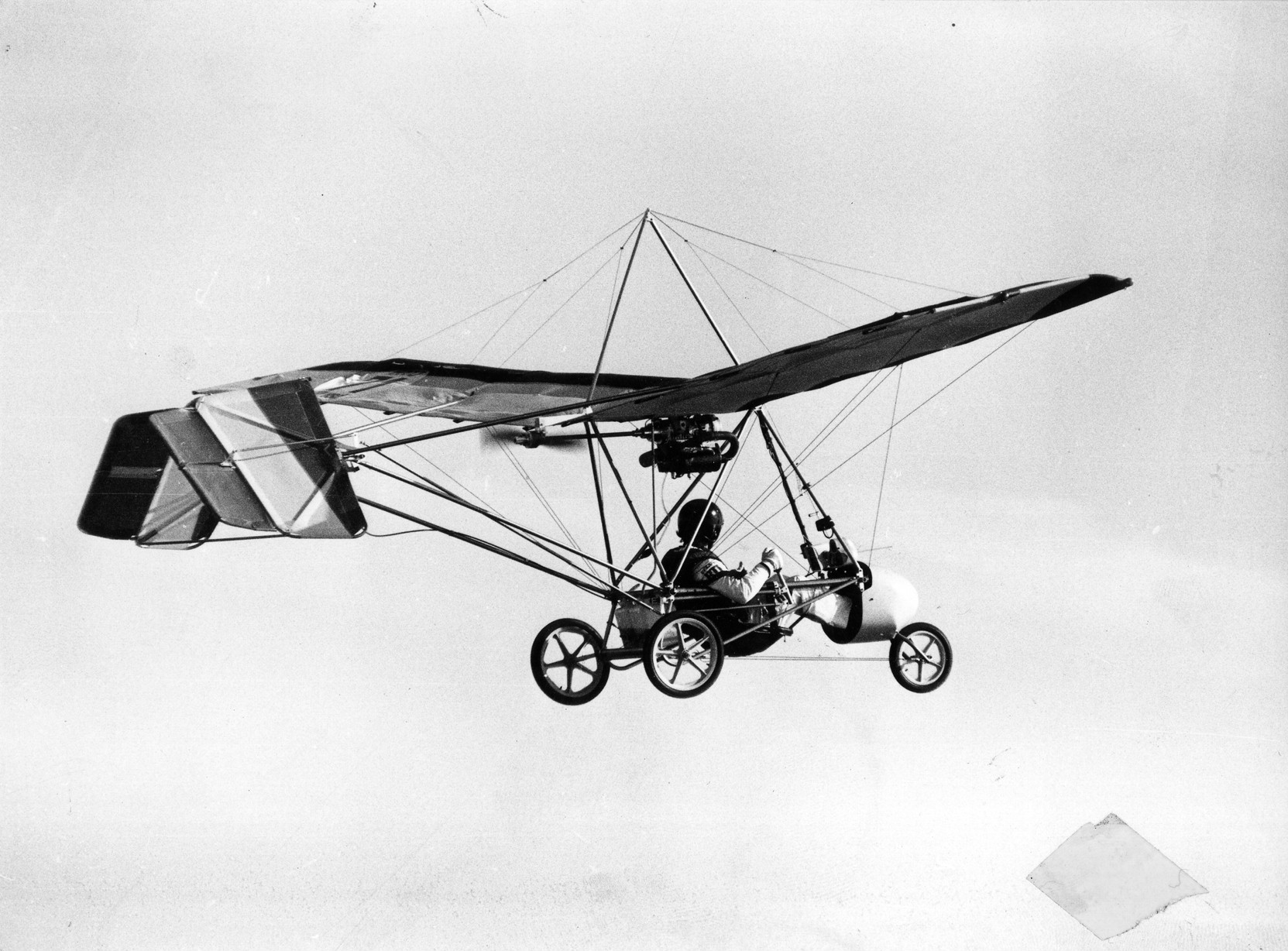
The machines… What some called a “minimum” in the 70s eventually arrived in our fields. The Danis and other Magallons, to name but a few, flew improbable contraptions. We must find the written records, photos and descriptions… Free-flight machines with no undercarriage but with a small engine that was not always very reliable… Weight-shift microlights and the first 3-axis aircraft, in tube and fabric, arrived naturally. We know what followed from these natural developments. Then came the first order concerning “motorised ultralight machines”; here too we know what followed, but it is also our history, that of a movement which, from the 80s, organised itself in the interests of microlighters; I for one have a lot to tell about that period, and I invite you to do the same, so that we build up a database that is still to be created, with you and for you of course!
The federation. In the 80s, microlighters decided to organise themselves and created our dear FFPLUM. We are going to go back over all the minutes of the Board of Directors meetings since the origin of our federation, note all the key events and contact the witnesses to those events. We will bring them together at the Mondial de l’ULM in Blois, around a big round table; they will share their memories and testify to what they saw and felt, and you will be able to question them as you wish! It is also an idea for an activity for our clubs, isn’t it?
That, friends, is how we are going to go about it, all together, to put the great history of microlighting down in black and white and present it to our contemporaries. Strengthened by this history that has forged us and that, I have no doubt, will unite us all, we will be able to write a fine future for our shared passion.
If you have documents or exchanged letters, or good or bad memories, do not hesitate to send them to us. They will help us write our history comprehensively.









