Skip to content
French Microlight Federation
Home
Flying Entry to the Flying section

Fly

What is microlighting?Where to fly?Licence and insuranceMedicalHandivolMechanics

Become a pilot

The pilot certificateMicrolight examTrainingTrial flight

Regulations

Regulatory documentsAirspacePlan your flightsAirfieldsOPS ULM — order of 17/02/25

Federation support

Support for young peopleThe BIAGrants
Instruction Entry to the Instruction section

Network

Clubs and schoolsInstructors

Instructors

Microlight instructor trainingList of instructors by départementKnowledge refresherThe teaching programmeTeaching and technical sheets
Sport
Safety Entry to the Safety section

Prevention

DirectivesParachutesFederation prevention

Safety reports

REX — submit and browseFlight Safety BulletinReturn to Flying (REV)ECCAIRSCSV flight safety officersList of REX reports

Alerts

Safety news

Files and quizzes

Good practice
News Entry to the News section

Read

Federation newsULM Info — the magazineClub life

Calendar

EventsSubmit an eventFederation events

Media

Documents to downloadPractical guides

Stay informed

Frequently asked questions
The Federation Entry to the Federation section

The institution

Elected membersThe divisionsRegional committeesThe DTNEthics and professional conductSafeguarding in microlightingThe federation in figuresOfficial textsGeneral Assembly

Federation events

The Youth Microlight Tour (Tour ULM Jeunes)Microlight World ChampionshipsFesti'ULM

Join us

RecruitmentContact
Report Member area Federation shop Site map 2026 Licence

FlyingSix classes, six ways of leaving the ground

Flexible wing or rigid wing?

Seated or suspended, on wheels or on floats: each has its own regulations, training and airfields.

On video

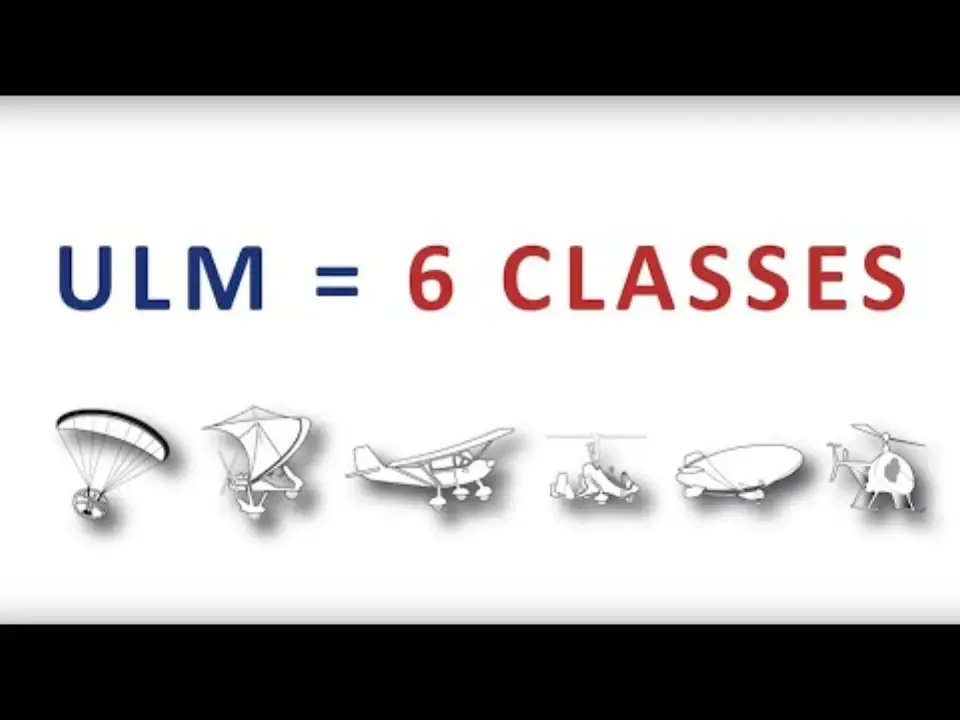
The six classes, in pictures

The federation's video presents the diversity of the six microlight classes.

YouTube video: playing it loads it from YouTube (Google), which receives your IP address and sets its trackers. Your consent will apply to YouTube videos on this site for six months. Manage my cookies

The six classes

Put two machines side by side

Choose two classes: power, maximum weights and speed limits, as set by the technical conditions of each class.

Machine A

Max. power single-seat
Max. power two-seat
Max. weight single-seat
Max. weight two-seat

Machine B

Max. power single-seat
Max. power two-seat
Max. weight single-seat
Max. weight two-seat

Technical conditions

Each class, its own sheet

Maximum masses may be increased with a rescue parachute, and for operation on water where the class allows it.

01

Paramotor

A paramotor microlight is an aircraft supported by a flexible wing of the parachute type.

Power
≤ 82 hp single-seat · 102 hp two-seat
Max. weight
≤ 300 kg single-seat · 450 kg two-seat
Parachute
+15 kg single-seat · +25 kg two-seat
Speed
Minimum flight speed ≤ 65 km/h

02

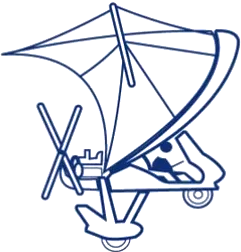
Weight-shift microlight

A weight-shift microlight is an aircraft supported by a rigid wing, below which a motorised trike is generally hung.

Power
≤ 82 hp single-seat · 102 hp two-seat
Max. weight
≤ 300 kg single-seat · 450 kg two-seat
Parachute
+15 kg single-seat · +25 kg two-seat
On the water
+30 kg single-seat · +45 kg two-seat
Speed
Minimum flight speed ≤ 65 km/h · stall ≤ 65 km/h

03

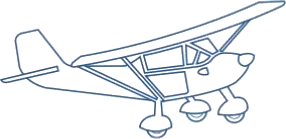
Three-axis microlight

A three-axis microlight is an aircraft supported by a fixed wing.

Power
≤ 88 hp single-seat · 109 hp two-seat
Max. weight
≤ 330 kg single-seat · 500 kg two-seat
Parachute
+15 kg single-seat · +25 kg two-seat
On the water
+30 kg single-seat · +45 kg two-seat
Speed
Stall speed ≤ 70 km/h
04

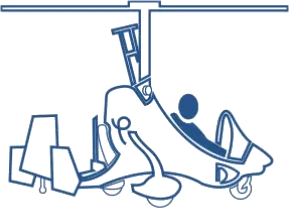
Gyroplane

The gyroplane flies thanks to a free rotor driven by the relative wind, while a propeller provides propulsion. It cannot stall.

Power
≤ 116 hp single-seat · 143 hp two-seat
Max. weight
≤ 330 kg single-seat · 500 kg two-seat
Parachute
+15 kg single-seat · +25 kg two-seat
On the water
+30 kg single-seat · +45 kg two-seat
Special feature
Rotor loading at maximum weight: 4,5 to 12 kg/m²
05

Ultralight aerostat

The ultralight balloon, hot-air or helium: a limited envelope volume, and the same microlight pilot certificate as the other classes.

Power
≤ 102 hp single-seat · 122 hp two-seat
Special feature
Helium envelope ≤ 400 m³ · hot-air envelope ≤ 1 200 m³ (900 and 2 000 m³ for airships excluded from Regulation (EU) 2018/1139)
06

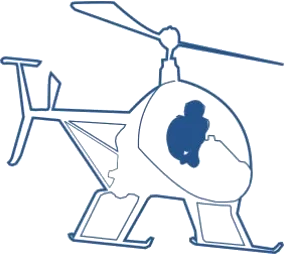
Ultralight helicopter

The most recent of the six microlight classes: a light single-engine helicopter, accessible with the microlight pilot certificate.

Power
≤ 116 hp single-seat · 143 hp two-seat
Max. weight
≤ 330 kg single-seat · 500 kg two-seat
Parachute
+15 kg single-seat · +25 kg two-seat
On the water
+30 kg single-seat · +45 kg two-seat
Special feature
Rotor loading at maximum weight: 8 to 20 kg/m²

What all the classes have in common

  • A common theory certificate issued by Civil Aviation
  • Practical training with a declared instructor for the class
  • A certificate issued by the DGAC, valid for life
  • A federation licence with aviation third-party liability
  • Access to microlight airfields and to the 724 affiliated clubs and schools

Quiz · 4 questions

Which one is made for you?

01Above your head, you want…

Six classes, one shared joy of flying

History of microlighting

Born in the fields, grown into aviation

From the motorised hang glider of the 1970s to the federation of today.

  1. Early 70s

    Free flight appears in France, exclusively in the form of the hang glider, flown on high ground. Small engines are soon added.

  2. 1982

    First regulatory text, close to the philosophy of free flight. At the same time, a band of enthusiasts founded the FFPLUM to defend everyone’s interests.

  3. 1983

    The first Grand Prix de France is the scene of several serious accidents: a start badly handled by the media that long weighed on the image of the microlight.

  4. Today

    The regulations have evolved, training has become more structured, and aircraft have gained in reliability. Around 90% of the fleet is built by professional manufacturers.

Handivol division

Making the sky accessible to all

The Handivol division encourages microlight flying among people with disabilities, supports clubs in welcoming them and offers help and advice to pilots. Long centred on three-axis microlights, “adapted piloting” is widening to include the paramotor trike and the powered aerostat.

Sport and competition

Titles in all six classes

National titles are contested every year under the federation's auspices; the French Team represents the country at championships recognised by the FAI.

  • Landing accuracy
  • Navigation and regularity
  • Paramotor slalom
  • Combined events

Medical

A certificate, not an aviation medical

First licence, or a break of at least one year: medical certificate of no contraindication (CMNCI) less than one year old, issued by any practising doctor in the European Community or Switzerland.

Renewal: no certificate each time, but the “QS-Sport” health questionnaire (cerfa 15699), which does not need to be returned to the federation.

They support the federation

All our partners
  • Ministry of Ecological Transition
  • DGAC
  • Ministry of Sport and the Olympic Games
  • National Sports Agency
  • CNFAS
  • FAI
  • Aéro-Club de France
  • CNOSF
  • EMF
  • Air and Space Museum