






Training Corner - BSV no.58
Every month we publish the accident figures. Some of these are, sadly, harder to read: those that represent our fellow microlight pilots who are no longer with us and those who have been seriously injured. For these, our figures are about 100% reliable, as the data is passed to us by the DGAC and the BGTA.
What about material-damage accidents that caused no serious injuries, or only minor ones: a few scratches, as the saying goes, or a sore back after a hard landing, or collapsed undercarriage legs, for example?
The figures reported to us today come mainly from our federal broker or, once again, from the DGAC.
Do they reflect reality? Allow me to have some doubts. How many runway excursions on landing, how many collisions in the car park, and how many other problems really occur throughout the year?
We champion the safety culture and the just culture, even in our microlight activity:
The principles of the just culture, as defined in Regulation (EU) No 376/2014 of 3 April 2014 on the reporting, analysis and follow-up of occurrences in civil aviation, are the essential basis for making this safety culture as active as possible and thus allowing our level of safety to improve continuously.
The punitive culture, the very basis of our education from primary school onwards, makes no distinction between a fault, which is a deliberate violation of the rules, and an error, which is unintentional even if it may lead to a violation.
Our society is becoming increasingly litigious, with everyone understandably seeking to protect themselves. This "punitive culture" has two perverse consequences for aviation:
- Refusing risk and giving up, a questionable application of the "precautionary principle"
- Not reporting errors in order to "protect the rights of the defence", which remains the majority case
Yet to improve safety, it is far more effective to analyse the errors of those who were lucky enough to get away with it and are willing to share their experience than to try to make wrecks and witnesses speak when those involved in the tragedy are dead. We will only reduce accidents by learning about them, analysing them and putting in place the training actions that are necessary and useful for all pilots. We pass no judgement; we simply seek to understand why they happen and how to reduce their occurrence.
So let us play the game, and not hesitate to report any incident or accident to the Flight Safety Committee or to the CSVs.
A short regulatory reminder to finish:
The season is starting for many of us. Let us not forget the rule of three take-offs and landings within 3 months in order to carry a passenger.
Safe flying
Jean-Christophe Gibert
Head of the Training Committee
Editorial
 MICROLIGHT QUIZ
This year, we will focus our flight safety improvement policy on preventing loss of control in flight, rigorous application of procedures and keeping theoretical knowledge up to date. This last point is essential for flying safely and is something to work on throughout the year.
That is why we are offering you this 40-question QUIZ so you can test your knowledge.
The Analyst's analysis
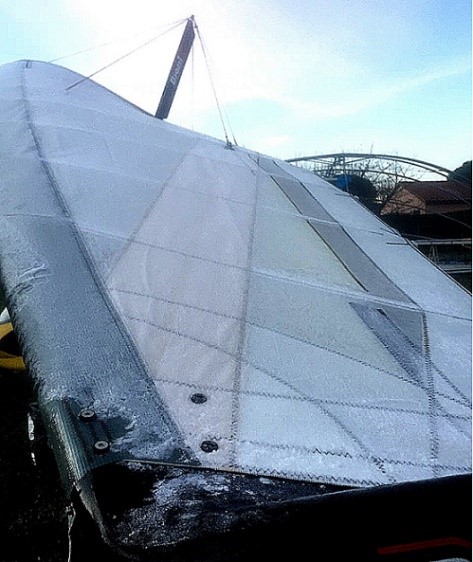
REX - Contamination by white frost
At the end of 2017, a weight-shift microlight pilot decided to set off early one morning on a flight to Bagnères-de-Luchon. The weather was very good and the day looked promising. For technical reasons, the machine had been left stored outdoors, though protected, because the cover of the AéroBulle that normally shelters this microlight was being replaced. During the morning pre-flight inspection, the pilot noticed a thin film of white frost over the whole upper surface of the wing, particularly the right wing.
Safety in figures
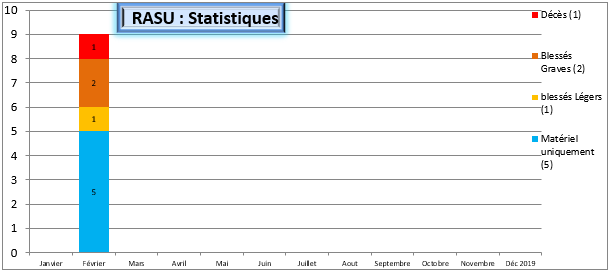
The season is under way again and we have sadly had to record the first fatal accident of the year. The circumstances are not yet clearly known, but according to initial information it is possible that reduced visibility may have contributed to this accident.
What about doing a REV? > video guide
A question about the REV programme? > see our dedicated FAQ









