






The Analyst's analysis - BSV no.58
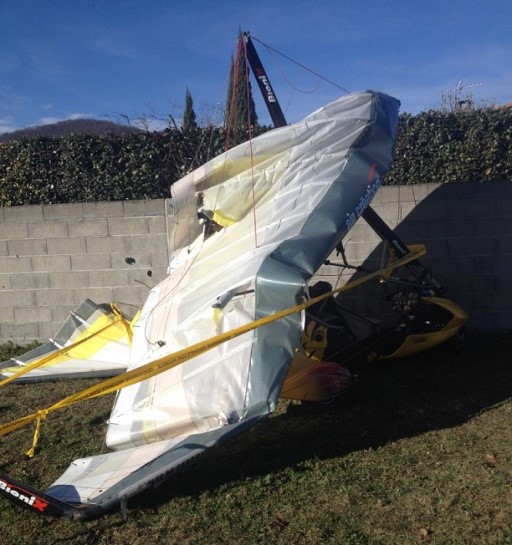
REX – Contamination by white frost…
At the end of 2017, a weight-shift microlight pilot decided to set off early one morning on a flight to Bagnères-de-Luchon. The weather was very good and the day looked promising.
For technical reasons, the machine had been left stored outdoors, though protected, because the cover of the AéroBulle that normally shelters this microlight was being replaced. During the morning pre-flight inspection, the pilot noticed a thin film of white frost over the whole upper surface of the wing, particularly the right wing.
With no reference material on the subject, and judging the film of frost to be rather thin, the pilot, flying alone that morning, did not think it necessary to clear the upper surface of the wing. He did not imagine for a second that it could cause a major aerodynamic disturbance on a weight-shift wing.
During the acceleration phase nothing special happened and the machine took off normally over its usual distance, but very quickly the wing veered to the right, requiring a rapid input from the pilot to control the flight path.
Containing the roll asymmetry, the pilot immediately applied the full power of the 100 hp engine.
At 10 metres above ground, the weight-shift microlight would climb no further. The increased angle of attack of the wing caused it to sink and, with the distance already used up and obstacles at the end of the strip, it was no longer possible to ease off the control bar.
The machine stopped climbing and sank inexorably. The pilot could not avoid a fence and then a clothes drying rack, and his run ended against a boundary wall, with serious consequences. The microlight was destroyed and the pilot suffered major injuries: 6 thoracic vertebrae and one cervical vertebra damaged, 2 ribs, a wrist and both feet broken.
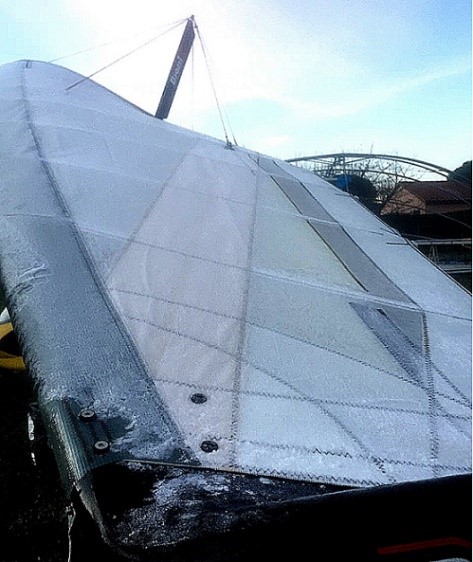
It is likely that the aircraft took off normally, helped by ground effect, which increases the aerodynamic efficiency of the wing. When this ground effect disappeared, the angle of attack increased further and the white frost disturbed the upper surface, which generates a large part of the lift. Seeing the end of the strip and the obstacles approaching, the pilot instinctively increased the angle of attack again but the wing, already on the back of the power curve, could no longer provide lift and stalled.
An upper surface contaminated by white frost no longer has the same aerodynamic characteristics: lift is impaired and drag increases markedly.
A wing contaminated by white frost makes take-off dangerous.
The aerodynamic properties of the wing are therefore altered; the roughness of the frost on the upper surface, however thin, seriously increases the drag of the profile.
It must be acknowledged that the fabric wing of a weight-shift microlight is no exception to this fundamental rule. The pilot's decision when faced with this thin layer of white frost can be explained by a lack of knowledge of the possible consequences, with no reference material on the subject.
Laurent Kerbrat
Flight safety analyst
Editorial

MICROLIGHT QUIZ
This year, we will focus our flight safety improvement policy on preventing loss of control in flight, rigorous application of procedures and keeping theoretical knowledge up to date. This last point is essential for flying safely and is something to work on throughout the year.
That is why we are offering you this 40-question QUIZ so you can test your knowledge.
On the training side
Every month we publish the accident figures. Some of these are, sadly, harder to read: those that represent our fellow microlight pilots who are no longer with us and those who have been seriously injured. For these, our figures are about 100% reliable, as the data is passed to us by the DGAC and the BGTA.
Safety in figures
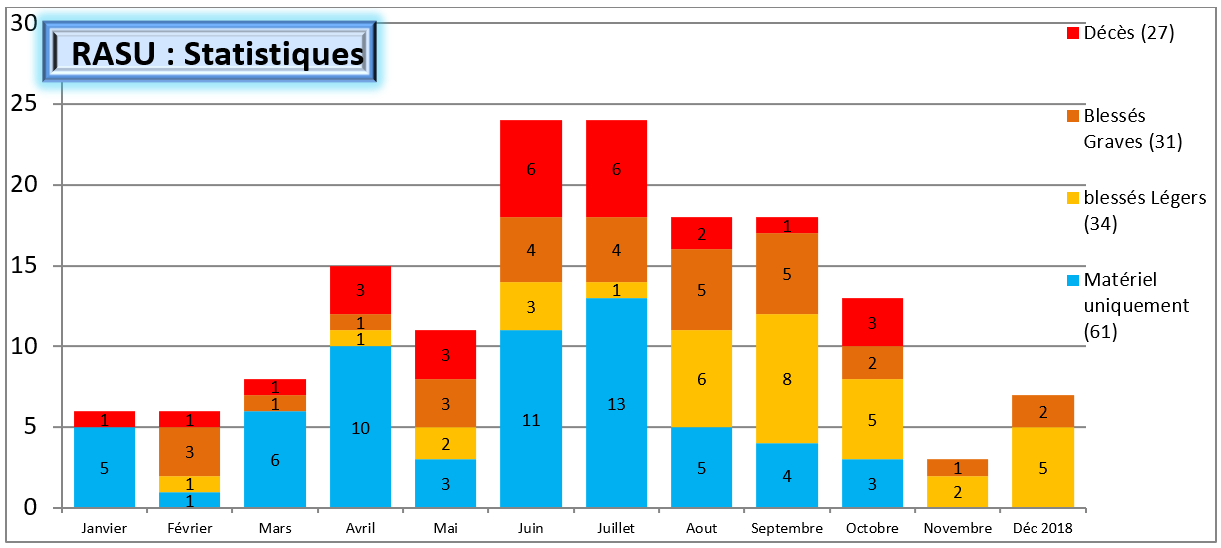 Since the start of this year, we have had no fatal or serious accidents, nor any with minor injuries, to record. The last fatal accident dates back to October 2018, so for three months in a row no death has been recorded in microlighting, which is extremely encouraging and exceptional.
What about doing a REV? > video guide
A question about the REV programme? > see our dedicated FAQ









