Lithium battery, thermal runaway…
By Laurent Kerbrat, flight safety officer (CSV) for Normandie
- 600 to 1 000 °Ctemperature a lithium battery fire can reach
- > 10 minof burning for the battery on fire
- 2 hlater, the still unstable battery could not be handled
- 11 Ahfor the new "Lipo" battery, more powerful than the previous 10 Ah one
What the pilot did, in order
- Switch offThe pilot instantly switches off all contacts.
- EvacuateHe gets out of the aircraft.
- Move awayHe manages to remove the burning battery and throw it well away from the aircraft.
- DocumentHe takes photos, a few seconds after the first smoke.
On 17 December 2020 a pilot, a microlight instructor on several classes, resumed flying after 6 weeks of lockdown. On the second flight of the day, alone on board, the readings were good at the holding point, ready to line up and take off. Suddenly, smoke came out of the instrument panel! Suspicion fell immediately on the battery installed behind the panel. The pilot instantly switched off all contacts, got out of the aircraft and nevertheless managed to remove the battery, which was burning up, and throw it well away from the aircraft!
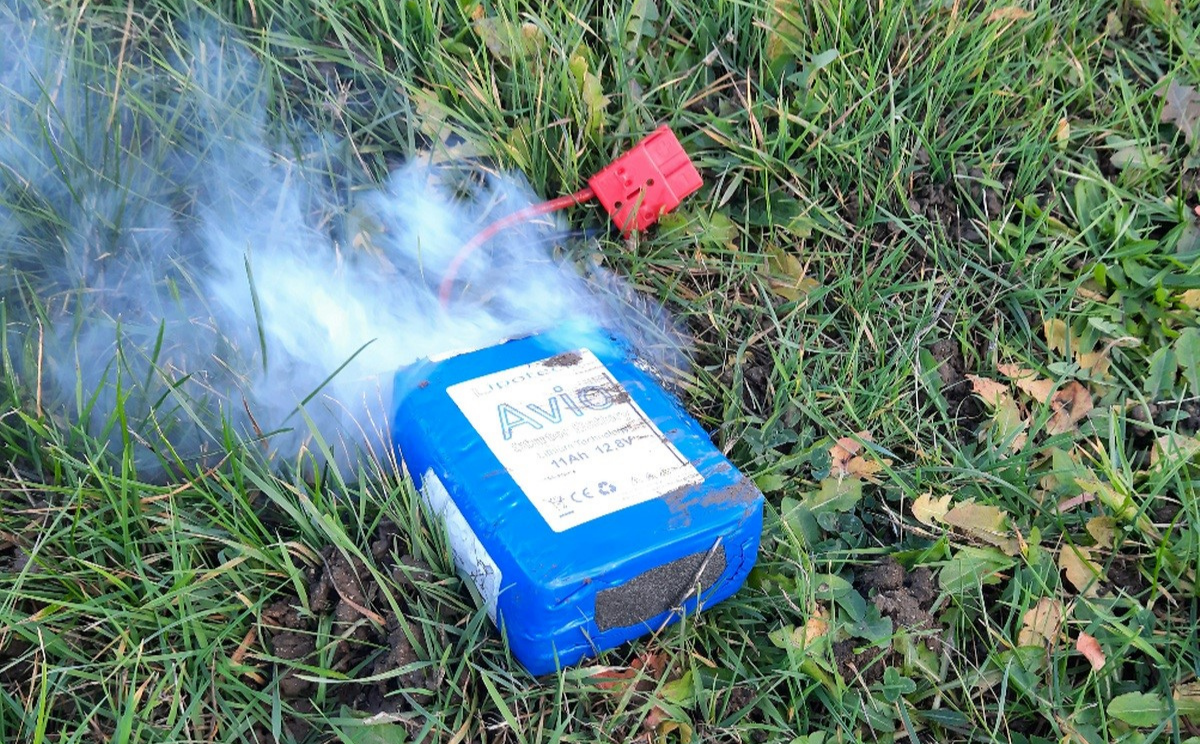
The right reflex
The pilot had the reflex to take photos; a few seconds after the first smoke, the battery caught fire! It burned for more than 10 minutes. Nearly 2 hours after the incident, it was still not possible to handle the battery, which was still "unstable" and still burning. The pilot was unhurt and the aircraft intact, but one can imagine the potential risk if this problem had occurred after the microlight had taken off.
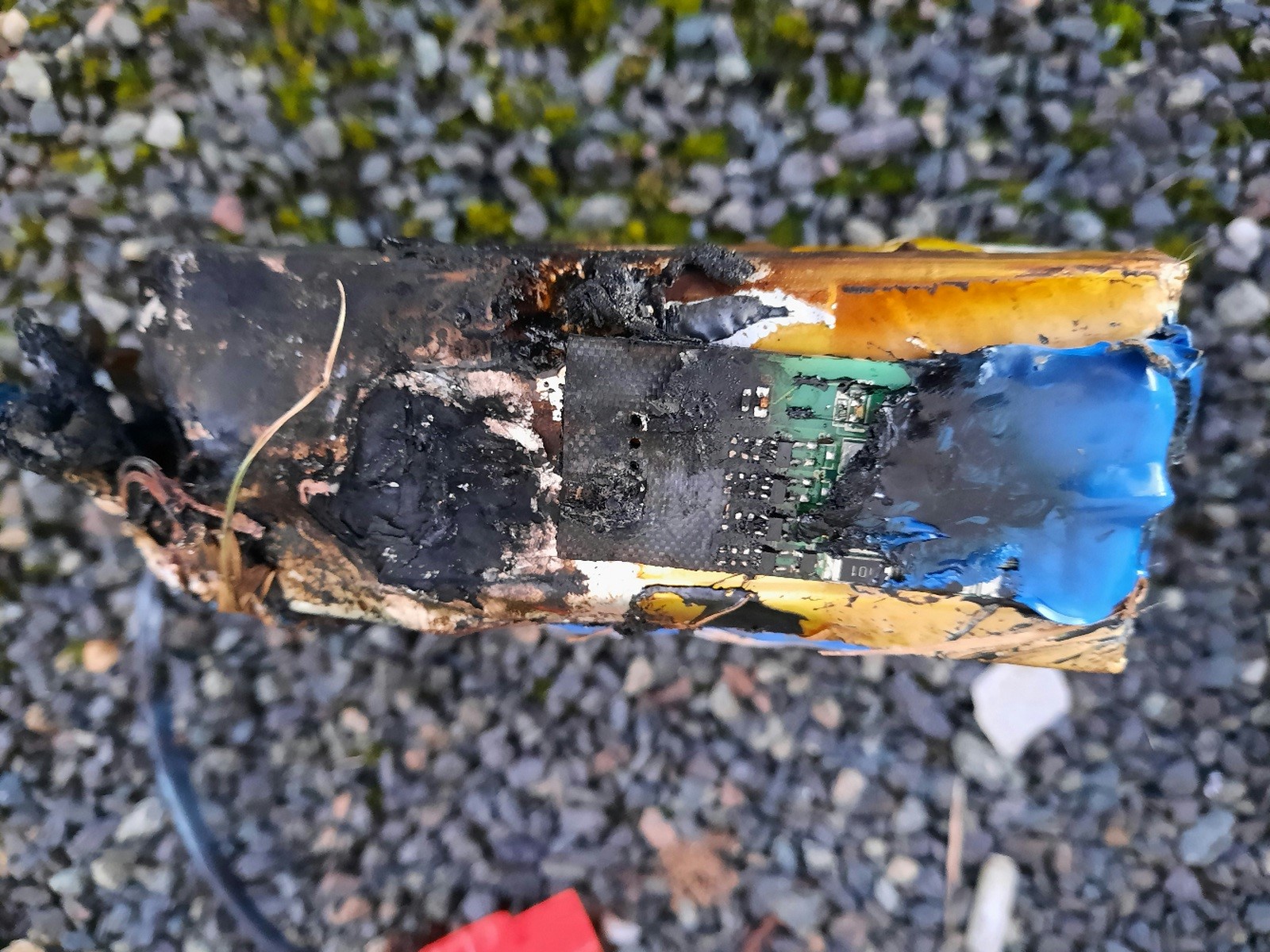
A previous battery, also a 10 Ah lithium one, had lasted 8 years without any particular problem. A new battery of the same model was therefore bought from the microlight trade in March 2020.
The "Lipo", a more powerful battery: be wary!
This new battery, noticeably more powerful (11 Ah), was put on charge with its charger shortly before the flight.
The "Lipo" battery uses "Lithium Polymer" technology, originally intended for low power; the RC [radio control] type copes poorly with heavy loads.
Every lithium battery must be paired with a suitable charge regulator and, as far as possible, positioned outside the cockpit. Particular caution is needed when buying batteries: a charge-balancing device known as a "BMS" is essential but not sufficient, and cannot replace a regulator suited to the type of battery used. The LiFePo4 battery uses "Li-ion" technology and is the one to favour for aircraft.
The temperature of a lithium battery fire can easily reach 600 to 1000 °C. For this reason, there are solutions for containing EFB (Electronic Flight Bag) equipment in a bag designed for all kinds of portable communicating devices and spare lithium batteries:
Tablets, iPads, smartphones, smart Bag battery packs, cameras, smartwatches, powerbanks, e-cigarettes, hoverboards, spare lithium cells and battery packs, etc. (Example: a battery bag, EASA-approved): http://www.lithiumsafe.com/lithium-battery-safety-bag/
To fly safely, let us check the installation of our charging circuit…
Laurent Kerbrat
CSV Normandie