







Editorial - BSV no.52
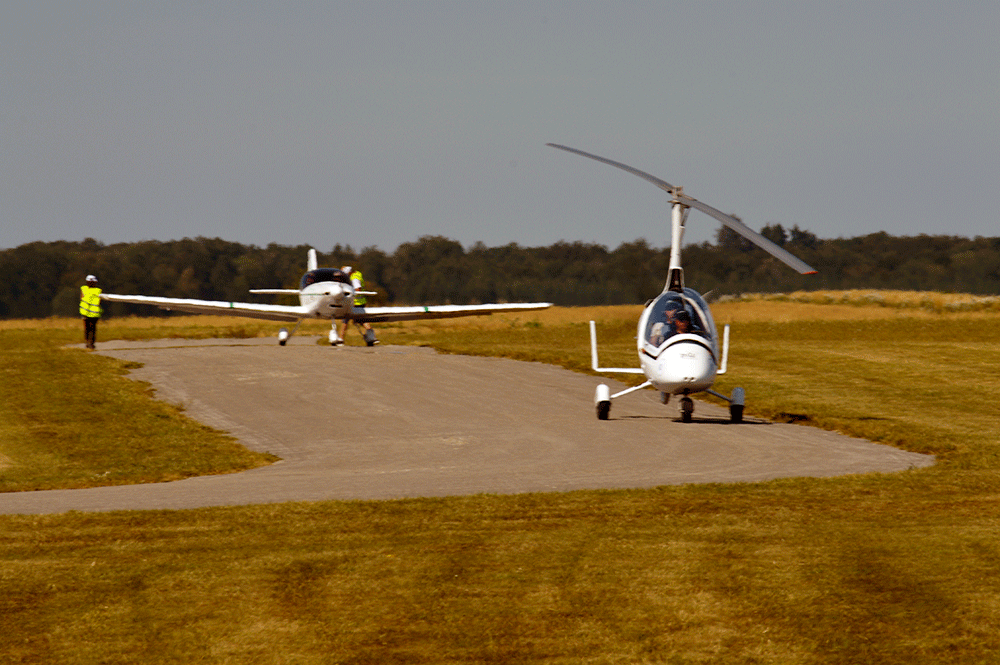 Taxiing!!
That's it, back to school: the holidays are over, but the summery weather gave us some lovely flights, whose memories will brighten the cold, misty days ahead.
Many people took advantage of the Return to Flying programme set up by the Federation, which continues and will be renewed next year, certainly with changes to make it even more accessible to everyone.
Our accident record at the end of the summer is in line with the average of the last 10 years, and while there is therefore not much to rejoice about, all the actions carried out at federal level, in the Regional Committees and at club level help keep accidents and incidents contained in absolute terms, despite the increase in the number of members over the period.
It is also a good sign for the quality of the training provided by the schools and for our instructors, who have managed to stem the events of 2015.
However, in the typology of accidents, there are still too many losses of control, whether in the air or on the ground, at take-off or landing, but also while taxiing.
Indeed, if there is one phase of flight that seems minor and is far too often neglected, it is taxiing before take-off and after landing.
Yet it is a critical phase that requires mental preparation, knowledge and consideration of wind direction and strength, and specific technical skills depending on the class of microlight used.
So, as a general rule, before you start taxiing, visualise and repeat to yourself the route you will take to the runway threshold, identify the intersections (collision risks) and avoid runway incursions at all costs, and, after a glance at the windsock, identify which taxi legs will be parallel, perpendicular, or more head-on or tail-on relative to the wind direction. In addition, taxi speed must always remain appropriate to the situation and you must never taxi faster than a person walking.
For weight-shift microlights, take particular care to tilt the wing into the wind and hold it firmly when taxiing in a direction perpendicular to the wind, to push it in a tailwind and to position it into the wind when facing a headwind.
For three-axis aircraft, and even more so for those with conventional landing gear, keeping the stick into the wind is a concern that must stay with you all the way to the runway threshold or as soon as you clear the runway to go to the parking area.
Finally, for gyroplanes, taxiing is a critical phase, particularly after landing, when clearing the runway and taxiing to parking. Above all, do not give in to haste, even if there is traffic on short final behind you, because taxiing must only begin once the rotor rpm has dropped well down, and you must absolutely avoid abrupt rudder-pedal inputs to steer.
Paramotors and helicopters do not have the same issues, the wing of the former not being deployed during taxiing and the latter taking off vertically....
Had these instructions been properly applied, no fewer than around ten incidents since the start of the year could have been avoided, incidents that caused damage but also injuries to the pilot...
Do not forget that the flight starts as soon as you arrive at the hangar, that it only ends after you have closed its doors, and that taxiing is a delicate phase requiring well-mastered technical skills and solid training.
Taxi slowly and safely, and a good return to the new season.

Eric Galvagno
Head of the Flight Safety Committee
The Analyst's analysis
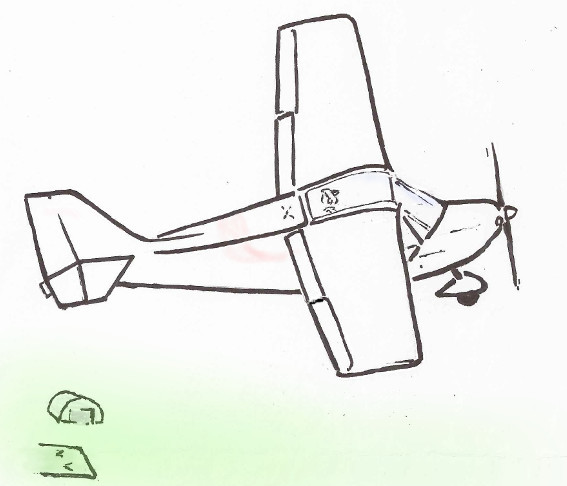 In October 2017, the BEA published its report on the accident involving the Super Guépard microlight registered 14-NI, which occurred on 11 September 2016 at Pont-Farcy (14). Both occupants of the aircraft were killed.
Training Corner
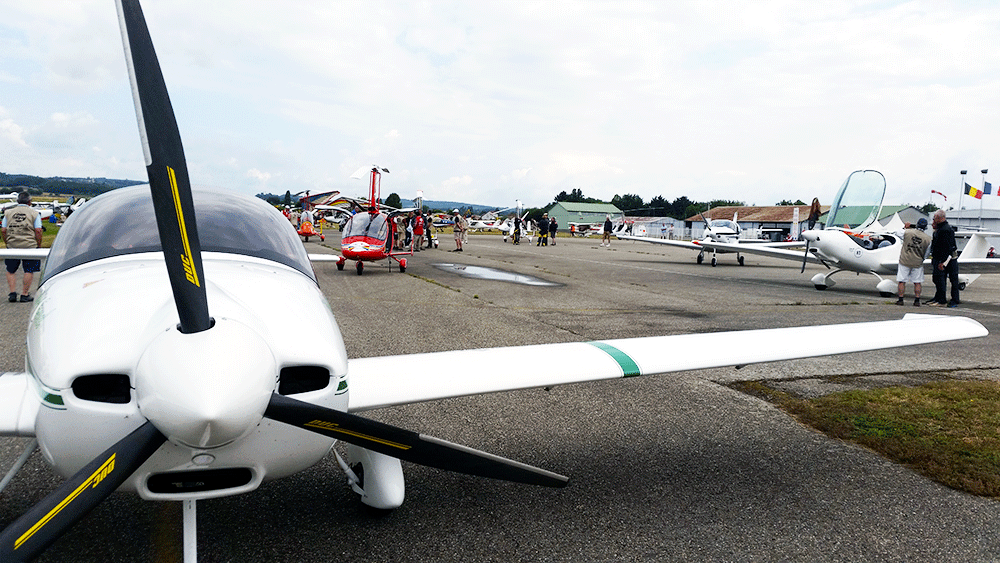
Knowing your environment perfectly...
Below is the lessons-learned account of a pilot who agreed to tell us about a recent material incident (ground collision) that he caused.
A number of lessons can be drawn from it.
Safety in Figures
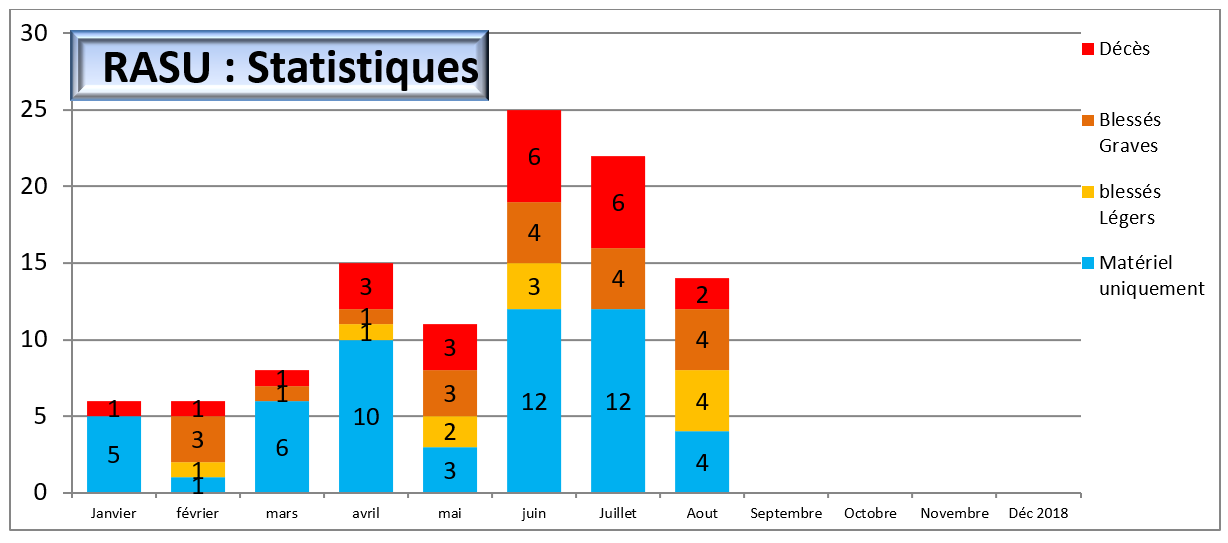
The table below summarises the accident statistics recorded from 1 January to 31 August 2018, ranking casualties by severity and distinguishing purely material-damage accidents. The second table shows microlight accidents involving French-registered aircraft that took place abroad with foreign crews.
What about doing a REV? > video guide
A question about the REV programme? > see our dedicated FAQ









